Custom Metal Die Casting Machine Top Factory
A die casting machine top — often referred to as the fixed platen or head assembly — serves as the structural anchor that absorbs locking force during injection. In cold-chamber machines processing
Custom Metal Die Casting Machine Top Factory
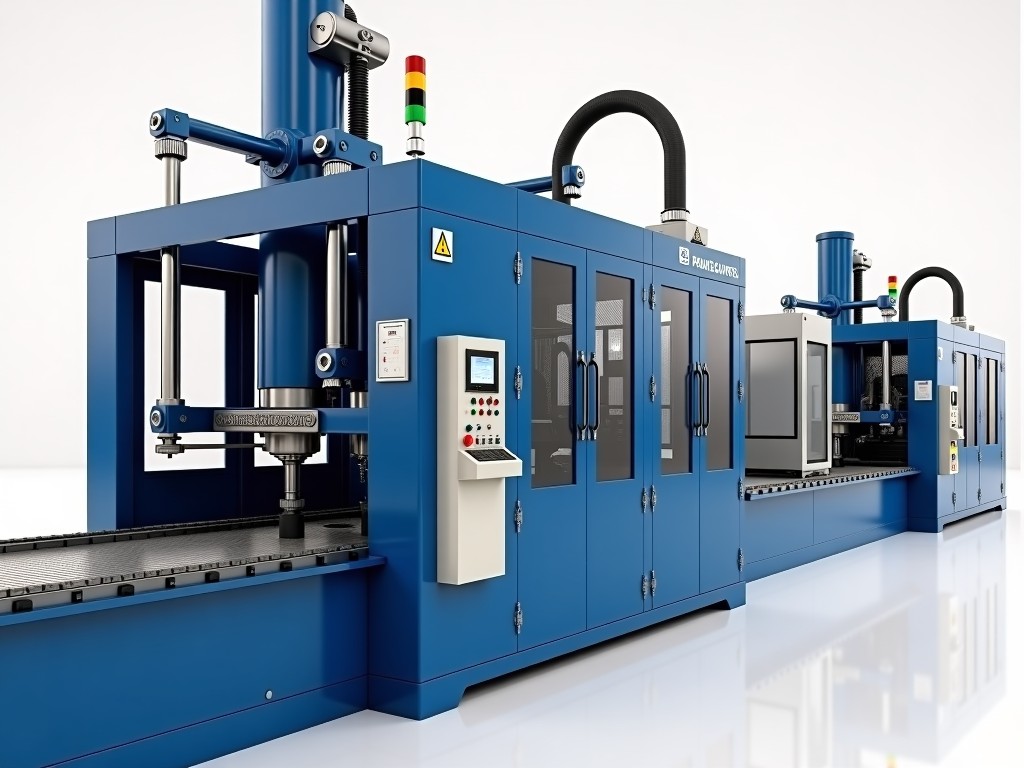
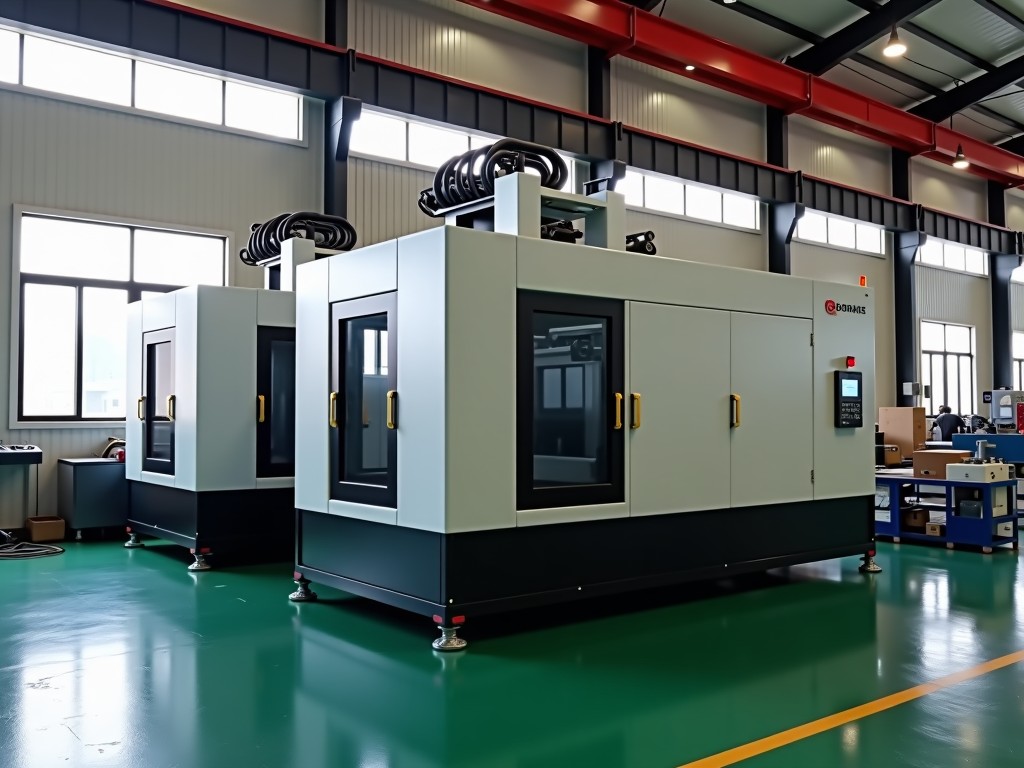
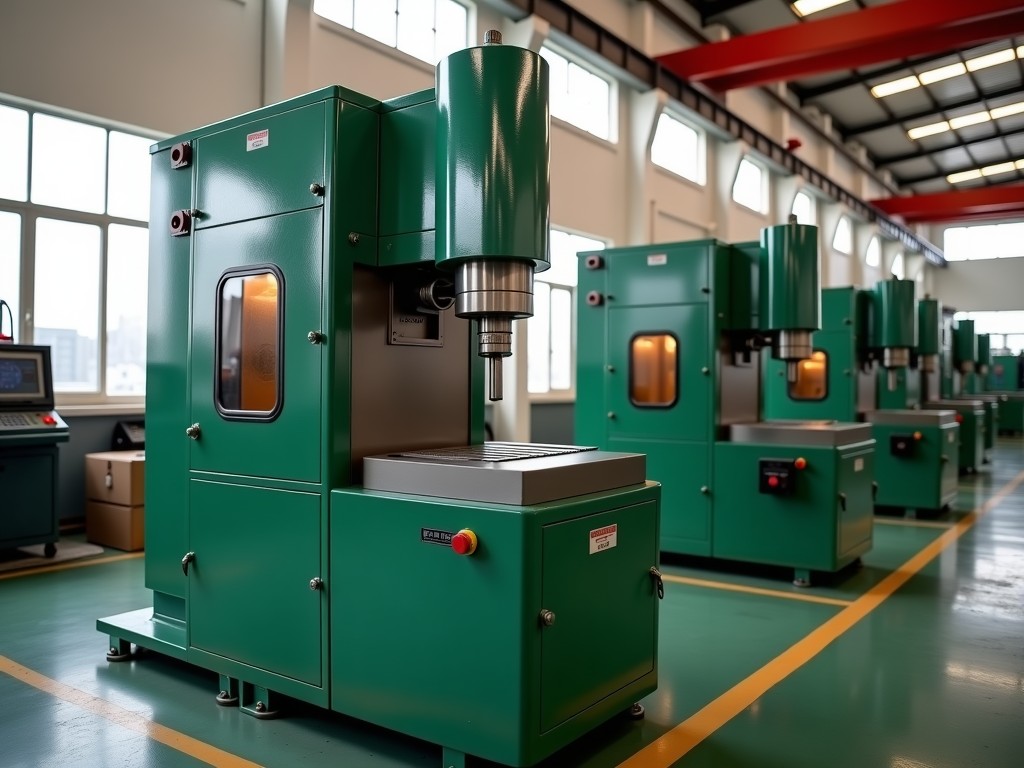
A die casting machine top — often referred to as the fixed platen or head assembly — serves as the structural anchor that absorbs locking force during injection. In cold-chamber machines processing aluminum, magnesium, or copper alloys, this component withstands cyclic loads exceeding 5,000 bar at the die interface. Customization becomes necessary when standard catalog dimensions conflict with oversized dies, non-standard tie-bar spacing, or integration requirements for automated extraction systems.
Structural Design Considerations
The machine top must distribute clamping force uniformly across the die face to prevent flash and dimensional variation. Finite element analysis (FEA) guides rib placement, wall thickness transitions, and bolt-hole reinforcement zones. For machines rated above 2,500 kN locking force, ductile iron (ASTM A536 Grade 80-55-06) typically replaces gray iron to improve fracture toughness under thermal cycling. Stress-relief annealing at 550–600 °C after rough machining reduces residual stress that could cause distortion during final machining.
Tie-bar through-holes require H7/g6 fit tolerance to maintain alignment under repeated loading. Custom tops often incorporate oversized pilot diameters or stepped bores to accommodate retrofit tie-bar kits. When the die height exceeds standard daylight, extended platen spacing demands thicker flanges and additional gusseting — each millimeter of added height increases bending moment at the base by approximately 3–4%.
Material Selection Matrix
| Material Grade | Tensile Strength (MPa) | Yield Strength (MPa) | Elongation (%) | Typical Application Range |
|---|---|---|---|---|
| ASTM A48 Class 40 (Gray Iron) | 275 | — | < 1 | Machines ≤ 1,200 kN |
| ASTM A536 80-55-06 (Ductile Iron) | 550 | 380 | 6 | 1,200–4,000 kN |
| ASTM A536 100-70-03 (Ductile Iron) | 690 | 480 | 3 | > 4,000 kN |
| Welded Steel Fabrication (S355J2+N) | 470–630 | 355 | 22 | Non-standard geometry, retrofit |
Material choice balances casting complexity, machinability, and fatigue performance. Ductile iron grades 80-55-06 and 100-70-03 dominate new builds above 1,200 kN due to superior crack propagation resistance. Welded steel fabrications suit one-off custom tops where pattern costs for iron castings are unjustifiable, though they require post-weld stress relief and tighter flatness control during machining.
Machining and Geometric Control
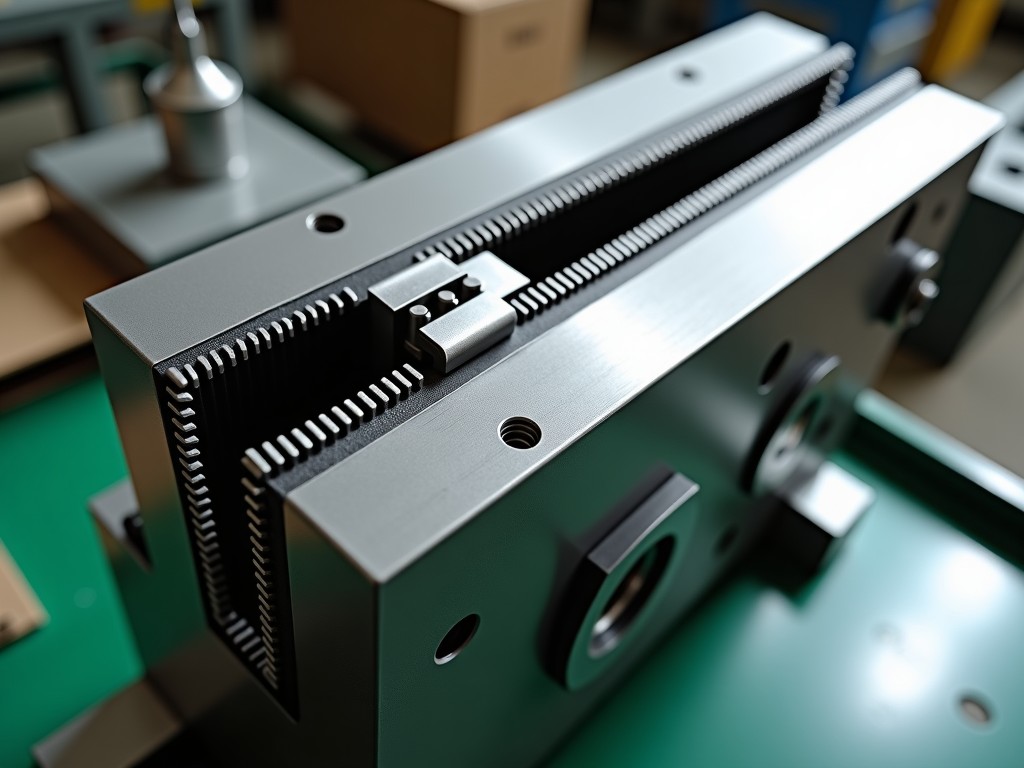
Five-axis gantry milling centers handle platen face machining in a single setup, achieving flatness within 0.02 mm over 1,200 mm spans. Parallelism between the die-mounting face and tie-bar bores is held to 0.015 mm per 500 mm — critical for preventing die tilt during high-speed cycling. Bolt-hole patterns follow customer-supplied die drawings; positional tolerance of ±0.03 mm relative to datum centers ensures interchangeability across die sets.
Surface finish on the die-mounting face typically specifies Ra 1.6–3.2 µm to promote even contact pressure. T-slots or tapped holes for die clamping blocks are machined after heat treatment to avoid distortion. For machines equipped with hydraulic die clamping, manifold channels are gun-drilled before final facing, with intersection plugs pressure-tested to 1.5× system pressure.
Integration Features for Automation
Modern custom tops incorporate mounting pads for linear guides, robotic extractor brackets, and die-temperature sensor ports. These features are designed into the casting model rather than welded post-machining to maintain structural integrity. Cable carriers and hydraulic hose trays route through cast-in channels, eliminating external clutter that interferes with safety guarding.
- Pre-tapped M16–M24 mounting grids on 50 mm pitch for quick-change die adapters
- Integrated proximity switch targets for die-position verification
- Thermocouple wells (Ø3 mm × 30 mm deep) at four quadrants for thermal mapping
- Lifting lugs rated 1.5× component weight per ISO 12100
When retrofitting existing machines, the custom top must match the moving platen's thermal expansion coefficient to avoid gap variation during production. Mismatched materials between fixed and moving platens can cause die separation at operating temperature, leading to flash and accelerated wear.
Quality Assurance Protocol
Each custom machine top undergoes a defined inspection sequence before shipment. Ultrasonic testing (UT) per ASTM A388 scans for internal porosity in critical cross-sections — particularly at rib-to-flange junctions. Magnetic particle inspection (MPI) per ASTM E709 examines all machined surfaces and hole edges for surface-breaking indications. Dimensional verification uses a coordinate measuring machine (CMM) with ±0.005 mm uncertainty, reporting actual values against the approved drawing.
Hydrostatic testing of internal cooling or hydraulic channels validates seal integrity at 1.5× design pressure for 30 minutes without pressure drop. Material certificates (EN 10204 Type 3.1) accompany each shipment, documenting chemical composition, mechanical properties, and heat treatment records. For export orders, packaging includes VCI wrapping, desiccant packs, and shock indicators calibrated to 5 g threshold.
Lead Time and Project Workflow
Typical lead time from approved drawing to delivery ranges 10–14 weeks for ductile iron castings, including pattern making (3–4 weeks), casting and heat treatment (4 weeks), rough machining (1 week), stress relief (1 week), finish machining (1–2 weeks), and inspection/packaging (1 week). Welded steel fabrications reduce lead time to 6–8 weeks by eliminating pattern and casting steps, but require additional NDT for weld seams.
The project initiates with a technical questionnaire capturing: machine brand/model, locking force rating, tie-bar diameter and spacing, die mounting pattern, daylight opening, maximum die weight, automation interface requirements, and target installation date. A 3D model review meeting (virtual or on-site) confirms interference clearances before pattern or fabrication release.
Frequently Asked Questions
Can the machine top be customized for non-standard tie-bar spacing?
Yes. Tie-bar bore centers, diameters, and fit tolerances are fully customizable. The casting or fabrication design adapts to your specified spacing, whether wider for large dies or narrower for compact cells.
What information is required before quotation?
Machine make/model, locking force (kN), tie-bar diameter and center distance, die mounting hole pattern (drawing preferred), required daylight, maximum die weight, automation mounting needs, and target delivery date.
Which materials are available for custom tops?
Gray iron (ASTM A48 Class 30/40), ductile iron (ASTM A536 65-45-12, 80-55-06, 100-70-03), and welded steel (S355J2+N, ASTM A572 Grade 50). Material recommendation depends on locking force, thermal cycling severity, and geometry complexity.
How is flatness and parallelism verified?
CMM measurement per ISO 1101 on the die-mounting face and tie-bar bore axes. Flatness typically ≤ 0.02 mm over full span; parallelism ≤ 0.015 mm per 500 mm. Full inspection report provided with shipment.
What packaging is used for export shipment?
VCI anti-corrosion wrap, desiccant packs (2 units per m³), steel skid with four-way forklift access, shock indicator (5 g), and tilt indicator. Wooden crate option available for sea freight. All packaging ISPM-15 compliant.
What is the typical production lead time?
10–14 weeks for ductile iron castings from drawing approval. 6–8 weeks for welded steel fabrications. Expedited options may be available depending on foundry capacity — inquire for current schedule.
Can you supply a sample or prototype before full production?
Prototype units are available for validation. Lead time matches production schedule. First-article inspection report (FAIR) per AS9102 or customer specification included. Prototype cost credited against production order ≥ 5 units.
Ready to discuss your custom die casting machine top requirements?
Submit your machine specifications and die mounting drawings for a detailed quotation including material recommendation, lead time, and inspection plan.
Request Technical Quotation