Custom Hot Chamber Die Casting Machine With Servo System Supplier
Hot‑chamber die casting remains the most efficient route for high‑volume production of zinc, magnesium and low‑melting‑point alloys. Integrating a closed‑loop servo drive into the injection and
Custom Hot Chamber Die Casting Machine with Servo System Supplier
Hot‑chamber die casting remains the most efficient route for high‑volume production of zinc, magnesium and low‑melting‑point alloys. Integrating a closed‑loop servo drive into the injection and clamping axes replaces conventional hydraulic valves with programmable motion profiles, delivering repeatable shot‑to‑shot consistency and measurable energy savings.
Machine Overview
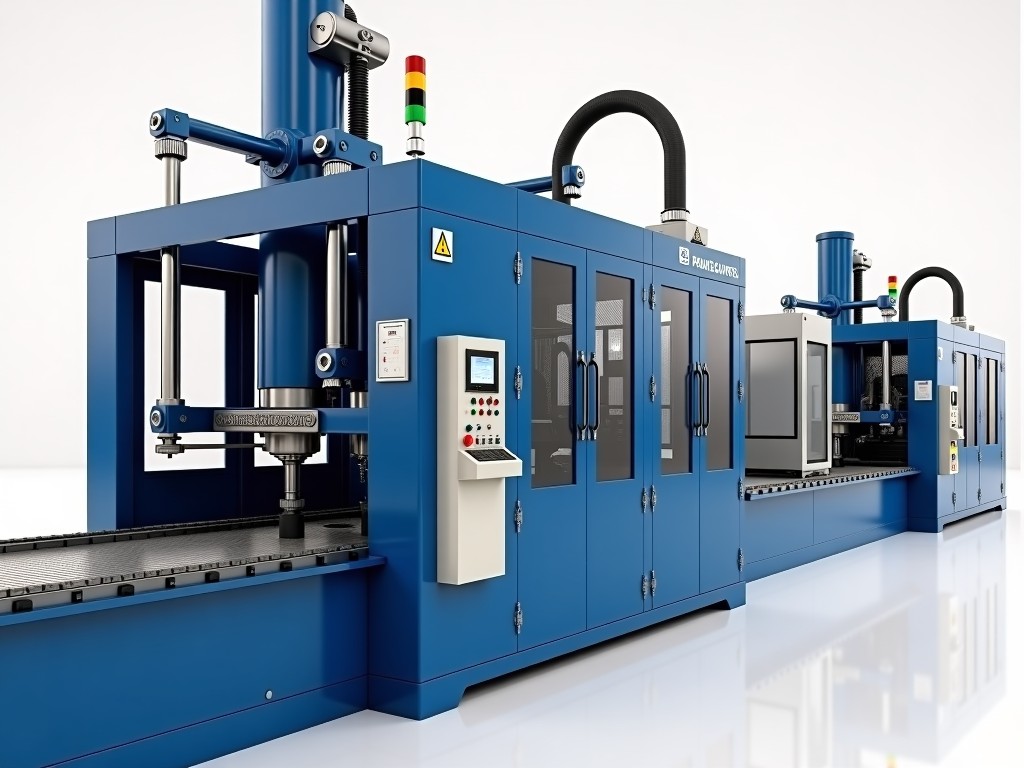
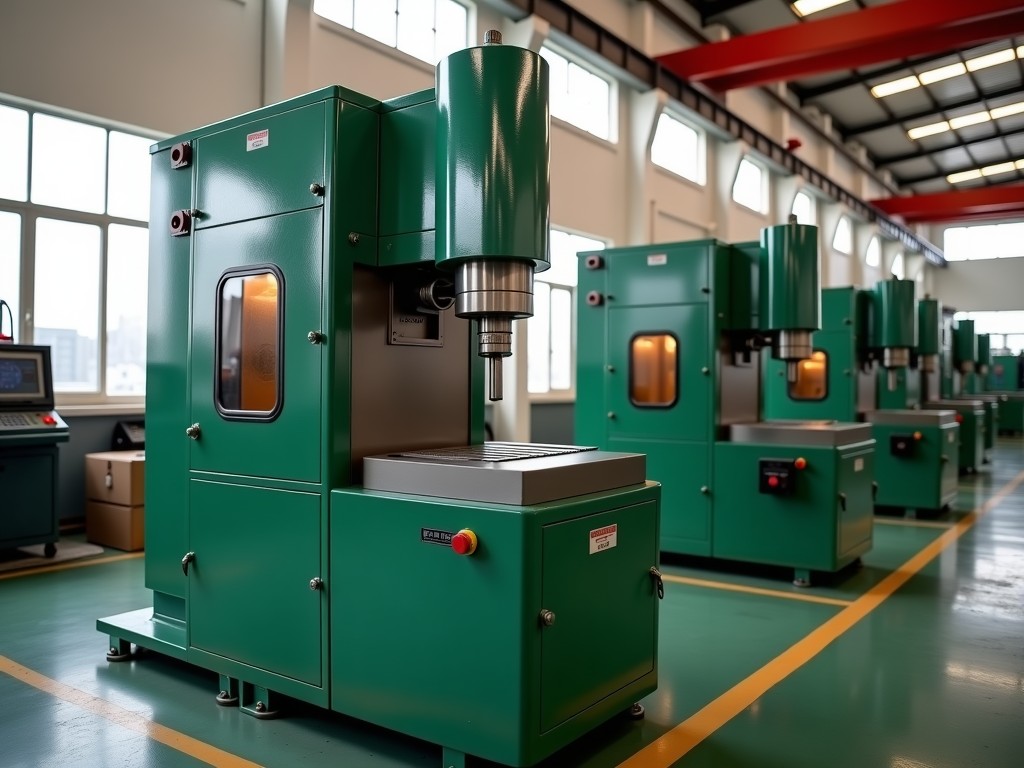
The base platform is a rigid, stress‑relieved cast‑iron frame that resists deflection under peak clamping forces up to 2,500 kN. A modular melt‑holding furnace with induction heating maintains alloy temperature within ±2 °C, reducing cold‑shot defects. The servo‑driven injection unit provides a maximum injection velocity of 6 m/s and a pressure curve that can be shaped in 0.1 ms increments.
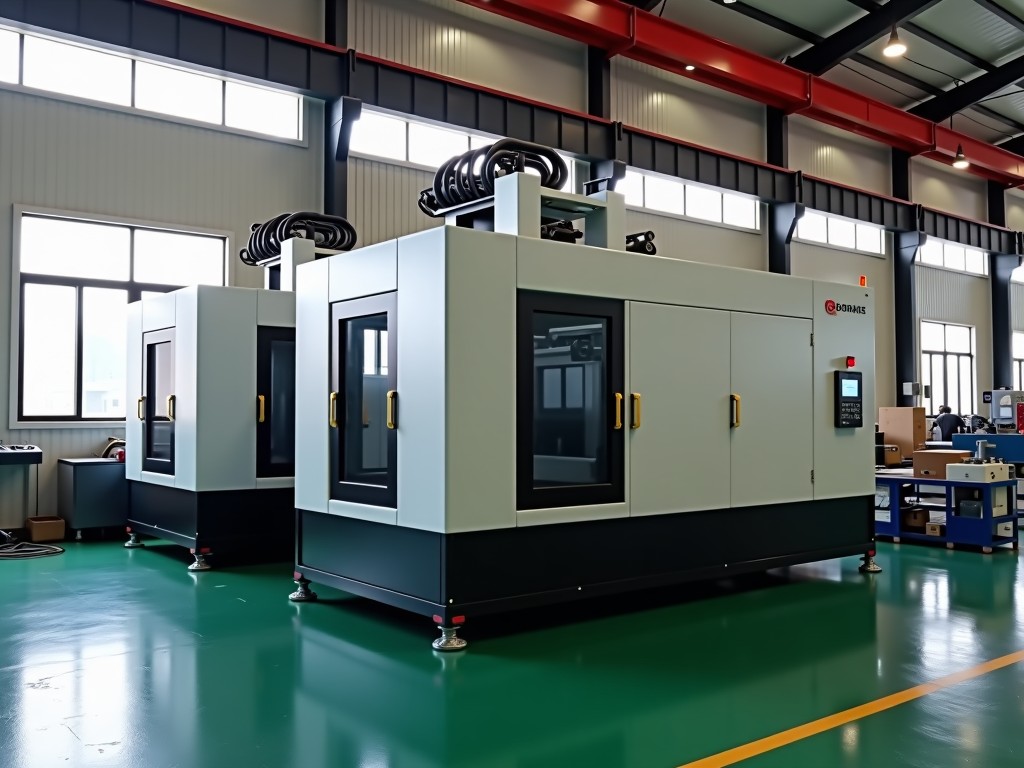
Because the servo system eliminates the need for a high‑pressure hydraulic pump, the machine footprint shrinks by roughly 15 % and the noise level drops below 78 dB(A) at full cycle. Maintenance intervals extend from 2,000 h (hydraulic) to 5,000 h (servo), lowering total cost of ownership.
Servo Drive Technology
Each axis — injection, clamping, and ejector — is powered by a permanent‑magnet synchronous motor coupled to a high‑resolution absolute encoder (23‑bit). The drive controller runs a real‑time EtherCAT loop at 4 kHz, enabling precise position, velocity, and torque control. This architecture supports:
- Programmable pressure‑rise curves for thin‑wall parts
- Dynamic clamping force profiling to match part geometry
- Regenerative braking that feeds energy back to the plant grid
The result is a repeatability of ±0.02 mm on critical dimensions across a 10,000‑shot run, verified by in‑process laser displacement sensors.
Customization Capabilities
Every project starts with a requirement sheet that defines alloy type, part weight, cycle time target, and floor‑space constraints. From that data the following parameters are configurable:
- Clamping force range: 800 kN – 2,500 kN (step 100 kN)
- Shot size: 30 g – 2,200 g (adjustable via interchangeable shot sleeves)
- Furnace capacity: 150 kg – 1,200 kg melt volume
- Control package: Siemens S7‑1500, Beckhoff CX, or Fanuc 30i‑B
- Safety integration: light curtains, safety PLC, or ISO 13849‑1 Category 3
Optional modules include automatic ladle systems, vacuum‑assisted casting, and inline X‑ray inspection cells. All modules share the same EtherCAT backbone, so software integration requires only a single PLC tag map.
Key Specifications
| Parameter | Typical Value | Customizable Range |
|---|---|---|
| Clamping Force | 1,600 kN | 800 kN – 2,500 kN |
| Maximum Injection Pressure | 1,200 bar | 800 bar – 1,500 bar |
| Shot Weight (Zn alloy) | 800 g | 30 g – 2,200 g |
| Cycle Time (dry cycle) | 2.8 s | 2.0 s – 4.5 s |
| Servo Motor Power (injection) | 45 kW | 30 kW – 75 kW |
| Energy Consumption (average) | 18 kWh/1,000 shots | Depends on profile |
| Footprint (L×W×H) | 3.2 m × 2.1 m × 2.8 m | Adjustable per layout |
Application Fit
Automotive transmission housings benefit from the servo‑controlled pressure ramp, which eliminates porosity in thin ribs while keeping cycle time under 3 s. Consumer‑electronics zinc‑alloy enclosures exploit the high repeatability to meet tight cosmetic tolerances without secondary machining. In the medical‑device sector, magnesium‑alloy brackets require a clean melt environment; the induction furnace with inert‑gas blanket reduces oxidation to <0.02 % MgO.
Because the machine can be re‑configured for different shot sizes within a single shift, a contract‑manufacturer running mixed‑volume programs can switch from a 150 g connector to a 1,200 g housing by swapping the shot sleeve and updating the servo profile — no mechanical gear changes required.
Quality Assurance & Inspection
Each unit undergoes a three‑stage validation before shipment:
- Static geometric inspection (CMM) of platen parallelism ≤0.015 mm
- Dynamic servo loop test: position error <0.02 mm at 6 m/s injection
- Thermal soak: furnace held at setpoint for 4 h, temperature uniformity ±1 °C
Process data — pressure curves, motor currents, furnace temperature — are logged to an onboard historian (CSV, 1 kHz) and can be streamed to a MES via OPC‑UA. This traceability supports PPAP Level 3 submissions without additional hardware.
Frequently Asked Questions
Can the machine dimensions be customized to fit an existing cell?
Yes. The frame is built from modular sub‑assemblies; length, width, and height can be altered in 100 mm increments while preserving structural rigidity. A site survey is recommended before final layout.
What information is required before a quotation?
Alloy type, target part weight, annual volume, desired cycle time, available floor space, and preferred PLC brand. Providing a 3‑D part model accelerates the servo‑profile simulation.
Which alloys are supported?
Standard hot‑chamber alloys: Zn‑Al (Zamak 3, 5, 7), Mg‑Al‑Zn (AZ91D, AM60B), and low‑melting‑point lead‑free solders. Custom alloy development is possible with furnace temperature programming up to 550 °C.
How is quality inspected during production?
In‑process laser displacement sensors monitor cavity fill; a statistical process control (SPC) dashboard flags deviations >3σ. Post‑cast, parts can be routed to an integrated X‑ray cell for internal defect detection.
What packaging methods are used for export?
Machines are secured on steel skids, wrapped in VCI‑film, and placed in fumigated wooden crates compliant with ISPM‑15. Shock indicators and humidity cards are included for transit monitoring.
What is the typical production lead time?
Standard configurations ship in 12–14 weeks after order confirmation. Customized frames or non‑standard PLC integration add 3–5 weeks.
How are samples arranged?
A pilot run of 200–500 shots can be scheduled at the factory. Sample parts, process logs, and a dimensional report are shipped together with the machine for customer validation.
Request a Quote
To receive a detailed proposal — including layout drawings, servo‑profile simulation, and a cost breakdown — please submit your project specifications through our inquiry form.
Submit Inquiry