Custom Automatic Die Casting Machine For Sale
This page details a fully configurable automatic die casting machine designed for high‑volume production of non‑ferrous alloys. The platform integrates a servo‑driven injection system, real‑time
Custom Automatic Die Casting Machine for Sale
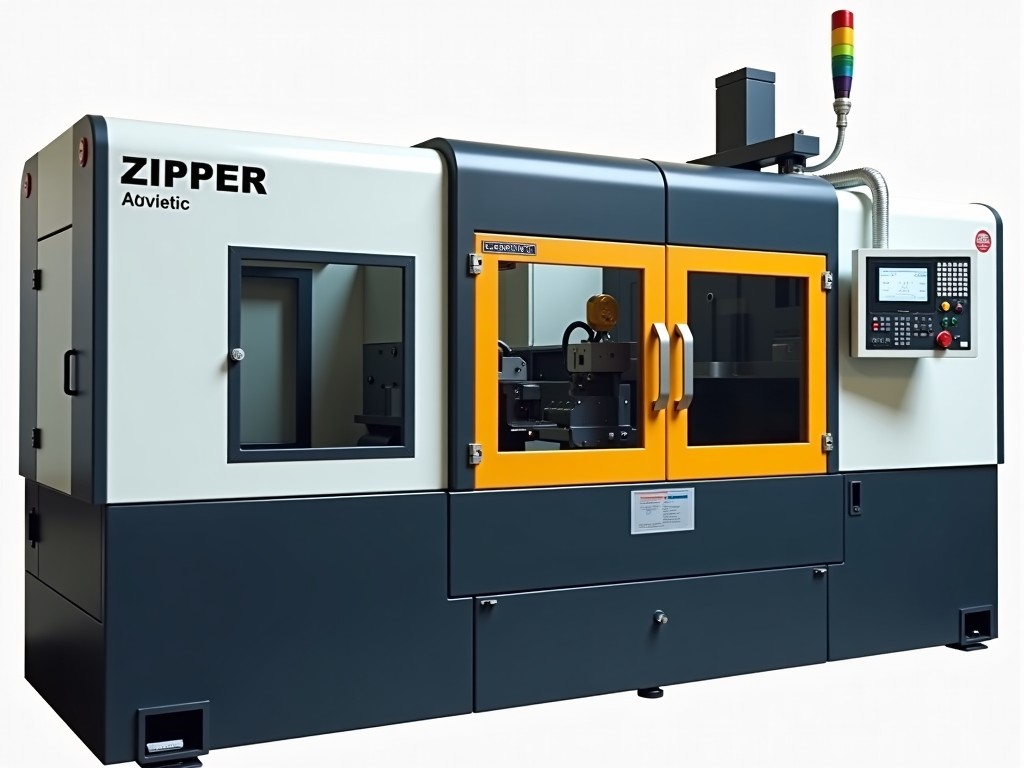
This page details a fully configurable automatic die casting machine designed for high‑volume production of non‑ferrous alloys. The platform integrates a servo‑driven injection system, real‑time process monitoring, and a modular frame that accepts interchangeable die sets ranging from 150 mm to 600 mm projected area.
Technical Overview
The machine uses a closed‑loop hydraulic accumulator paired with a 30 kW servo motor to deliver injection pressures up to 1,200 bar with a repeatability of ±0.5 % across the full stroke. Cycle times for a 300 g aluminum shot are typically 4.2 s, including die opening, ejection, and lubrication. A PLC‑based HMI provides 200 ms data logging of pressure, temperature, and plunger position, enabling statistical process control without external software.
Key Specifications
| Parameter | Typical Value | Customization Range |
|---|---|---|
| Clamping Force | 1,200 kN | 800 kN – 2,500 kN |
| Maximum Shot Weight (Al) | 1.2 kg | 0.3 kg – 3.5 kg |
| Injection Speed | 0.5 – 6 m/s | Adjustable via servo profile |
| Die Height (max) | 650 mm | 400 mm – 900 mm |
| Control System | Siemens S7‑1500 PLC + 15" HMI | Alternative PLC brands on request |
| Power Consumption (avg.) | 45 kW | Depends on duty cycle |
Customization Options
Each machine can be tailored to the specific alloy, part geometry, and throughput target of the project. The following options are routinely configured during the quotation phase:
- Die heating zones – up to 12 independently controlled zones with ±2 °C stability.
- Automated ladle or vacuum feed system for magnesium and zinc alloys.
- Integrated robotic part extraction with vision‑guided placement.
- Extended frame for tandem die operation, doubling output without additional floor space.
- Oil‑free hydraulic circuit for cleanroom environments.
Typical Applications
Automotive structural brackets benefit from the machine’s high clamping force and fast cycle, reducing part cost per kilogram. Consumer‑electronics housings require the tight dimensional control delivered by the servo‑driven injection profile, which limits flash to <0.15 mm. In the lighting industry, the optional vacuum feed eliminates porosity in thin‑wall magnesium reflectors, a defect that conventional gravity feed cannot resolve.
Quality Assurance & Inspection
Every unit undergoes a 48‑hour run‑in at rated pressure while logging pressure‑time curves for each shot. Dimensional verification of the die mounting surface is performed with a calibrated laser tracker (±0.02 mm). Hydraulic circuit integrity is tested at 1.5× design pressure. A final statistical capability study (Cp, Cpk) on a 500‑shot sample is provided with the shipment documentation.
Frequently Asked Questions
Can the machine dimensions be customized to fit existing production lines?
Yes. The base frame is built from modular steel weldments that can be lengthened or widened in 100 mm increments. Height adjustments are achieved by swapping the column assemblies, which are pre‑drilled for standard anchor patterns.
What information is required before a formal quotation?
We need the target alloy, projected part weight, annual volume, available floor space, and any existing automation interfaces (e.g., robot brand, communication protocol). A preliminary die drawing accelerates the configuration of clamping force and shot size.
Which alloys can be processed on this platform?
The standard configuration handles aluminum (A380, ADC12), magnesium (AZ91D), and zinc (Zamak 3, Zamak 5). Copper‑based alloys are possible with a high‑temperature barrel upgrade and ceramic‑coated plunger.
How is quality inspected during production?
In‑process sensors record pressure, temperature, and plunger velocity at 1 kHz. The HMI flags deviations beyond user‑defined limits and can automatically pause the cycle. Post‑process, a coordinate‑measuring machine (CMM) checks critical dimensions on a statistical sample.
What packaging methods are used for export shipments?
Machines are secured on a steel skid, wrapped in VCI‑treated stretch film, and enclosed in a fumigated wooden crate meeting ISPM‑15. Shock indicators and humidity cards are attached for transit monitoring.
What is the typical production lead time?
Standard configurations ship within 12 weeks after order confirmation. Custom frame dimensions or non‑standard PLC hardware add 3–5 weeks, depending on component availability.
Request a Quote
Provide your project specifications and our engineering team will return a detailed proposal, including cycle‑time simulation, energy‑consumption estimate, and a recommended spare‑parts kit.
Submit Inquiry Request Technical Datasheet