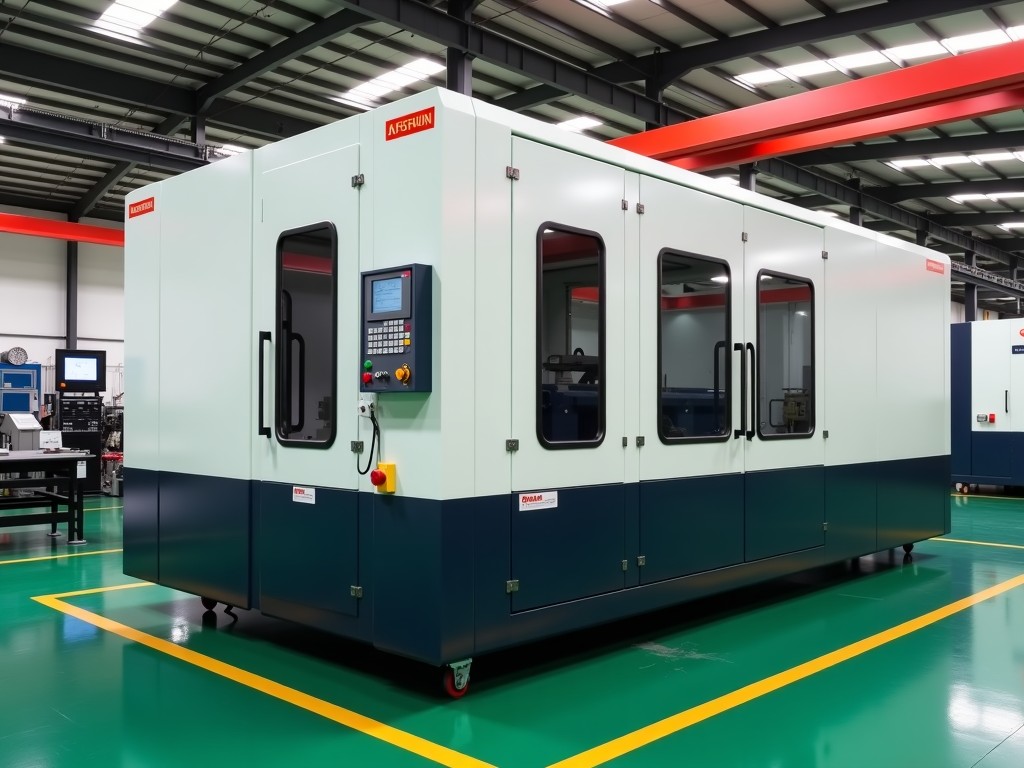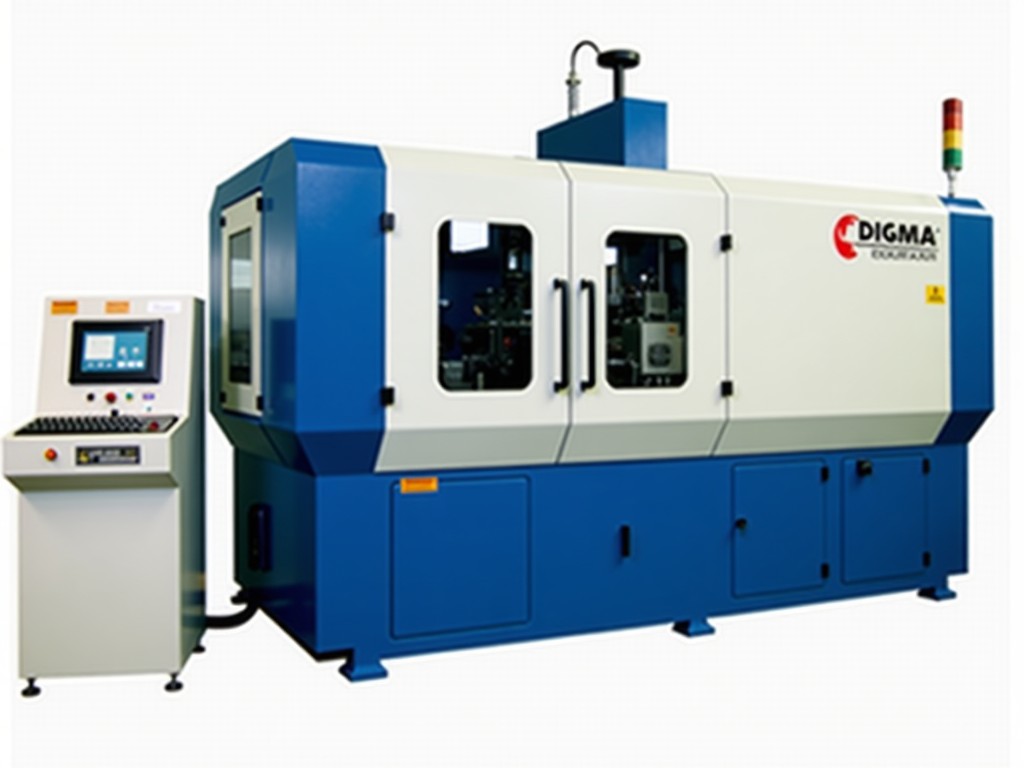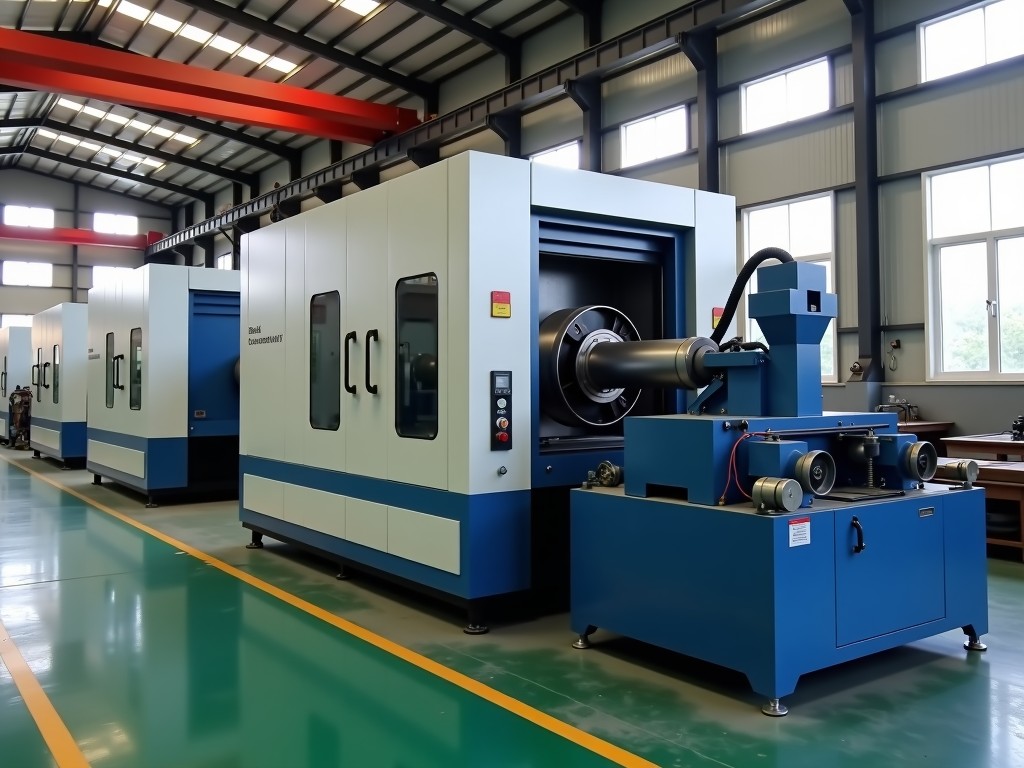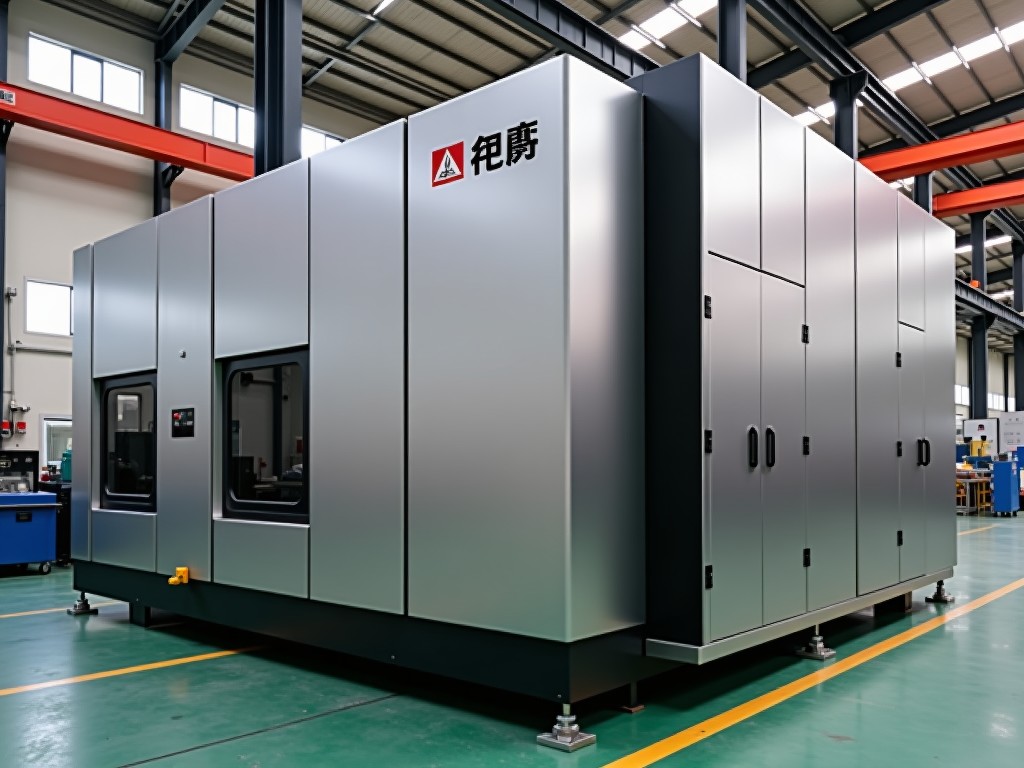
China Magnesium Cold Chamber Die Casting Machine Company
Magnesium alloy die casting demands precise thermal management and rapid cycle execution. Cold chamber architecture separates the injection system from the molten metal reservoir, preventing iron
China Magnesium Cold Chamber Die Casting Machine Company
Magnesium alloy die casting demands precise thermal management and rapid cycle execution. Cold chamber architecture separates the injection system from the molten metal reservoir, preventing iron contamination from prolonged exposure to the shot sleeve — a critical consideration when processing AZ91D, AM60B, or newer rare-earth-containing alloys like WE43 and ZE41.
Machines in the 1,250 kN to 4,400 kN locking force range cover the majority of automotive structural components: instrument panel beams, seat frames, steering column brackets, and powertrain housings. Clamping unit rigidity directly influences dimensional stability of thin-wall sections below 2.5 mm, where magnesium's rapid solidification amplifies sensitivity to platen deflection.
Shot end design governs metal velocity profiles. Three-stage injection with programmable acceleration curves allows tailoring the fill phase to part geometry — slow initial movement to avoid air entrapment in complex runners, fast second stage for complete cavity fill before skin formation, and controlled intensification to compensate for solidification shrinkage without flash generation.
Typical Technical Parameters
| Parameter | Range / Description | Notes |
|---|---|---|
| Locking force | 1,250 – 4,400 kN | Customizable per project tonnage calculation |
| Clamping stroke | 450 – 1,100 mm | Matches mold height requirements |
| Tie bar spacing (H × V) | 560×560 – 1,160×1,160 mm | Determines maximum mold envelope |
| Shot weight (Mg alloy) | 0.8 – 12 kg | Depends on plunger diameter and stroke |
| Plunger diameter options | 50, 60, 70, 80, 90, 100 mm | Selected for 40–60% fill ratio target |
| Injection pressure (intensified) | Up to 90 MPa | Servo-hydraulic or accumulator-driven |
| Maximum injection velocity | 6 – 10 m/s | Third-stage capability on larger models |
| Ejector force / stroke | 110–450 kN / 100–250 mm | Programmable multi-step ejection |
| Dry cycle time (EUROMAP 6) | 2.8 – 6.5 s | Varies with machine size |
| Control system | Siemens S7-1500 / Beckhoff CX / proprietary | OPC UA, Profinet, EtherCAT ready |
Values represent typical configurability. Final specification is determined during application review — shot sleeve diameter, accumulator volume, and platen design are matched to your mold layout and annual volume targets.
Engineering Characteristics That Define Performance
Frame stress-relief annealing after welding eliminates residual deformation that would otherwise cause uneven tie bar loading. On machines above 2,500 kN, finite element analysis validates platen deflection under full lock — target is ≤0.05 mm/m to maintain flash-free parting lines on magnesium's low-viscosity melt.
Shot end selection involves trade-offs. Larger plunger diameters reduce required injection pressure but increase metal volume in the biscuit, raising material cost and cycle time. Smaller plungers enable higher intensification pressures for pressure-tight castings but demand faster injection velocities to outrun solidification. Our application engineers simulate fill patterns using ProCAST or MAGMASOFT before recommending a configuration.
Temperature control of the shot sleeve uses independent PID zones — typically three along the barrel length. Maintaining 200–250°C sleeve temperature reduces thermal shock on the plunger tip, extending tip life from 3,000 shots to 8,000+ shots on AZ91D. Ceramic-coated tips are available for high-volume runs where tip replacement downtime carries significant cost.
- Real-time injection curve recording with 1 ms sampling for process validation
- Automatic ladler synchronization — configurable pour delay, pour volume, and splash suppression
- Vacuum valve interface with 0.5 ms response time for evacuation-assisted filling
- Centralized lubrication with flow monitoring per point; alarm on blockage
- Energy recovery on deceleration phases — 15–22% hydraulic power reduction typical
Application Fit: Why These Machines Suit Magnesium Structural Casting
Automotive instrument panel cross-car beams require consistent wall thickness of 2.0–2.5 mm across 1.2–1.5 m lengths. The combination of high locking force rigidity and multi-stage velocity profiling prevents cold shuts at flow fronts meeting from opposite gates. Vacuum-assisted evacuation reduces gas porosity to <0.5% volume fraction — necessary for subsequent heat treatment (T5/T6) without blistering.
Powertrain housings (transmission cases, electric motor end-shields) benefit from the machine's intensification pressure stability. Magnesium's solidification shrinkage of 4–6% volume demands sustained pressure during the final 15–20% of solidification. Accumulator-backed intensification holds pressure within ±3% of setpoint, minimizing shrink porosity in load-bearing bosses and flange areas.
Electronics enclosures for 5G base stations and server power supplies exploit magnesium's EMI shielding (60–80 dB attenuation) and thermal conductivity (50–70 W/m·K). Thin walls of 1.2–1.8 mm with high aspect ratio ribs require injection velocities above 6 m/s and precise gate freeze control. The control system's gate freeze timer — triggered by cavity pressure sensor decay — optimizes cycle time without premature gate sealing.
Customization Scope
Every quotation begins with a mold layout review. The following items are configured per project:
- Platen T-slot pattern, bolt hole grid, or custom mold mounting interface
- Shot sleeve length and nozzle radius to match your furnace launder geometry
- Ladler type: pneumatic, servo-driven, or robotic cell integration
- Vacuum system: standalone pump package or machine-integrated valve block
- Safety guarding: light curtain, safety door interlock, or full perimeter fencing per CE/OSHA
- Auxiliary cores: hydraulic, pneumatic, or servo-electric core pull circuits (2–8 circuits)
- Data acquisition: MES connectivity, quality data logging, energy monitoring dashboard
Non-standard tie bar spacing, extended daylight for insert overmolding, and dual-shot configurations for magnesium-aluminum hybrid structures are evaluated case by case.
Quality Assurance and Factory Acceptance
Each machine undergoes a 72-hour continuous run at rated parameters before shipment. Test protocol includes: dry cycle repeatability (platen parallelism ±0.02 mm), injection curve reproducibility (velocity profile overlay within 2%), intensification pressure hold stability, and thermal steady-state verification of shot sleeve zones.
Cavity pressure sensors (Kistler 6172A or equivalent) are calibrated to ISO 9001 traceable standards. Injection monitoring software stores 10,000+ shot records with full waveform capture — essential for PPAP Level 3 submission when supplying Tier 1 automotive.
Spare parts kit ships with every machine: plunger tips (3×), shot sleeve (1×), seal kits for injection and clamping cylinders, proximity switches, and filter elements. Critical wear components are stocked in regional warehouses; lead time for non-stock items is typically 3–4 weeks.
Frequently Asked Technical Questions
What information is required for a detailed quotation? Mold layout (2D/3D), annual volume, alloy grade, cycle time target, automation interface requirements, and facility utilities (power, water, compressed air).
Can the machine handle both magnesium and aluminum alloys? Yes, with shot sleeve and plunger tip changeover. Aluminum requires higher sleeve temperatures (350–400°C) and different lubrication; changeover takes 2–3 hours. Dedicated magnesium machines omit the aluminum-specific cooling circuits.
How is shot sleeve wear monitored? Optional sleeve wall thickness measurement via ultrasonic sensor at fixed intervals. Data trends into preventive maintenance schedule — typical sleeve life is 50,000–80,000 shots on magnesium.
What is the typical production lead time? 16–24 weeks from order confirmation for standard configurations. Custom platen designs or non-stock control hardware may extend to 28–32 weeks.
Is on-site commissioning included? Standard scope includes 5 days of mechanical/electrical commissioning and 3 days of process parameter development with your mold. Extended process optimization support available separately.
What export packaging is used? Machine base on steel skids with vibration-damping mounts; moving components secured with hydraulic locks. Vacuum-sealed barrier film with desiccant for sea freight. Container loading supervised with photographic documentation.
Next Step
Share your mold drawing and annual volume forecast. Our application team will return a configured machine specification, cycle time simulation, and budgetary pricing within 5 business days.
Request Technical Proposal