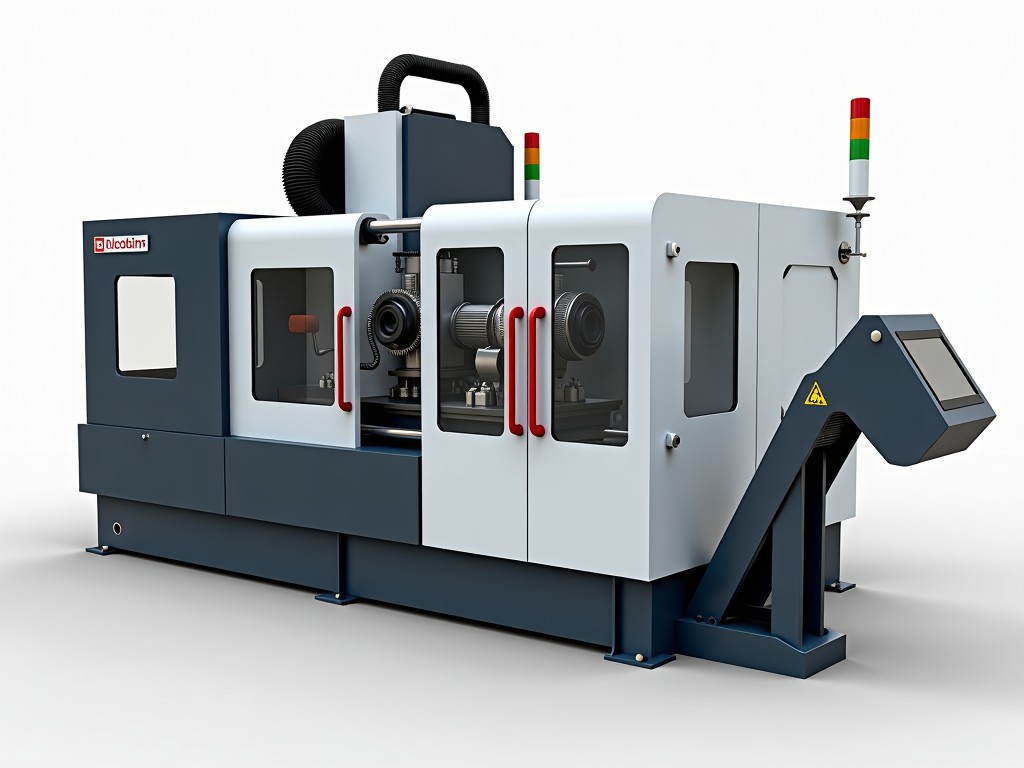
China Die Casting Machine Top Manufacturer
Selecting a die casting machine supplier in China requires evaluating structural rigidity, injection dynamics, and control system architecture rather than relying on brand recognition alone. The
China Die Casting Machine Top Manufacturer: Technical Capabilities & Selection Guide
Selecting a die casting machine supplier in China requires evaluating structural rigidity, injection dynamics, and control system architecture rather than relying on brand recognition alone. The domestic market has consolidated around manufacturers who design and build their own hydraulic circuits, toggle systems, and real-time monitoring software. This page outlines the engineering criteria that separate volume producers from precision-focused suppliers, helping procurement engineers match machine specifications to casting requirements.
Machine Architecture: Cold Chamber vs. Hot Chamber Systems
The fundamental classification determines alloy compatibility and cycle mechanics. Cold chamber machines handle aluminum, magnesium, and copper alloys where the melt temperature exceeds the safe operating limit of a submerged injection plunger. Metal is ladled — manually or automatically — into a horizontal shot sleeve for each cycle. Hot chamber machines integrate the gooseneck and plunger directly into the molten metal bath, enabling faster cycles for zinc, lead, and tin-based alloys with lower melting points. Chinese manufacturers typically offer both architectures, but the depth of in-house casting for platens and toggle crossheads varies significantly.
Toggle design influences locking force consistency and maintenance intervals. Three-platen toggle systems distribute strain more evenly across the tie bars than two-platen designs, reducing frame deflection during high-pressure intensification. However, two-platen machines occupy less floor space per ton of locking force, a factor for facilities with constrained layouts. Leading Chinese builders now simulate toggle kinematics using finite element analysis (FEA) before cutting steel, minimizing post-assembly alignment corrections.
Critical Specification Matrix for Procurement Comparison
The table below consolidates the parameters that directly affect part quality, cycle time, and tooling compatibility. Values represent typical ranges available from Tier 1 Chinese manufacturers; final figures are configured per project.
| Parameter | Cold Chamber Range (Al/Mg/Cu) | Hot Chamber Range (Zn/Pb/Sn) | Selection Impact |
|---|---|---|---|
| Locking Force | 160 – 4,500 tonnes | 40 – 500 tonnes | Determines maximum projected area × injection pressure |
| Shot Weight (Al / Zn) | 0.5 – 85 kg (Al) | 0.1 – 8 kg (Zn) | Must exceed part + runner + biscuit mass by 30–50% |
| Platen Size (H × V) | Customizable per die envelope | Customizable per die envelope | Oversize platens accommodate multi-cavity or family dies |
| Tie Bar Spacing | 350 – 2,200 mm | 200 – 600 mm | Limits maximum die width/height; verify ejection stroke clearance |
| Injection Pressure (Intensified) | 600 – 1,200 bar | 300 – 600 bar | High pressure reduces porosity in thin-wall sections <2 mm |
| Shot Velocity (Phase 3) | 4 – 10 m/s | 2 – 5 m/s | Fast fill prevents cold shuts; requires proportional valve control |
| Control Platform | Siemens / B&R / Proprietary PLC + HMI | Siemens / B&R / Proprietary PLC + HMI | Open protocols (OPC UA) simplify MES/SCADA integration |
Injection System Engineering: Velocity Profile & Accumulator Sizing
Shot end performance dictates internal porosity and surface finish. Multi-stage velocity profiles — typically five to seven phases — allow slow initial fill to avoid air entrapment, rapid main fill before solidification front advances, and controlled deceleration to minimize flash. Chinese manufacturers with proprietary injection algorithms embed pressure-feedback loops that adjust valve opening in real time, compensating for viscosity changes between heats.
Accumulator capacity must match the peak flow demand of the largest intended shot. Undersized accumulators cause pressure decay during intensification, increasing shrinkage porosity. A practical rule: nitrogen-charged bladder accumulators should deliver at least 1.5× the theoretical oil volume required for the final intensification stroke at rated pressure. Verify that the supplier conducts dynamic pressure verification using piezoelectric transducers during factory acceptance testing (FAT), not just static pressure holding tests.
- Differential injection cylinders reduce rod-side volume, improving response symmetry.
- Ceramic-coated shot sleeves extend life 3–5× vs. H13 nitrided sleeves in aluminum applications.
- Vacuum valve integration (Chillvent, MMC, or proprietary) requires synchronized PLC I/O mapping.
Clamping Unit Rigidity & Platen Parallelism Control
Frame deflection under full lock-up directly correlates to flash thickness and die wear patterns. Top-tier Chinese builders stress-relieve welded frame fabrications via vibration aging or furnace annealing before final machining. Platen parallelism is typically held within 0.05 mm over the full tie-bar span at maximum locking force. Ask for the latest dial-indicator test report measured at four corners under 25 %, 50 %, 75 %, and 100 % rated tonnage.
Ejection systems on larger machines (>1,200 t) increasingly use hydraulic core-pull valves mounted directly on the moving platen with rotary unions, eliminating external hose loops that snag during die changes. Ejection force and stroke are programmable per die recipe; verify the number of independent core-pull circuits available — standard packages offer 4–8, with expansion modules for complex slides.
Automation Integration: Cell-Level Design vs. Standalone Machine
A machine sold without defined automation interfaces often incurs hidden integration costs. Leading suppliers deliver the machine with pre-wired safety zones (light curtains, guarding interlocks per ISO 13849-1 PL d/e), dedicated I/O terminals for robot handshake signals, and mechanical mounting pads for extractor robots (3-axis, 5-axis, or 6-axis). Sprayer robots require synchronized axis timing with die open/close; confirm the PLC cycle map includes configurable wait positions for spray dwell.
Furnace integration — whether holding furnace, dosing furnace, or centralized melting — demands thermal coupling analysis. Ladle transfer time, metal temperature drop, and pour rate consistency affect shot repeatability. Some Chinese manufacturers offer turnkey cell packages including furnace, vacuum system, trim press, and conveyor, reducing single-point-of-failure risk during commissioning.
Quality Assurance: Factory Acceptance Testing (FAT) Protocol
A robust FAT goes beyond dry cycling. Insist on the following minimum test sequence, witnessed either on-site or via live-streamed data acquisition:
- Dry cycle at maximum speed for 30 minutes — monitor toggle lubrication temperature and tie bar strain gauge readings.
- Cold shot profiling: record pressure vs. time curves at 1 kHz sampling across all programmed velocity phases.
- Intensification pressure hold test: sustain peak pressure for 10 seconds; pressure drop <3 % indicates seal integrity.
- Platen parallelism verification under load at four quadrants using calibrated dial indicators.
- Ejection and core-pull function test with simulated die resistance (hydraulic load cell).
- Safety circuit validation: emergency stop response time, guard interlock defeat attempt, two-hand start compliance.
Request the raw CSV data logs, not just a signed checklist. Data transparency indicates confidence in repeatability.
Customization Logic: From Standard Platform to Project-Specific Configuration
Standard platforms cover 70–80 % of market requirements. The remaining 20–30 % — oversized platens for structural automotive castings, ultra-high vacuum for pressure-tight housings, or sub-0.5 mm thin-wall capability for 3C electronics — requires early engineering involvement. Chinese manufacturers with dedicated R&D centers (typically 50+ engineers) can modify toggle geometry, increase accumulator banks, or integrate active platen parallelism control (servo-hydraulic or piezo-actuated) within 12–16 weeks lead time.
Provide the following data at RFQ stage to avoid iterative redesign loops:
- Die outline drawing with ejector pattern, slide/core positions, and cooling layout.
- Target annual volume, shift pattern, and required OEE (Overall Equipment Effectiveness).
- Alloy grade, wall thickness range, and critical-to-quality dimensions (CTQs).
- Existing automation brand preference (Fanuc, Yaskawa, ABB, KUKA, or domestic).
- Facility utilities: electrical supply (380 V / 415 V / 480 V, 50/60 Hz), compressed air pressure, cooling water capacity.
After-Sales Infrastructure: Spare Parts, Training & Retrofit Pathways
Machine uptime over a 15–20 year lifecycle depends on spare parts availability and local service competency. Top manufacturers maintain regional warehouses stocked with proportional valves, accumulator bladders, toggle pins/bushings, shot sleeve assemblies, and PLC I/O cards. Ask for the recommended two-year critical spares list priced in the quotation — this reveals supply chain maturity.
Operator and maintenance training should cover hydraulic schematic navigation, PLC alarm diagnostics, and preventive maintenance schedules (lubrication intervals, filter beta ratios, oil analysis thresholds). Retrofit pathways — such as upgrading relay-logic machines to servo-pump drive systems or adding real-time process monitoring (Industry 4.0 gateway) — extend asset relevance without full replacement.
Frequently Asked Technical Questions
Can platen dimensions and tie bar spacing be customized for existing dies?
Yes. Platens are machined from forged or cast blanks per die envelope drawings. Tie bar spacing changes require frame weldment modification; lead time increases by 4–6 weeks. Provide die footprint and ejector pattern early to avoid interference with moving platen ribs.
What information is required before a firm quotation?
Minimum: part drawings (STEP/IGES), projected area, wall thickness, alloy, annual volume, target cycle time, automation scope, and facility utility specs. Optional but valuable: existing die photos, current machine model being replaced, and quality acceptance criteria (porosity class, leak test pressure).
How is shot end wear managed for high-volume aluminum production?
Ceramic-coated (plasma-sprayed Al2O3-TiO2) or nitride-treated H13 shot sleeves paired with beryllium-copper or coated steel plungers are standard for >500k shots/year. Automatic lubrication systems with graphite-free ceramic paste reduce buildup. Monitor sleeve ID growth via ultrasonic thickness gauge every 50k shots.
What packaging and export protection methods are used?
Machines are drained of hydraulic oil, nitrogen purged, and wrapped in VCI (volatile corrosion inhibitor) film. Critical machined surfaces receive rust-preventive coating. Components are secured in fumigated wooden crates with shock/tilt indicators. Container loading plans with center-of-gravity marks are provided for port handling.
What is the typical production lead time from order to shipment?
Standard platforms (≤800 t): 10–14 weeks. Large custom machines (>1,600 t or non-standard platens): 18–26 weeks. FAT adds 1–2 weeks. Sea freight to major ports: 3–6 weeks depending on destination. Total door-to-door typically 4–7 months.
Request a Technical Consultation
Share your die drawings, alloy specs, and volume targets. Our application engineers will return a machine configuration with cycle time simulation and cell layout proposal within 5 business days.
Submit Project Requirements