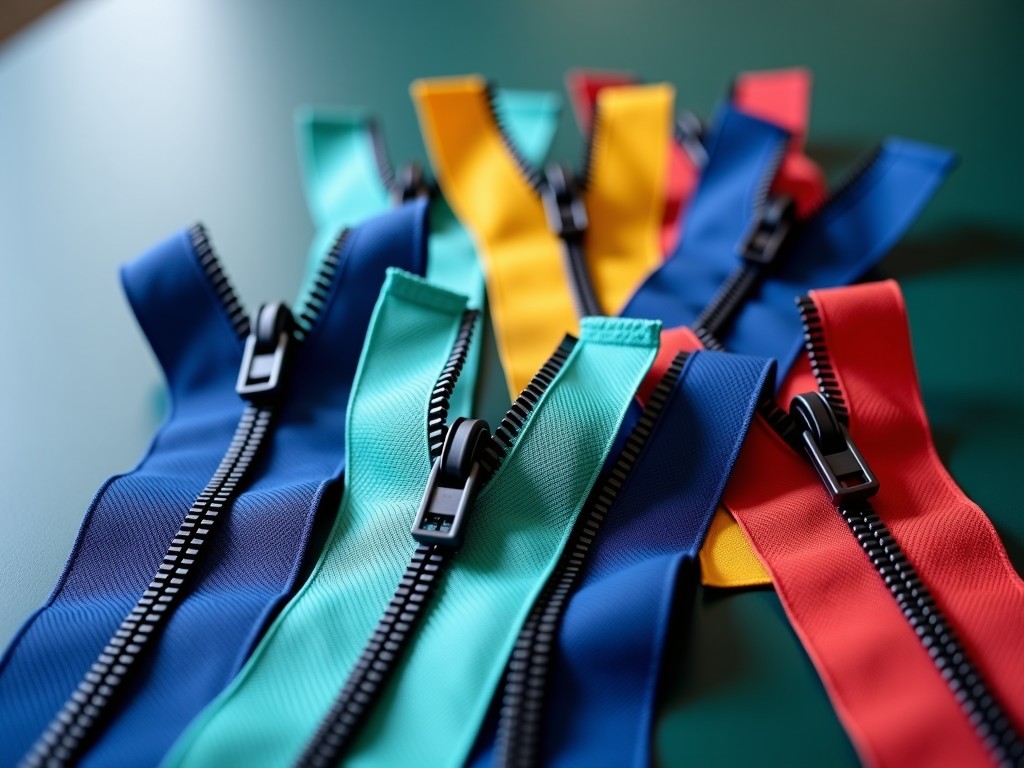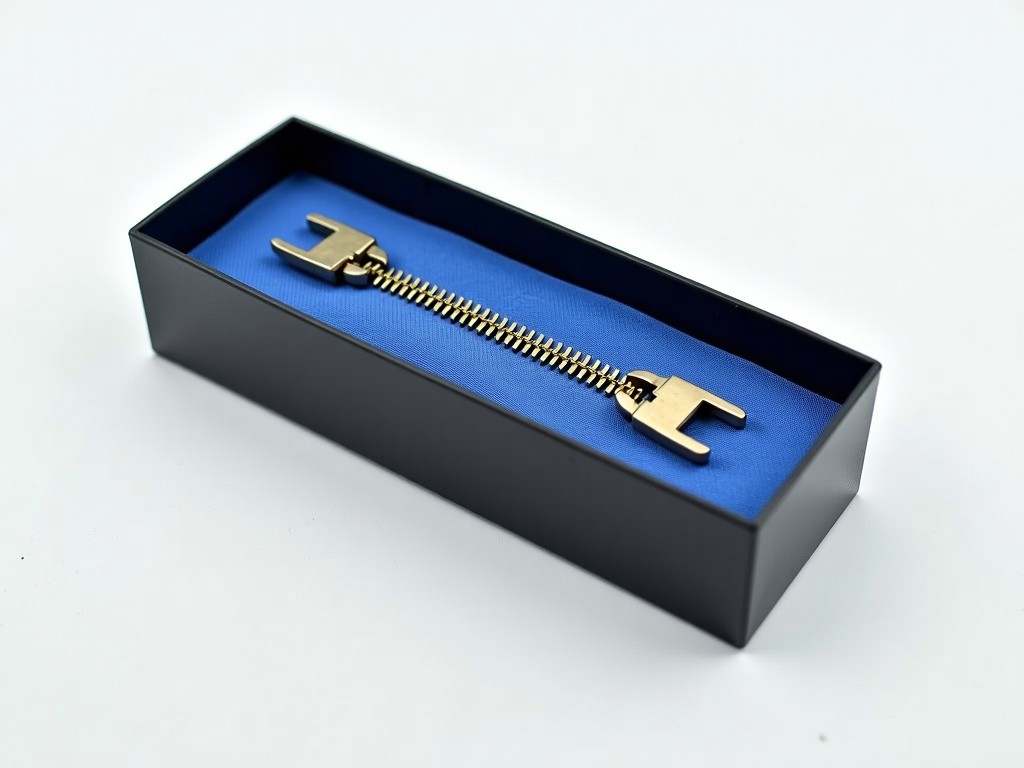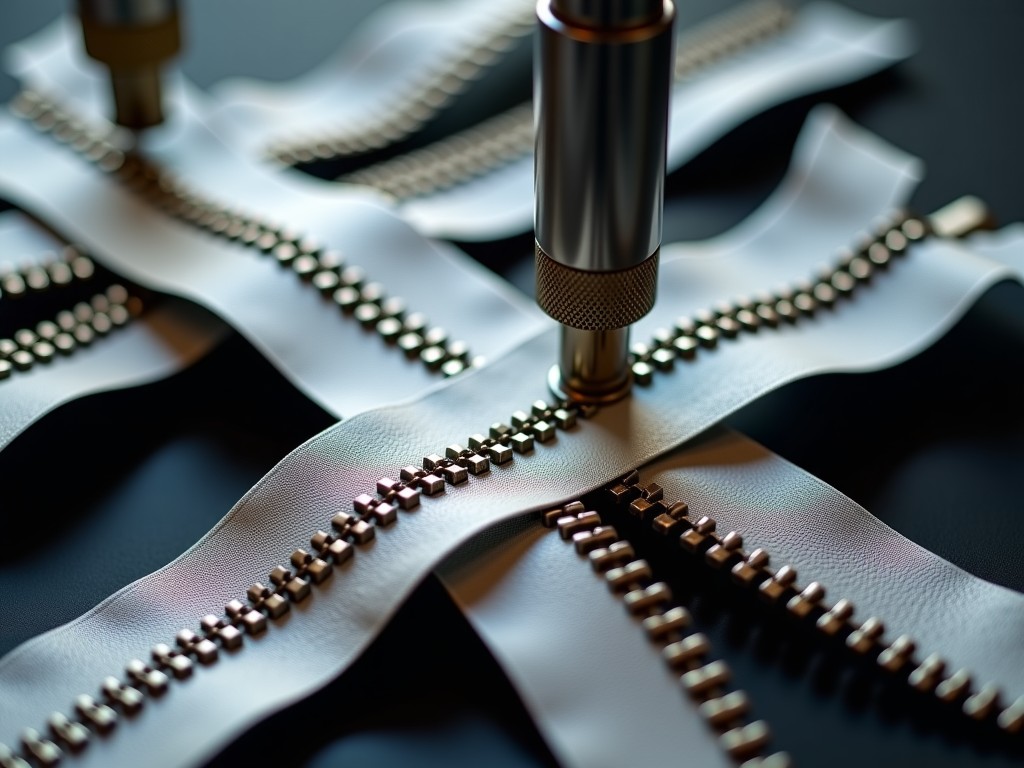
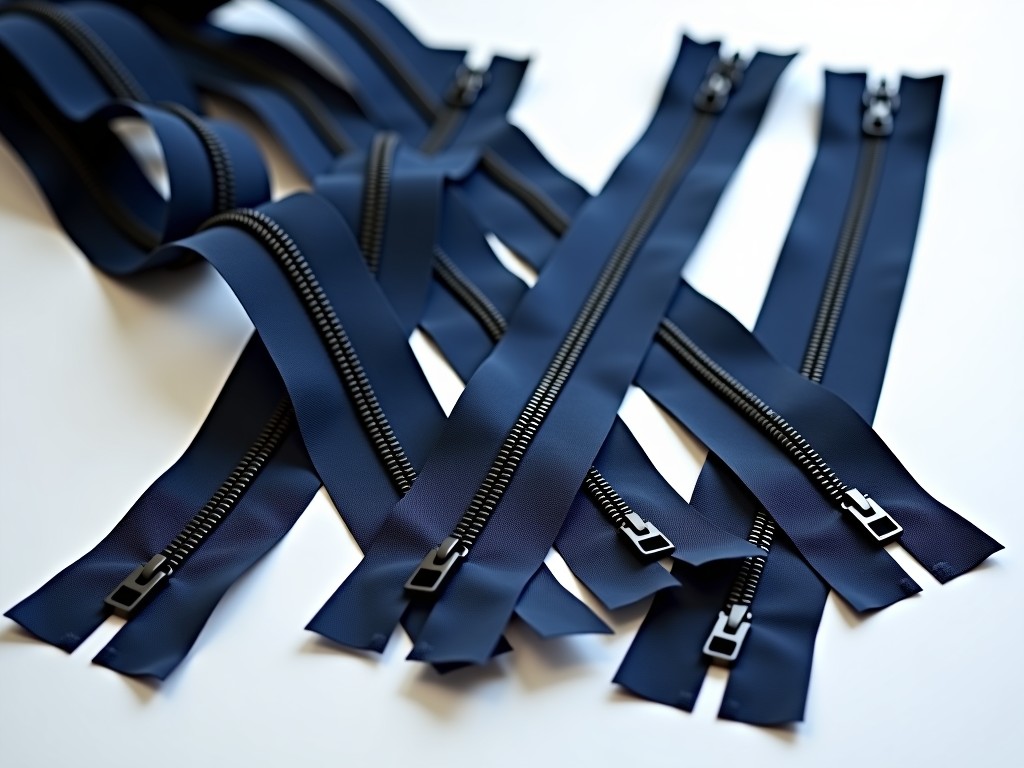
Wholesale Zipper Bottom Stop For Garment And Luggage Bags Supplier
Engineered for high-cycle durability, these bottom stops prevent zipper separation at the terminal end of single- and double-slider configurations. Available in metal, nylon, and injected plastic
Wholesale Zipper Bottom Stop for Garment and Luggage Bags Supplier
Engineered for high-cycle durability, these bottom stops prevent zipper separation at the terminal end of single- and double-slider configurations. Available in metal, nylon, and injected plastic variants with customizable dimensions, plating, and attachment methods to match OEM assembly requirements.
Function and Mechanical Role
A zipper bottom stop acts as the fixed anchor point that prevents the slider from disengaging the chain at the closed end. Unlike top stops which often come in pairs for dual-slider arrangements, the bottom stop is typically a single component — either a clamp-on metal bracket, an injection-molded nylon block, or a ultrasonic-welded plastic profile. Its primary failure mode is deformation under repeated slider impact or corrosion-induced fracture in humid environments.
In luggage applications, the stop must withstand lateral shear forces when the bag is overpacked and the zipper is forced closed. Garment zippers see lower peak loads but higher cycle counts — often exceeding 10,000 open/close cycles over product lifetime. The stop material and attachment method must be selected accordingly.
Material Options and Performance Characteristics
Three material families dominate production. Selection depends on zipper type (coil, Vislon, metal tooth), environmental exposure, and cost targets.
| Material | Typical Zipper Compatibility | Corrosion Resistance | Impact Tolerance | Common Plating / Finish |
|---|---|---|---|---|
| Zinc alloy (Zamak 3/5) | Metal tooth, heavy coil | Moderate (requires plating) | High | Nickel, antique brass, black nickel, gunmetal |
| Brass (C2680/C2600) | Premium metal tooth | Good (self-passivating) | Medium-High | Polished, brushed, PVD coated |
| PA66 / PA6 (nylon 66/6) | Coil, Vislon, plastic molded | Excellent | Medium (glass-filled grades higher) | Natural, black, custom Pantone |
| POM (acetal) | Injection-molded zipper chain | Excellent | High | Natural, colored |
| Stainless steel 304/316 | Marine, military, outdoor | Superior | Very High | Passivated, electropolished |
Glass-filled PA66 (30% GF) increases tensile strength to ~180 MPa and heat deflection temperature to 250°C, suitable for automotive interior zippers. For standard luggage, unfilled PA66 at 80 MPa tensile provides adequate margin at lower cost.
Design Configurations
Bottom stops are not universal. The profile must match the zipper chain cross-section and slider geometry. Common configurations include:
- Clamp-on U-type: Two-prong metal bracket that crimps over the last teeth. Used on metal tooth and heavy coil zippers. Prong depth and width customized per chain size (#3, #5, #8, #10).
- Injection-molded block: Single-piece nylon/POM stop with integrated teeth engagement. Ultrasonically welded or heat-staked to tape. Eliminates separate assembly step.
- Profile-extruded stop: Continuous plastic profile cut to length, used on high-volume Vislon production. Lower piece cost but requires dedicated extrusion tooling.
- Low-profile flat stop: 1.2–1.8 mm thickness for invisible zippers on garments. Stamped from 0.3 mm brass or stainless strip.
- Reinforced luggage stop: Wider base (12–16 mm) with dual anchor points to distribute shear load across both tape edges.
Custom profiles require a minimum 5,000-piece MOQ for new mold investment. Existing standard molds cover YKK #3/#5/#8 coil, Vislon 5VS/8VS/10VS, and common metal tooth sizes. Technical drawings or physical samples reduce development lead time from 21 days to 10 days.
Application Engineering by Segment
Garment zippers prioritize low profile and smooth slider transition. A 0.3 mm brass stop with rounded edges prevents fabric snagging. For waterproof garment zippers (PU-coated tape), the stop must not puncture the coating — nylon injection-molded stops with radiused contact surfaces are specified.
Luggage zippers demand shear resistance. A #10 Vislon chain under 150 N lateral load transfers force directly to the bottom stop. Zinc alloy with 8–12 µm nickel plating passes 96-hour neutral salt spray (ASTM B117) while maintaining clamp integrity. For marine luggage, 316 stainless stops eliminate galvanic corrosion with aluminum slider bodies.
Outdoor gear (tents, backpacks) uses coil zippers with PA66 stops. UV-stabilized grades (0.5% carbon black + HALS) retain 85% tensile after 1,000 hours QUV exposure. Color matching to tape is critical — we maintain a spectrophotometer library of 200+ standard tape colors.
Quality Control and Inspection Standards
Every production lot undergoes dimensional, mechanical, and visual inspection per internal work instructions aligned with ISO 9001:2015. Key checkpoints:
- Dimensional: Critical dimensions (prong width, stop height, tape engagement depth) measured at 10% sampling rate using 0.01 mm resolution calipers. Cpk ≥ 1.33 required.
- Pull-off strength: Minimum 80 N for #5 coil, 150 N for #10 Vislon. Tested on calibrated tensile tester at 50 mm/min crosshead speed.
- Salt spray: 48h standard, 96h for nickel-plated, 240h for stainless. Evaluation per ISO 9227 / ASTM B117 with <5% red rust allowance.
- Cycle durability: 20,000 cycles on reciprocal slider test rig (frequency 30 cycles/min) with zero stop deformation or tape separation.
- Visual: No burrs, flash, plating pits, sink marks, or color mismatch beyond ΔE 1.5 vs. approved master.
Full inspection reports (FAI, PPAP Level 3) available upon request. Statistical process control data retained for 3 years minimum.
Customization Parameters
Beyond material and profile, the following parameters are configurable per order:
- Plating thickness: 3–20 µm nickel, 0.1–0.5 µm gold flash, PVD 0.3–1 µm. Thickness verified by XRF.
- Logo/branding: Laser etching (metal), pad printing (plastic), or molded-in relief (injection tools). Minimum character height 0.8 mm.
- Attachment method: Pre-assembled on chain (cut-to-length), loose for customer assembly, or reel-fed for automated insertion.
- Tape compatibility: Specify tape width (10–35 mm), thickness (0.3–0.8 mm), and coating type (PU, PVC, TPU, none).
- Packaging: Bulk polybag (1,000–5,000 pcs), compartment box (100 pcs), reel (2,000–10,000 pcs), or custom kit with matching top stops.
Packaging and Export Logistics
Standard export packaging uses double-wall corrugated cartons (ECT 48) with anti-static PE liner. Carton dimensions optimized for palletization: 400 × 300 × 250 mm (gross weight 12–18 kg). Pallets are heat-treated (ISPM-15) and stretch-wrapped with edge protectors.
For humidity-sensitive platings, we include silica gel desiccants (2 units per carton) and VCI paper interleaving. Container loading plans provided for FCL shipments — typical 20' GP holds 28 pallets (336 cartons). LCL shipments use reinforced corner boards and strapping.
HS Code: 9607.19 (slide fasteners parts). Country of origin: China. CO, Form E, Form A certificates available.
Frequently Asked Questions
Can dimensions be customized for non-standard zipper chains?
Yes. Provide a technical drawing with critical dimensions (chain width, tooth pitch, tape thickness) or send 50 cm of actual zipper chain. We reverse-engineer the stop profile and quote tooling cost. Lead time for new mold: 18–25 days depending on complexity.
What information is required before quotation?
Zipper type (coil/Vislon/metal), chain size (#3/#5/#8/#10), material preference, plating/finish, annual volume, packaging preference, and target price range. Photos of existing stop (top and side view) accelerate matching.
What materials are available for high-temperature applications?
PA66-GF30 (continuous use to 150°C), PPS (200°C), or stainless steel 316. For automotive engine compartment proximity, we recommend stainless with passivated finish. Provide operating temperature profile for material validation.
How is quality inspected during production?
In-process: First-article inspection, then hourly dimensional checks (5 pcs). Final: 100% visual, 10% dimensional, 1% destructive pull test per lot. AQL 1.0/2.5 (critical/major) per ISO 2859-1. Third-party inspection (SGS, BV, Intertek) welcome at buyer expense.
What packaging methods are available for automated assembly lines?
Reel-fed (continuous tape with stops pre-attached at fixed pitch), vibratory bowl feeder compatible loose parts (oriented), or magazine sticks (50 pcs per stick). Specify feeder bowl geometry for orientation verification.
How are export shipments protected against humidity damage?
VCI (volatile corrosion inhibitor) paper wrap per carton, silica gel desiccants calculated per DIN 55474, moisture-barrier PE liner (100 µm), and container desiccant strips (2 kg per 20' GP). Humidity indicator cards included in each carton.
What is the typical production lead time?
Standard items from stock: 3–5 days. Custom material/finish: 15–20 days. New mold + production: 30–40 days. Blanket orders with scheduled releases reduce per-delivery lead time to 7 days.
How are samples arranged?
Free samples (20–50 pcs) from existing molds. Courier collect (DHL/FedEx/UPS account) or prepaid at $35–50 depending on destination. Custom samples require tooling deposit (30%) refundable at 10,000-piece cumulative order volume.
Request technical datasheet, samples, or volume pricing for your zipper bottom stop requirements.
Submit Inquiry