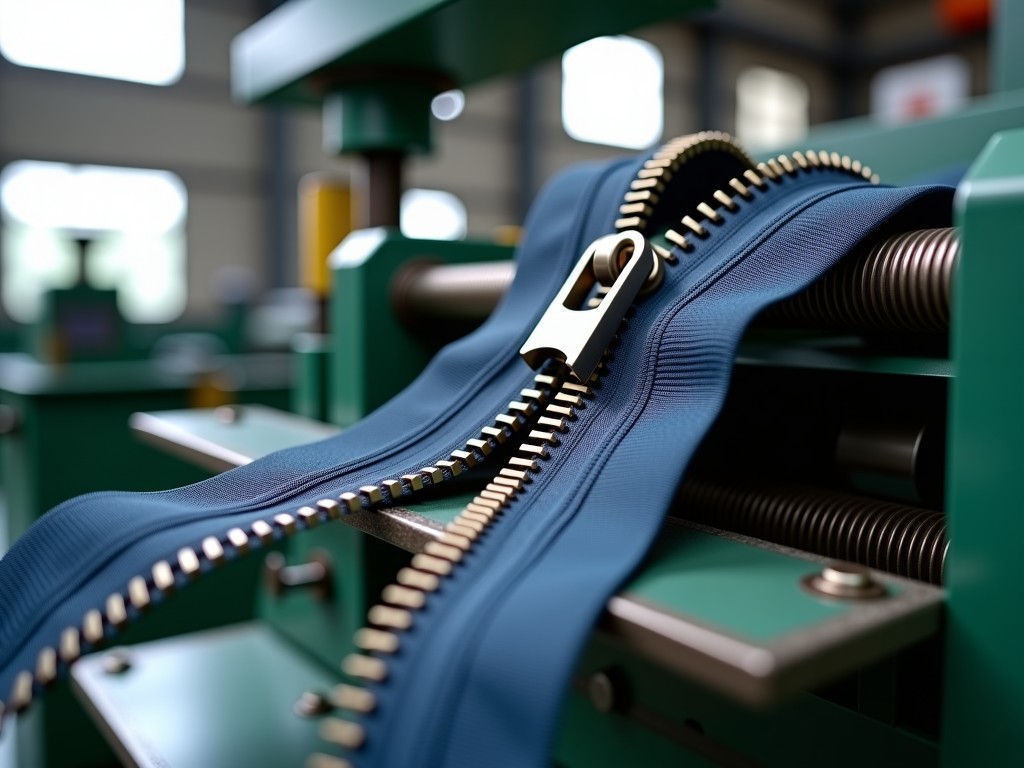
Oem Heavy Duty Metal Zipper Making Machine Company
Industrial zipper production demands equipment that maintains dimensional accuracy across millions of cycles while processing hardened brass, aluminum, or nickel-silver wire. As an OEM heavy duty
OEM Heavy Duty Metal Zipper Making Machine Company
Industrial zipper production demands equipment that maintains dimensional accuracy across millions of cycles while processing hardened brass, aluminum, or nickel-silver wire. As an OEM heavy duty metal zipper making machine company, the focus centers on designing chain-forming systems where tooth profile consistency, tape feeding synchronization, and heat-treatment integration define output quality.
Standard light-duty machines often struggle with the spring-back characteristics of high-tensile alloys used in outdoor gear, military specifications, or heavy luggage. Heavy-duty platforms address this through reinforced cam tracks, servo-driven forming stations, and closed-loop tension control on the tape feed — features that reduce scrap rates during extended production runs.
Core Machine Configurations for Metal Zipper Chains
Metal zipper manufacturing splits into distinct process chains: wire flattening, tooth profiling, tape attachment, and optional post-forming treatments. Each stage offers configuration choices that affect throughput, changeover time, and final chain specifications.
Material Processing Considerations
Wire chemistry directly dictates tooling life and forming parameters. Brass alloys (C26000, C26800) exhibit predictable work hardening but require frequent annealing cycles if tooth height exceeds 4 mm. Aluminum 3003/5052 offers weight savings for outdoor gear yet demands polished die surfaces to prevent galling. Nickel-silver (C75200) resists corrosion in marine environments but accelerates punch wear by 30–40% compared to brass.
Tape substrate selection interacts with the clamping mechanism. Heavy cotton duck (12–16 oz/yd²) requires higher clamp pressure and slower feed acceleration to avoid slippage during tooth insertion. Coated polyester tapes — common in technical apparel — benefit from heated clamp jaws (80–120°C) that momentarily soften the coating for mechanical interlock without adhesive.
- Wire straightness tolerance: ≤0.5 mm/m for consistent tooth pitch
- Surface finish: Ra ≤0.4 µm on forming dies to prevent metal pickup
- Lubrication: Micro-dosing oil mist (0.01–0.03 ml/stroke) reduces die wear without contaminating tape
Customization Logic for OEM Integration
OEM projects rarely align with catalog specifications. Integration depth typically falls into three tiers: mechanical interface matching (mounting pattern, shaft height, drive coupling), control system harmonization (PLC brand, fieldbus protocol, safety circuit architecture), and process recipe management (parameter sets stored per SKU with version control).
A recent integration for a European luggage manufacturer required the zipper machine to accept tape from a slitter-rewinder via a 3-meter accumulator loop, synchronize speed via EtherCAT, and output chain directly into a continuous dyeing line. The solution added a dancer-roll tension controller and a custom HMI screen mirroring the plant SCADA — modifications scoped during a two-day on-site audit.
Customization checklist provided at quotation:
- Available floor footprint and overhead clearance (crane access for die changes)
- Compressed air supply (6–8 bar, dew point ≤+3°C) and electrical spec (380–480V, 50/60Hz)
- Target OEE baseline and mean-time-between-failure (MTBF) expectation
- Spare parts philosophy: consignment stock vs. regional warehouse vs. on-demand machining
Quality Assurance & In-Process Inspection
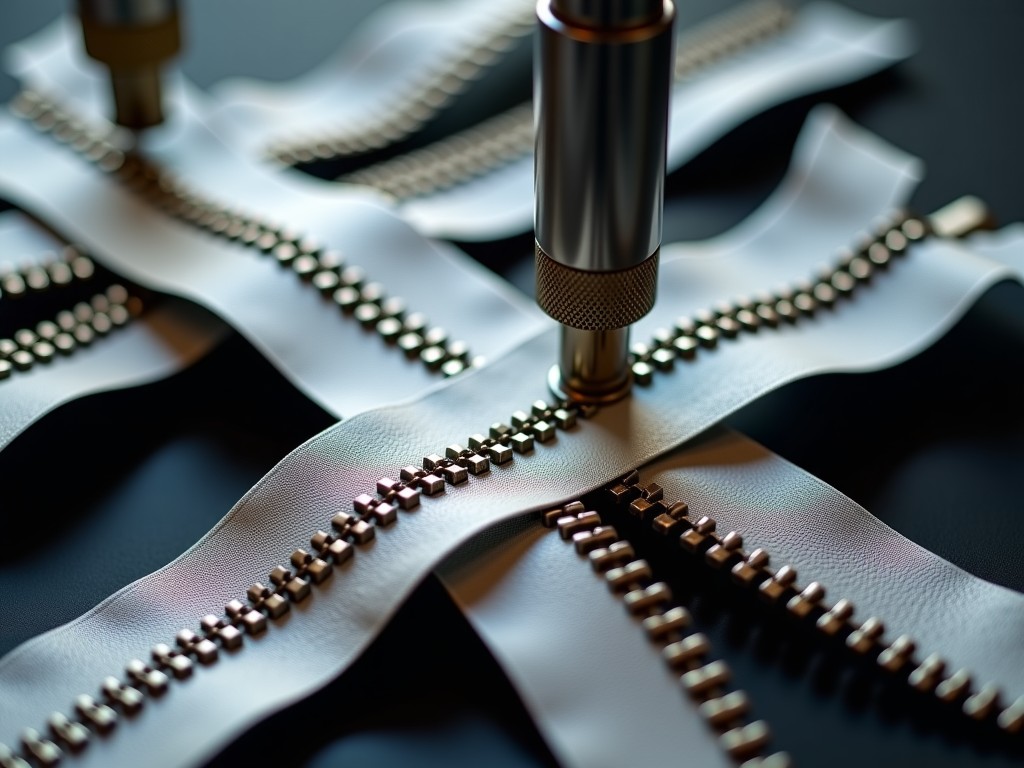
Final inspection of metal zipper chains typically measures tooth height, pitch, tape adhesion strength, and crosswise tensile load. In-process monitoring catches drift earlier. Laser micrometers at the profiling station track tooth thickness every 50th stroke; force transducers on the crimp head log peak pressure per tooth. Data streams to a local historian (InfluxDB or similar) for SPC trending.
Acceptance testing at the factory before shipment follows a structured protocol: 4-hour warm-up run at rated speed, dimensional audit of 500 consecutive teeth, pull-test sampling per ASTM D2061, and thermal cycling of assembled chain (-20°C to +80°C, 10 cycles). Test reports accompany each machine; raw data available in CSV format.
Industry Applications & Fit Rationale
Heavy-duty metal zipper machines serve sectors where failure consequences exceed rework cost. Military and tactical gear requires Berry Amendment compliance — domestic wire sourcing, traceable heat lots, and first-article testing. The machine's force-monitored crimp station provides the documented process control auditors expect.
Outdoor and marine hardware demands corrosion resistance. Nickel-silver chain produced on induction-annealed wire shows 500+ hours salt spray (ASTM B117) without red rust. The annealing zone eliminates residual stress that would otherwise accelerate stress-corrosion cracking at the tooth root.
Industrial filtration and conveyor belting use metal zippers as modular splice elements. Here, tooth profile precision ensures consistent engagement force across 2-meter-wide belts. The quick-change turret allows profile switching between filter-bag zippers and conveyor splices on the same line.
Procurement Timeline & Support Structure
Typical lead time for a configured heavy-duty line: 16–22 weeks from order confirmation to factory acceptance test (FAT). Long-lead items — servo drives, custom punch/die sets, induction power supplies — are ordered upon receipt of deposit. General-arrangement drawings issued at week 2; P&ID and electrical schematics at week 6 for customer review.
Installation supervision includes 5 days on-site: mechanical alignment, servo tuning, recipe development for first three SKUs, and operator training. Remote diagnostics via secured VPN (customer firewall permitting) covers the 12-month warranty. Preventive maintenance kits — wear plates, cam followers, seal kits — ship with the machine; replenishment orders typically fulfilled within 10 business days from regional stock.
Frequently Asked Technical Questions
Can the machine produce both one-way and two-way (double slider) zipper chains?
Yes. The tooth profiling turret accommodates symmetric and asymmetric profiles. Two-way chain requires a secondary indexing step to offset tooth engagement on the return path — handled by a programmable cam switch in the servo controller. Changeover between modes takes approximately 15 minutes with preset recipes.
What information is needed before a firm quotation?
Minimum: target tooth profile drawing (DXF or STEP), wire alloy and diameter range, tape width and material, required output rate (meters/hour), and local utility specs. For OEM integration, additionally provide PLC brand preference, safety category (Cat. 3/PLe typical), and footprint constraints.
How is die life managed for high-volume nickel-silver production?
Carbide-tipped punches with TiAlN coating extend life to 1.5–2 million teeth per edge. The machine includes a die-wear compensation routine: the controller increments punch penetration by 2–3 µm per 100k strokes based on force-trend analysis. Full die cassette swap takes under 20 minutes with the quick-change rail.
Is in-line coating (e.g., PVD, electroplating) integrable?
Post-forming coating requires a separate line due to chemistry and ventilation. However, the machine can output chain onto take-up reels compatible with continuous plating systems — tension-controlled, non-conductive spools with edge guides. Interface specifications for reel dimensions and signal handshake are provided during layout design.
What packaging protects the machine during ocean freight?
Main frame: vacuum-sealed in VCI barrier film with desiccant (per MIL-PRF-131), mounted on steel skids with ISO corner castings. Electrical cabinets: separate crates with shock indicators. Critical alignments (turret-to-anvil, feed rollers) locked with shipping bolts painted red. Packing list includes torque values for re-commissioning.
Ready to define the specification for your metal zipper line?
Share your wire alloy, tooth profile, and throughput targets. A technical proposal with GA drawings and budget estimate follows within 5 business days.
Request Technical Consultation