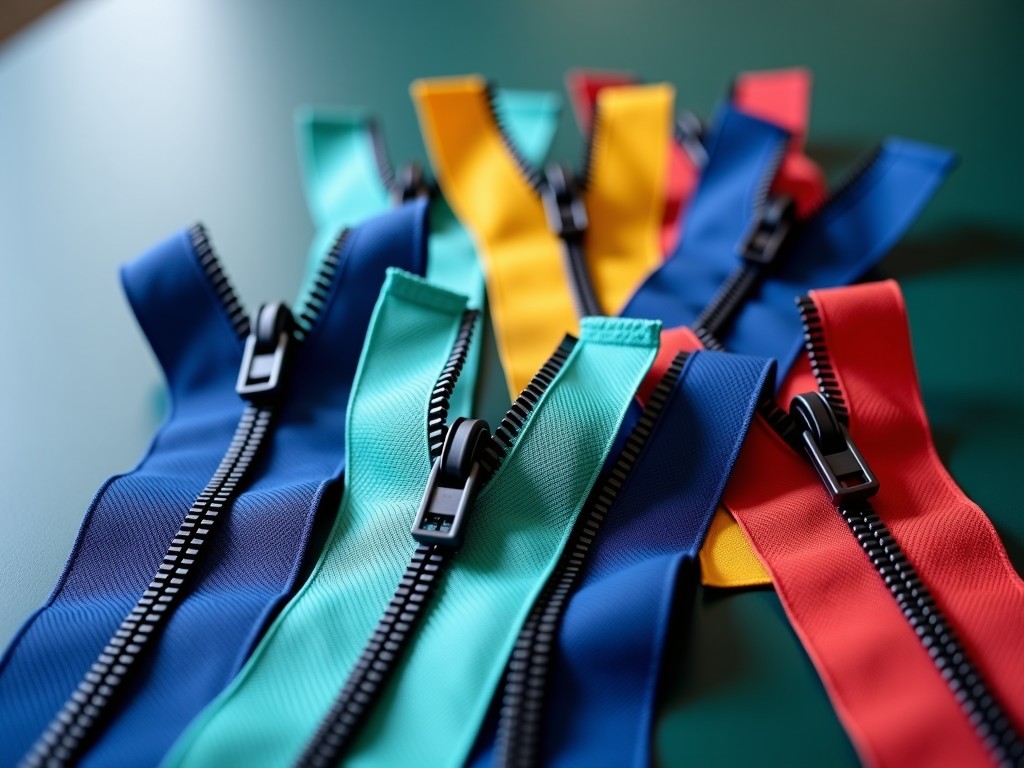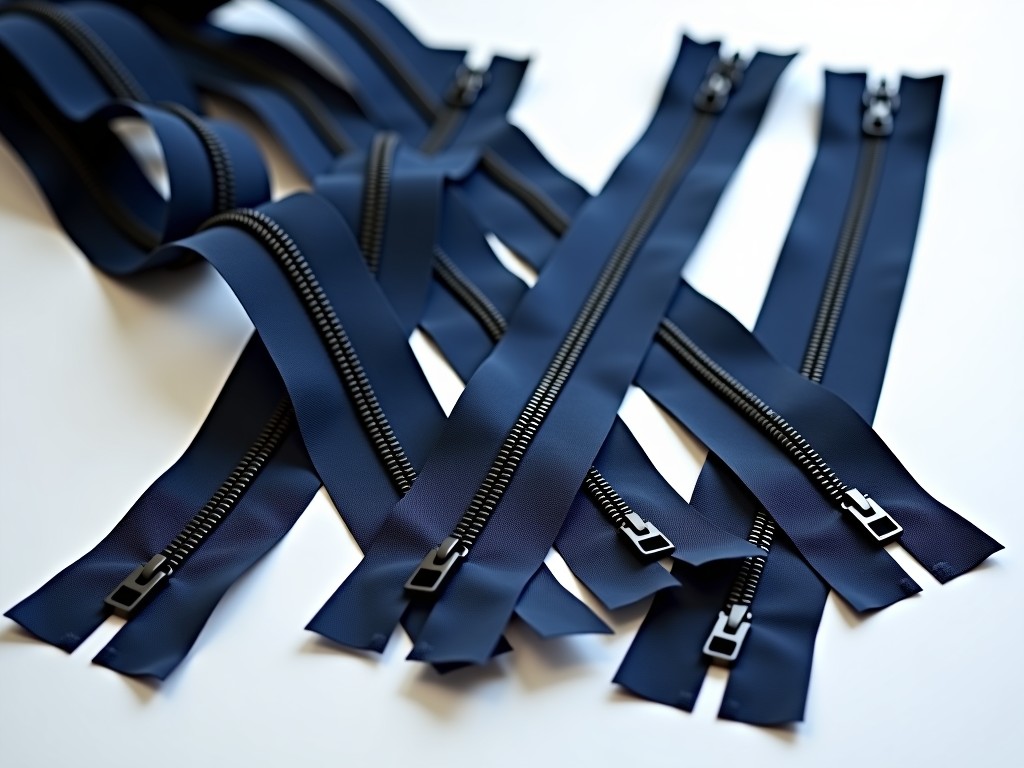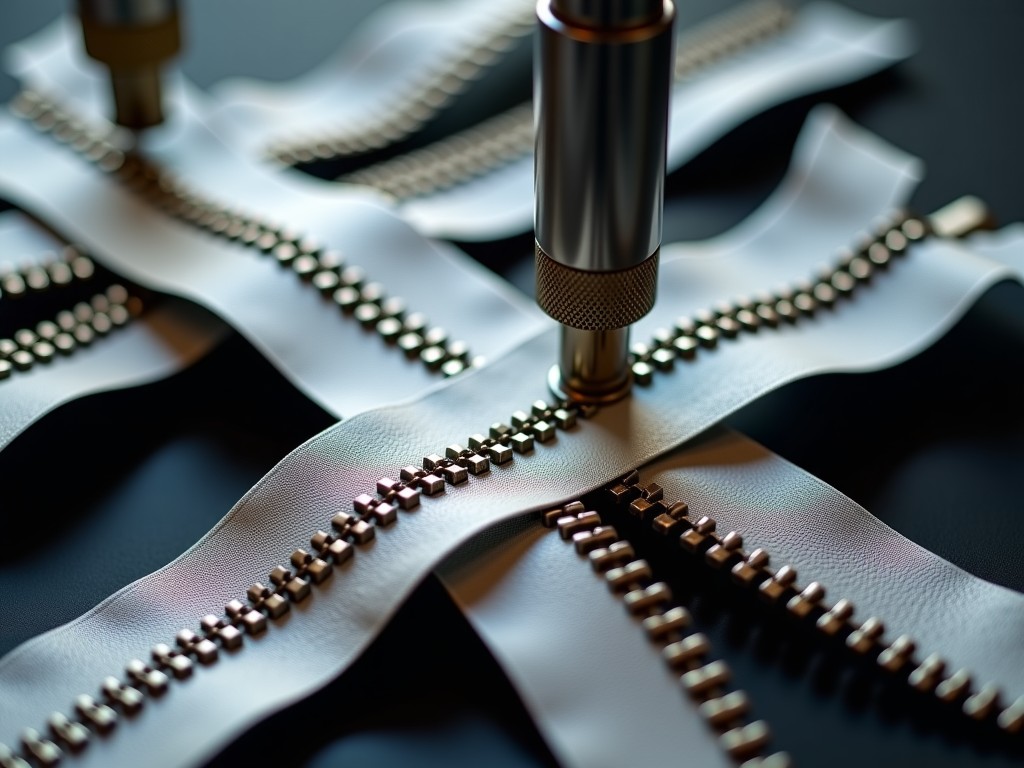
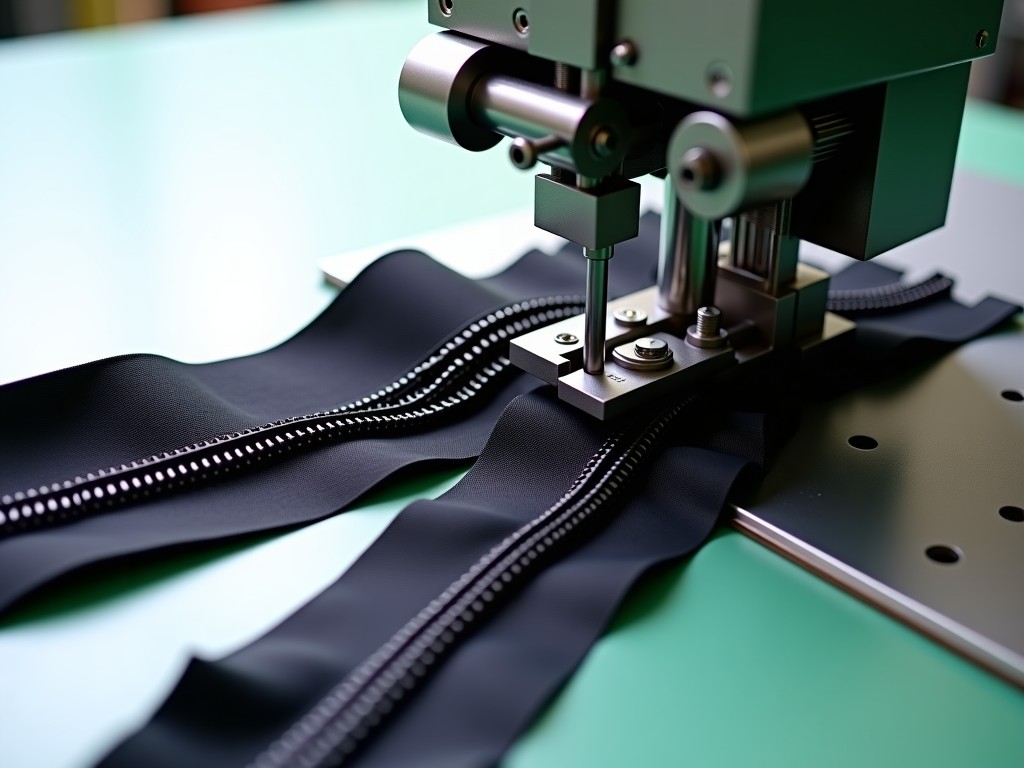
Factory Direct Zipper Making Machine For Luggage Supplier
Luggage manufacturers require zipper chain production that matches specific tape widths, tooth profiles, and pull-force specifications. This machine series produces continuous zipper chain — coil,
Factory Direct Zipper Making Machine for Luggage Supplier
Luggage manufacturers require zipper chain production that matches specific tape widths, tooth profiles, and pull-force specifications. This machine series produces continuous zipper chain — coil, injected-molded tooth, and metal tooth variants — directly from raw wire, tape, and pigment masterbatch, eliminating the intermediate spooling and dyeing steps that add cost and lead time in conventional supply chains.
The platform integrates tape feeding, tooth forming, heat setting, and inline inspection in a single frame. For luggage OEMs, this means the ability to switch between #5 coil for lightweight carry-ons and #10 injected tooth for heavy-duty duffels without changing the base machine — only the forming module and tape guide set. Changeover typically completes in under 45 minutes with preset recipe recall.
Technical Specifications
| Parameter | Typical Range | Notes |
|---|---|---|
| Applicable zipper sizes | #3, #4, #5, #8, #10 | Module swap required per size group |
| Tooth type support | Coil, injected mold, metal | Separate forming heads; quick-release mount |
| Production speed | 80–180 m/min (coil); 60–120 m/min (injected) | Speed limited by tape tension stability |
| Tape width range | 10–38 mm | Adjustable edge guides with digital readout |
| Main drive power | 5.5–11 kW servo | Regenerative braking on deceleration |
| Compressed air | 0.6–0.7 MPa, 120 L/min | For cutter, clamp, and reject ejector |
| Control system | PLC + HMI, Ethernet/IP, OPC UA | Recipe storage ≥200 profiles |
| Footprint (L×W×H) | 3.2×1.4×1.9 m | Excludes material accumulation table |
| Weight | ≈2,800 kg | Cast iron base; vibration <0.15 mm/s RMS |
Forming Module Architecture
Three interchangeable forming heads mount on a precision-machined dovetail slide with pneumatic locking. The coil head uses dual synchronous servo-driven winding cams to maintain constant pitch across the full speed range — critical for luggage zippers where pitch variation exceeds ASTM D2061 tolerance and causes slider jamming. The injected-mold head employs a 12-cavity rotating mold wheel with individual cavity temperature control (±1.5 °C), reducing tooth height deviation to within ±0.03 mm. Metal tooth heads accept pre-plated brass or aluminum wire; the stamping die set is hardened to 58–62 HRC for 2 million cycle life before regrind.
Tape tension is managed by a closed-loop dancer roll with load-cell feedback updating at 1 kHz. This prevents tape stretch during high-speed coil winding, a common cause of post-production chain shrinkage that leads to puckered seams on luggage panels. The system stores tension profiles per tape material — polyester, nylon 6,6, or recycled PET — and recalls them with the zipper recipe.
Inline Quality Assurance
Every meter of chain passes through three inspection stations before winding. A laser micrometer measures tooth height and width at 500 points per second, flagging deviations beyond ±0.02 mm. A vision system with 5 µm/pixel resolution detects missing teeth, tape edge fray, and color inconsistency against a stored master image. A tensile pull tester samples every 500 m, applying 180 N crosswise and 90 N longitudinal force per ISO 13937; failures trigger automatic splice marking for downstream removal.
Data logs export in CSV and MQTT formats for ERP integration. Luggage brands requiring batch traceability can correlate each zipper roll to raw material lot, operator shift, and machine parameters — supporting warranty claims and recall readiness.
Luggage-Specific Application Considerations
Luggage zippers endure cyclic loading, abrasion from conveyor handling, and exposure to humidity extremes. The machine addresses these by offering optional post-forming treatments: a hot-air annealing zone (120–180 °C) relieves residual stress in coil chain, reducing torque retention that causes slider migration; a fluoropolymer spray station applies 2–3 µm dry film lubricant for injected tooth chain, lowering slider friction coefficient from 0.35 to 0.18 without wet chemicals.
For waterproof luggage lines, the machine accommodates TPU-coated tape with a heated pre-feed roller (up to 80 °C) to prevent coating delamination during tooth forming. Metal tooth production includes an optional electrostatic oil mist system that deposits corrosion inhibitor into the interlocking gap — a requirement for marine-grade luggage specifications.
Customization Options
- Forming module selection: single-head or dual-head (simultaneous #5 coil + #8 injected)
- Tape edge treatment: ultrasonic sealing, hot-cut, or folded-edge for reinforcement
- Color dosing: gravimetric masterbatch feeder with ±0.5% accuracy
- Winding: traverse winder for 2 kg spools or accumulator for continuous box feed
- Safety: light curtain, area scanner, or fenced enclosure per CE/UL/GB standards
Packaging and Shipment Protection
Machines ship on fumigated plywood skids with vibration-damping mounts. Critical alignments — forming head centerline, tape path straightness, dancer roll parallelism — are verified at factory and locked with torque-sealed bolts. A 30-minute no-load run video and laser alignment report accompany each unit. For sea freight, VCI film wrapping and desiccant packs (2 kg per cubic meter) prevent corrosion during 45+ day transits. On-site commissioning typically requires 3 days: mechanical leveling, servo tuning, recipe validation, and operator training.
Frequently Asked Questions
Can the machine produce two different zipper sizes simultaneously? The dual-head configuration runs independent forming modules on a shared tape feed and control system. Each head maintains its own speed and tension profile. Output is wound on separate spools.
What information is needed for a quotation? Target zipper sizes and types, daily volume per size, tape material and width, required tooth profile (standard or custom), factory voltage and compressed air capacity, and preferred control system protocol.
How is forming module changeover performed? The operator releases four pneumatic clamps, slides the active module out on linear rails, inserts the next module, and engages clamps. The HMI auto-detects module ID and loads the corresponding recipe. No tooling or parameter re-entry required.
What is the typical production lead time? Standard single-head coil machine: 60–75 days ex-works. Dual-head or metal-tooth configurations: 85–100 days. Expedited builds available for stocked modules — confirm at inquiry.
How are spare parts managed? A recommended 2-year critical spares list (forming cams, mold wheels, cutter blades, servo motors, PLC I/O cards) ships with the machine. Consumables — tape guides, heater cartridges, air filters — are standardized across the product line for single-source procurement.
Is remote diagnostics supported? Yes. The Ethernet/IP gateway allows secure VPN access for firmware updates, parameter review, and real-time oscilloscope traces. On-site PLC programming is not required for routine adjustments.
Next Steps
Share your zipper specification sheet and target daily output. We will return a layout drawing, utility requirements, and a cycle-time simulation for your product mix within two business days.
Request Technical Proposal