Factory Direct Metal Zipper Polishing Plating Waxing Machine Exporter
Continuous surface finishing lines for metal zipper components integrate three distinct process zones — mechanical polishing, electroplating deposition, and protective waxing — into a single
Factory Direct Metal Zipper Polishing, Plating & Waxing Machine
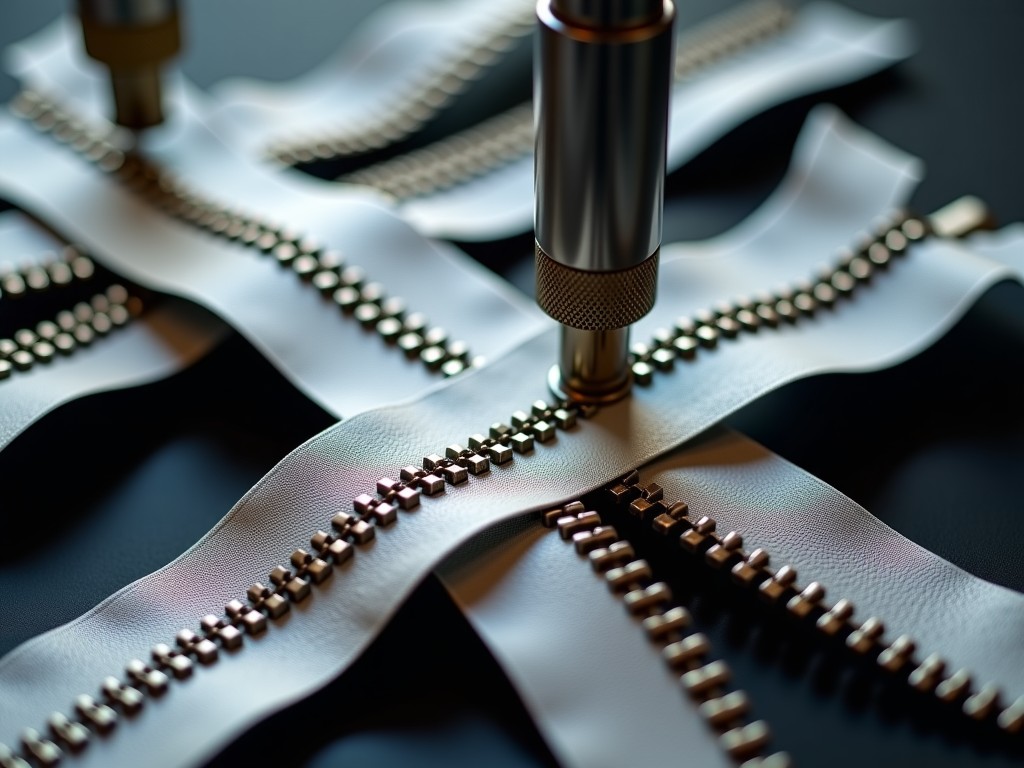
Continuous surface finishing lines for metal zipper components integrate three distinct process zones — mechanical polishing, electroplating deposition, and protective waxing — into a single automated flow. Eliminating inter-stage handling reduces surface oxidation risk and ensures coating adhesion consistency across high-volume batches.
The system accommodates ferrous and non-ferrous zipper chains, sliders, and stops. Process parameters for each zone are stored in recipe-based PLC programs, allowing rapid changeover between nickel, brass, antique brass, or black nickel finishes without manual recalibration.
Factory-direct supply means the equipment ships with pre-validated process windows for standard zipper profiles. Custom tank geometries, barrel diameters, and automation levels are engineered per project specification rather than selected from a fixed catalog.
Technical Specifications
| Parameter | Typical Range / Configuration |
|---|---|
| Polishing Station Type | Vibratory bowl / Centrifugal disc / Drag finisher (selectable) |
| Plating Tank Capacity | 200–2,000 L per tank; PP or PVC lined, heated/cooled jackets |
| Rectifier Output | 500–6,000 A, 0–12 V DC, pulse / periodic reverse capable |
| Waxing Tank Control | ±1 °C PID control; immersion time 5–60 s programmable |
| Throughput Capacity | 500–5,000 kg / 8 hr shift depending on profile & spec |
| Control System | Siemens / Mitsubishi PLC + HMI; recipe storage ≥ 50 programs |
| Rinse Stages | Counter-flow cascade; DI water final rinse option |
| Frame Construction | SS304 structural frame; chemical-resistant coating on carbon steel bases |
| Compliance Standards | CE, ISO 9001 manufacturing; plating tanks per IPC-4552 / ASTM B488 reference |
Process Flow & Engineering Logic
Zipper components enter the line via a stepped vibratory feeder that meters parts into the polishing zone. Media selection — ceramic, plastic, or stainless steel pins — is matched to the base metal hardness and target Ra value. Typical polish cycles achieve Ra 0.1–0.3 µm on brass chain, preparing a uniform nucleation surface for plating.
Post-polish, parts travel through a multi-stage counter-flow rinse cascade. Conductivity monitoring on the final rinse tank triggers automatic dump-and-refill when thresholds exceed 15 µS/cm, preventing contaminant carry-over into the plating bath. This detail alone reduces bath maintenance frequency by an estimated 30 % compared to manual rinse tanks.
The electroplating zone uses barrel or rack carriers driven by a variable-speed overhead gantry. Current density is distributed via auxiliary anodes positioned for zipper chain geometry, minimizing high-current burning on edges and low-current zones in interlocking teeth. Pulse-reverse waveforms are standard for nickel and alloy deposits to refine grain structure and improve ductility.
Critical Component Design
Polishing barrels feature replaceable polyurethane liners with 85 Shore A hardness, balancing media retention and impact energy transfer. Liner life typically exceeds 2,000 hours on brass zipper chain; wear indicators molded into the liner wall allow visual inspection without disassembly.
Plating tanks are fabricated from 15 mm polypropylene sheet, extrusion-welded and spark-tested at 20 kV. Bus bars are copper with tin plating, sized for 3 A/mm² current density to minimize voltage drop. Anode bags — 10 µm polyester — are mounted on quick-release frames for 5-minute changeouts during production.
The waxing module uses a jacketed stainless steel vessel with a submerged circulation heater. A nitrogen blanket option prevents wax oxidation during idle periods, extending bath life from weeks to months. Parts exit through a chilled-air knife that solidifies the wax film uniformly, eliminating drips that cause assembly-line jams downstream.
Material Compatibility & Application Suitability
Brass and zinc-alloy zipper chains constitute the majority of throughput. The line handles both because the polishing media recipe and plating chemistry are decoupled — only the process recipe changes, not the hardware. Stainless steel zipper components (marine grade) require a dedicated pickle/activation station inserted before plating; this module is available as an add-on.
Slider bodies, often die-cast zinc, benefit from the line's precise temperature control in the acid copper strike tank. Uniform strike thickness prevents blistering during subsequent bright nickel / chromium layers — a common failure mode when strike temperature drifts above 28 °C.
For antique finishes, the line integrates a controlled oxidation station between plating and waxing. Chemical blackening or sulfide treatment dwell time is managed to ±2 seconds via the gantry timer, ensuring batch-to-batch color consistency that manual dip tanks cannot achieve.
Customization Dimensions
- Station count: 8–24 process positions; additional rinse or dry-off stations insertable.
- Carrier style: Perforated barrels (chain), titanium racks (sliders), or hybrid carousel.
- Automation level: Semi-auto (operator load/unload) to fully robotic with vision-based part detection.
- Effluent integration: In-line pH adjustment, cyanide destruction, or zero-liquid-discharge loop sized to local regulations.
- Data acquisition: OPC-UA / MQTT streaming of rectifier waveforms, tank temps, rinse conductivity to MES.
Quality Verification Protocol
Each machine undergoes a 72-hour wet run at the factory using the buyer's actual zipper components or representative samples. Acceptance criteria include coating thickness uniformity (Cpk ≥ 1.33 across 50 parts), salt spray resistance per ASTM B117 (neutral, 96 hr minimum for standard nickel), and cross-hatch adhesion (ISO 2409, rating 0 or 1).
A digital quality dossier ships with the equipment: rectifier calibration certificates, tank weld inspection reports, PLC logic backup, and a first-article inspection report signed by the process engineer. This documentation accelerates the buyer's IQ/OQ/PQ qualification timeline.
Packaging, Shipping & Installation Support
Main frames are bolted to treated timber skids with vibration-damping mounts. Tanks are drained, purged with dry nitrogen, and sealed with desiccant breathers. Control cabinets receive conformal coating on PCBs and are shipped in climate-controlled crates (15–25 °C, <60 % RH).
On-site commissioning typically requires 5–10 working days: mechanical leveling, utility hook-up, bath makeup, recipe loading, and statistical process capability study. Remote PLC access via encrypted VPN is standard for the first 12 months, enabling real-time parameter tuning without travel delays.
Frequently Asked Technical Questions
Can the line process both chain and sliders simultaneously?
Yes, using a dual-carrier gantry. Chain runs in barrels on the lower track; sliders run on racks above. The PLC interleaves cycles so both streams share plating tanks without cross-contamination.
What utility connections are required at the installation site?
Three-phase power (380–480 V, 50/60 Hz) sized to rectifier kVA; compressed air 0.6 MPa clean/dry; process water <5 µS/cm for final rinse; drainage for acid/alkaline waste streams; ventilation hood extraction ≥ 0.5 m/s face velocity over open tanks.
How is bath chemistry controlled without an on-site chemist?
The HMI includes a dosing calculator: operator inputs tank volume and target concentration; the system outputs exact additive volumes. Optional inline hull-cell or XRF integration provides closed-loop replenishment for high-mix lines.
What is the typical lead time from order to shipment?
12–18 weeks for standard configurations; 20–28 weeks for heavily customized lines (zero-liquid-discharge, robotic load/unload). A detailed project schedule with milestone gates is issued at order confirmation.
Are spare parts and consumables available long-term?
All mechanical components (liners, anode bags, heater elements, pump seals) are standard industrial parts or manufactured to drawing. A recommended 2-year critical spares list is provided at FAT. Rectifier thyristor modules and PLC I/O cards are stocked for 10+ years.
Request a Technical Proposal
Submit your annual volume, zipper profile drawings, target finish specifications, and local environmental constraints. A process engineer will return a preliminary layout, utility summary, and budgetary quotation within 3 business days.
Start Technical Discussion