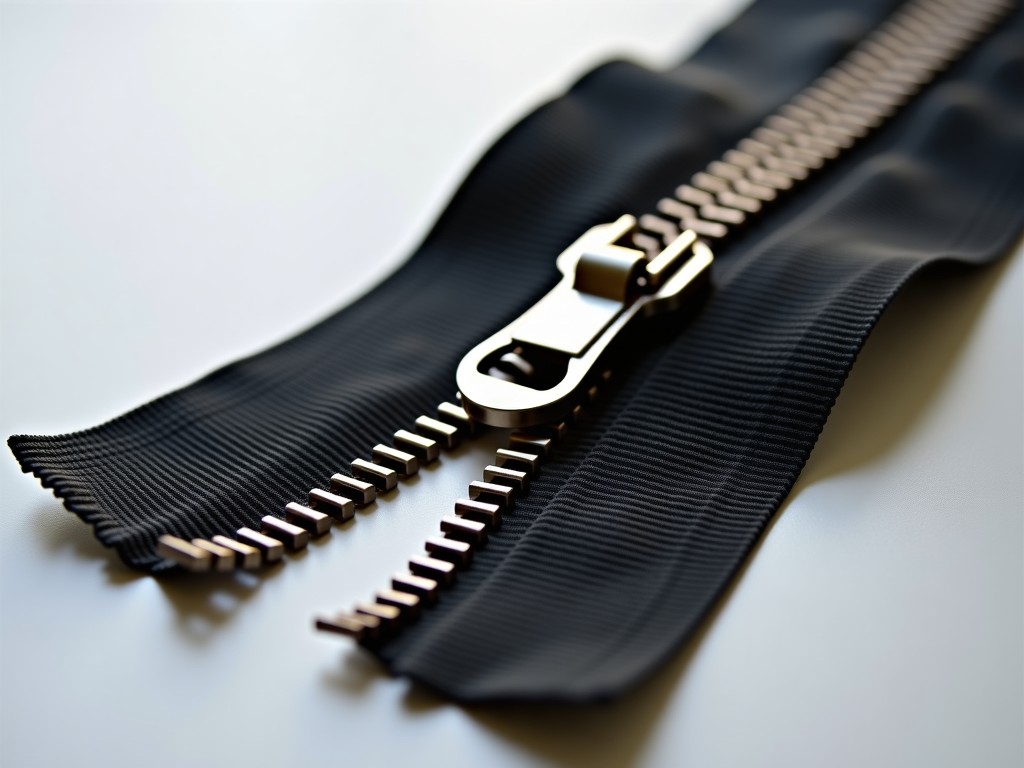
Factory Direct Custom Metal Zipper Manufacturing Equipment For Sale
This equipment line is engineered for continuous production of metal zipper chains with tooth pitches ranging from 0.8 mm to 2.5 mm. The modular frame allows integration into existing assembly cells
Factory Direct Custom Metal Zipper Manufacturing Equipment for Sale
This equipment line is engineered for continuous production of metal zipper chains with tooth pitches ranging from 0.8 mm to 2.5 mm. The modular frame allows integration into existing assembly cells or stand‑alone operation, and the control architecture supports rapid recipe changeover for multi‑product runs.
Product Overview
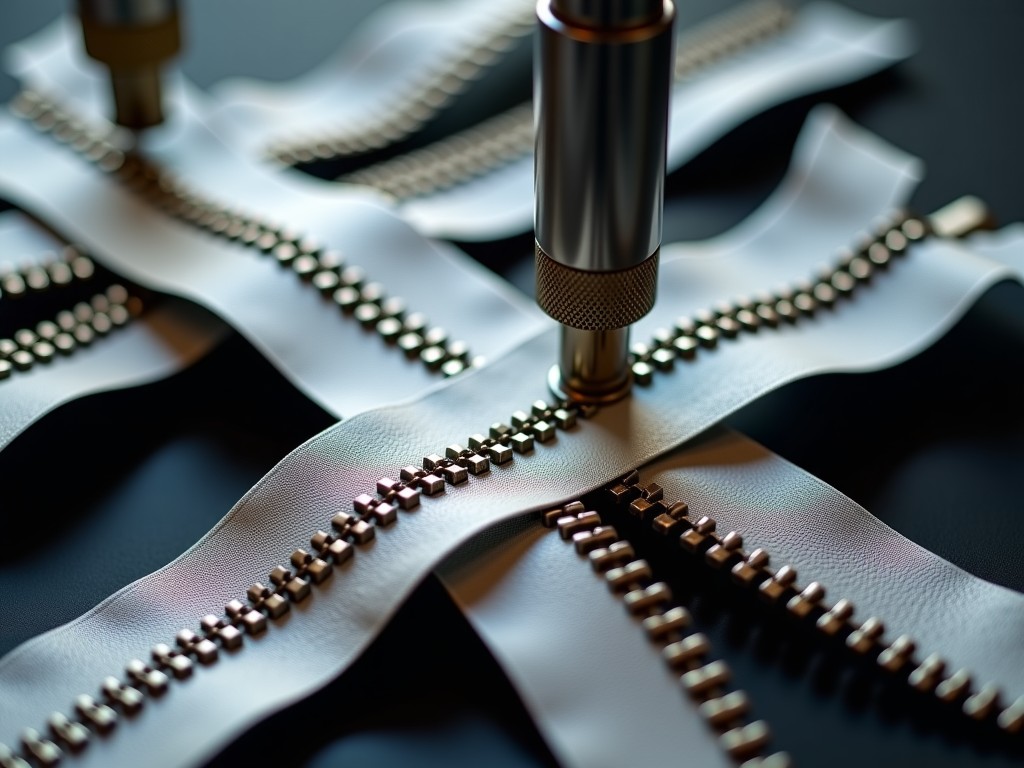
The machine combines a high‑precision forming head, a servo‑driven feed system, and an inline optical inspection module. All motion axes are synchronized through a PLC‑based motion controller, delivering repeatable tooth geometry within ±0.02 mm. The design emphasizes accessibility for tooling changes, reducing downtime during alloy or profile switches.
Key Technical Specifications
| Parameter | Typical Value / Range |
|---|---|
| Zipper tooth pitch | 0.8 mm – 2.5 mm (customizable) |
| Maximum production speed | Up to 120 m/min, dependent on material |
| Supported metal alloys | Brass, nickel‑silver, stainless steel, aluminum |
| Power supply | 3‑phase 380 V ± 10 %, 50/60 Hz |
| Control system | PLC with HMI, optional IoT gateway |
| Footprint (L×W×H) | ≈ 3.2 m × 1.5 m × 2.0 m (configurable) |
Customization Capabilities
Because zipper designs vary across apparel, automotive, and industrial sectors, the platform offers a range of configurable modules. Each option is defined by measurable parameters rather than marketing descriptors.
- Tooth profile geometry – standard, reverse, or proprietary shapes defined by CAD data
- Surface finish – polished, anodized, or coated per specification (e.g., Ni‑P, TiN)
- Integration modules – automatic feeder, inline vision inspection, data logging to MES
- Control logic – recipe‑based changeover, remote recipe upload via secure VPN
Industry Applications & Fit
The equipment suits high‑volume zipper producers supplying garment OEMs, where consistent tooth height and pitch directly affect slider engagement force. In automotive trim, the same line can produce corrosion‑resistant stainless‑steel chains that meet salt‑spray requirements. For technical textiles, the ability to run aluminum alloy at reduced tension prevents wire deformation, preserving conductivity in smart‑fabric zippers.
Quality Assurance & Testing
Every unit undergoes a three‑stage verification before shipment. First, a dimensional audit uses calibrated laser micrometers to confirm tooth pitch, height, and flank angle across a 10 m sample. Second, a fatigue test runs the chain through 10⁶ cycles at rated speed while monitoring slider pull force. Third, an SPC report is generated, documenting Cp/Cpk values for critical dimensions; the report accompanies the machine documentation package.
Packaging, Shipping & Export Protection
Machines are bolted to fumigated wooden pallets, wrapped in VCI corrosion‑inhibiting film, and encased in reinforced plywood crates with high‑density foam inserts at all contact points. For sea freight, desiccant packs and humidity indicators are added. Custom crating dimensions are calculated from the final machine footprint to minimize container waste and ensure compliance with ISPM‑15.
Frequently Asked Questions
Can the machine dimensions be tailored to an existing line?
Yes. The frame is modular; length, width, and height can be adjusted within the ranges shown in the specifications table. Provide your line layout for a detailed proposal.
What information is required before a quotation?
Typical data includes desired tooth pitch, alloy type, target output (m/min), available floor space, and any special surface‑finish or integration requirements.
Which metal alloys are available?
Brass, nickel‑silver, stainless steel, and aluminum are standard. Other alloys can be evaluated on a project basis.
How is quality inspected during production?
In‑line optical sensors measure tooth height, pitch, and surface defects at full speed. A final statistical process control (SPC) report is supplied with each batch.
What packaging methods protect the equipment for export?
Machines are secured on fumigated wooden pallets, wrapped in VCI film, and placed in reinforced plywood crates with shock‑absorbing foam. Custom crating is available for oversized configurations.
What is the typical production lead time?
Standard configurations ship in 8‑10 weeks after order confirmation. Customized builds add 2‑4 weeks depending on complexity.
How are samples arranged?
Sample zipper runs can be produced on a pilot machine at our facility. Shipping of sample coils is arranged on a cost‑share basis.
Request a Quote
To discuss your specific requirements, please contact our engineering team. A detailed questionnaire will be provided to capture all technical parameters before a formal proposal is issued.