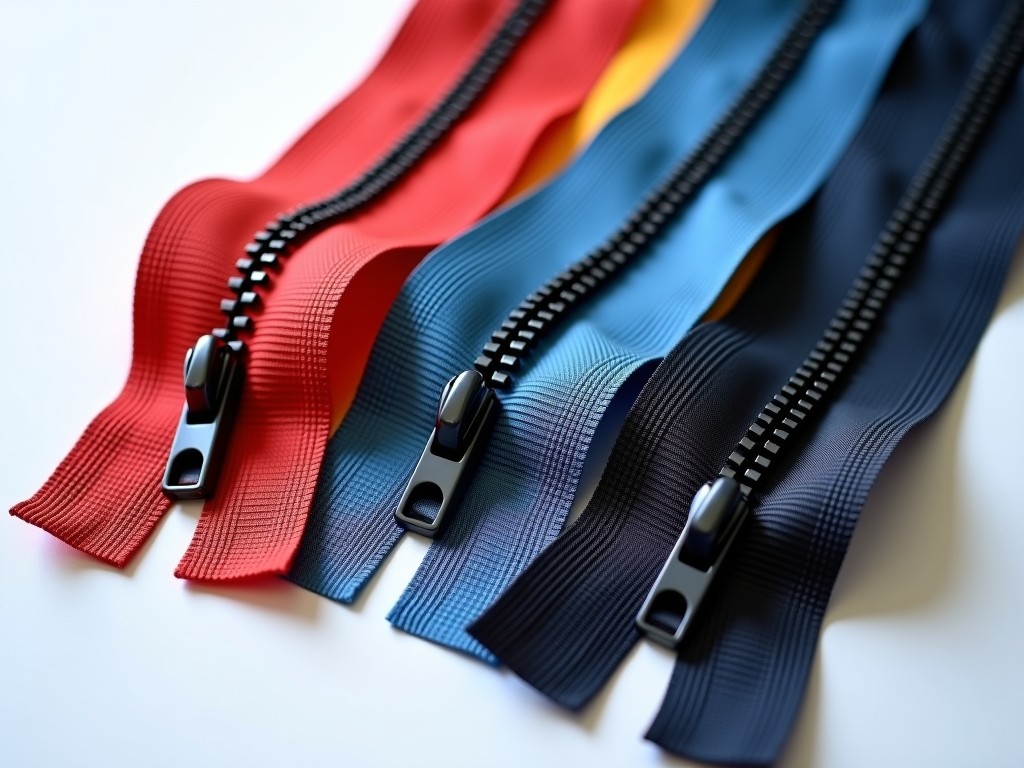
Custom Zipper Machinery For Textile Industry Suppliers
Engineered for high‑volume textile converters, the machinery line covers the complete zipper manufacturing chain — from tape feeding and tooth forming to slider insertion and final inspection. Each
Custom Zipper Machinery for Textile Industry Suppliers
Product Overview
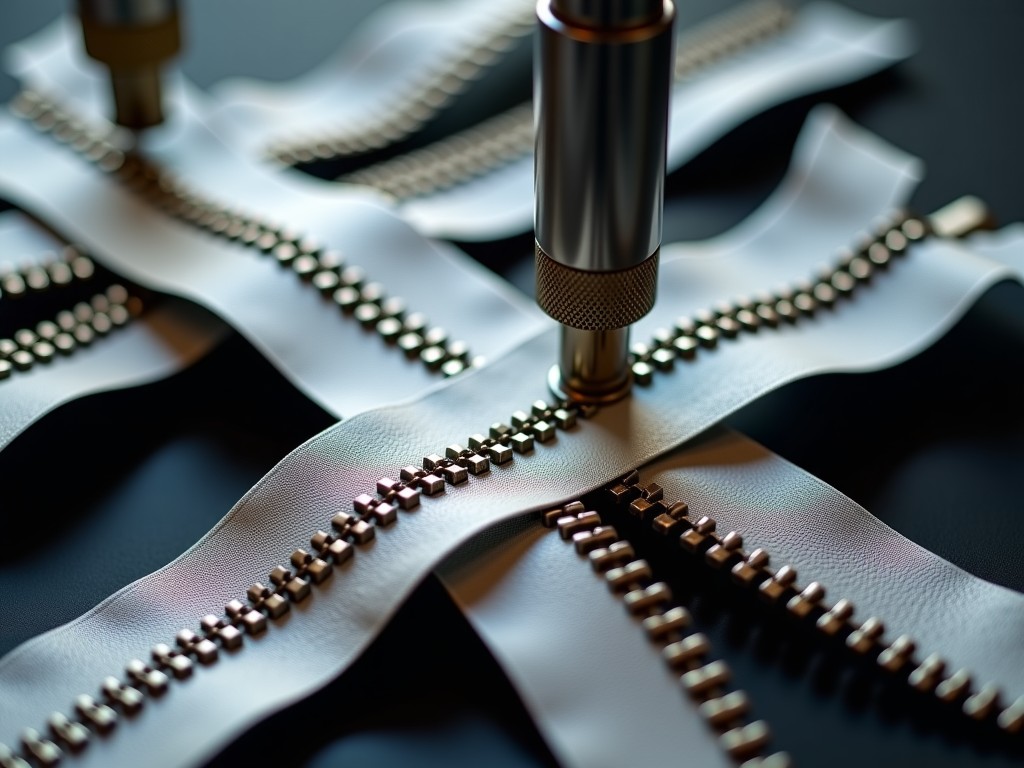
Engineered for high‑volume textile converters, the machinery line covers the complete zipper manufacturing chain — from tape feeding and tooth forming to slider insertion and final inspection. Each module is built on a modular frame that can be reconfigured without major structural changes, allowing suppliers to adapt to new zipper profiles or material blends within a single shift.
The control platform uses an open‑architecture PLC with Ethernet/IP connectivity, enabling integration into existing MES/ERP environments. Real‑time torque monitoring on the forming rollers reduces tooth‑profile deviation to within ±0.02 mm, a tolerance that directly translates into lower reject rates during downstream garment assembly.
Technical Specifications
| Parameter | Typical Value / Range | Customization Scope |
|---|---|---|
| Maximum tape width | 30 mm – 120 mm | Adjustable via interchangeable guide rails |
| Tooth pitch options | 3 mm, 4 mm, 5 mm, 6 mm (standard) | Custom pitches down to 2 mm on request |
| Forming speed | Up to 250 m/min (continuous) | Speed reducer kits for delicate yarns |
| Slider insertion force | 0.8 kN – 2.5 kN (servo‑controlled) | Force profile programmable per zipper type |
| Power supply | 380 V / 3 ph / 50 Hz (CE compliant) | 480 V / 60 Hz version available |
| Control interface | 15‑inch HMI, OPC UA server | Remote diagnostics via VPN tunnel |
Values shown represent the most common configuration; each line item can be tuned to match specific yarn denier, coating chemistry, or regulatory requirements.
Customization Capabilities
Suppliers often need to switch between metal, coil, and molded‑plastic zipper families. The platform accommodates this through three interchangeable tooling cartridges:
- Metal‑tooth cartridge – hardened tool steel, CNC‑ground to ±0.01 mm profile tolerance.
- Coil‑forming cartridge – servo‑driven mandrel with programmable helix angle.
- Molded‑plastic cartridge – heated cavity with precise temperature profiling (±1 °C).
Beyond tooling, the following parameters are configurable per project:
- Tape tension control algorithm (PID gains stored per recipe).
- Lubrication system – choice of dry‑film, oil‑mist, or water‑based agents.
- Inline vision inspection – selectable camera resolution (5 MP to 20 MP) and defect library.
- Data logging format – CSV, SQL push, or MQTT topic for Industry 4.0 integration.
Typical Applications & Why They Fit
Apparel manufacturers producing high‑frequency seasonal collections benefit from the rapid changeover (< 15 min) between zipper styles, reducing downtime between runs. Automotive interior suppliers value the closed‑loop force control on slider insertion, which guarantees consistent pull‑force specifications required by OEM durability tests. Technical textile converters working with coated or laminated tapes rely on the adjustable tension algorithm to prevent web wrinkling at line speeds above 200 m/min.
In each case the machinery’s modularity translates directly into lower cost per thousand zippers, because the same capital asset serves multiple product families without dedicated lines.
Quality Assurance & Inspection
Every machine undergoes a factory acceptance test (FAT) that includes:
- Dimensional verification of tooth profile using calibrated optical comparators.
- Dynamic run‑out measurement on forming rollers at rated speed.
- Slider insertion force curve capture across the full force range.
- Communication handshake test with customer‑specified MES endpoint.
Statistical process control (SPC) charts are generated for the first 10,000 m of production; control limits are set at ±3σ based on the FAT baseline. Ongoing calibration services are offered on a quarterly or semi‑annual basis, depending on utilization intensity.
Packaging & Export Logistics
Machines are shipped in custom‑built wooden crates compliant with ISPM‑15. Inside, each module is secured on vibration‑damping foam blocks and wrapped in VCI (volatile corrosion inhibitor) film. Standard packaging includes:
- Main frame crate (≈2.3 m × 1.1 m × 1.8 m, 1,200 kg).
- Tooling cartridge crate (≈1.0 m × 0.6 m × 0.5 m, 180 kg).
- Control cabinet crate (≈0.9 m × 0.6 m × 1.2 m, 250 kg).
For sea freight, containers are loaded with a 30 % free‑space allowance to accommodate optional on‑site assembly fixtures. Documentation package (bill of lading, commercial invoice, certificate of origin, CE declaration) is prepared in English, French, and Spanish by default; additional languages are available on request.
Frequently Asked Questions
Can the machine dimensions be customized to fit an existing floor layout? Yes — frame length and height can be altered in 100 mm increments; a site survey is recommended before finalizing the layout.
What information is required before a quotation can be issued? Typical data includes target zipper type(s), tape material and width, desired output (m/min), preferred control protocol, and any local regulatory standards.
Which tape materials are compatible? Polyester, nylon, cotton, aramid, and blended coated tapes up to 0.8 mm thickness have been validated; other substrates can be evaluated during a trial run.
How is quality inspected during production? Inline vision system checks tooth geometry, slider alignment, and tape edge integrity; data is logged per meter and can trigger automatic reject diversion.
What packaging options exist for air freight? Light‑weight aluminum frame crates with shock‑absorbing corners are offered; total weight reduction of ~15 % versus standard wooden crates.
What is the typical production lead time? 12–16 weeks from order confirmation for a standard configuration; custom tooling adds 3–4 weeks.
How are samples arranged? A pilot run of 500 m can be scheduled at the factory; sample shipment is arranged via express courier with full test report.
Request a Quote
Provide your project specifications and a technical specialist will prepare a detailed proposal, including layout drawings, cycle‑time simulation, and total cost of ownership estimate.
Submit Inquiry