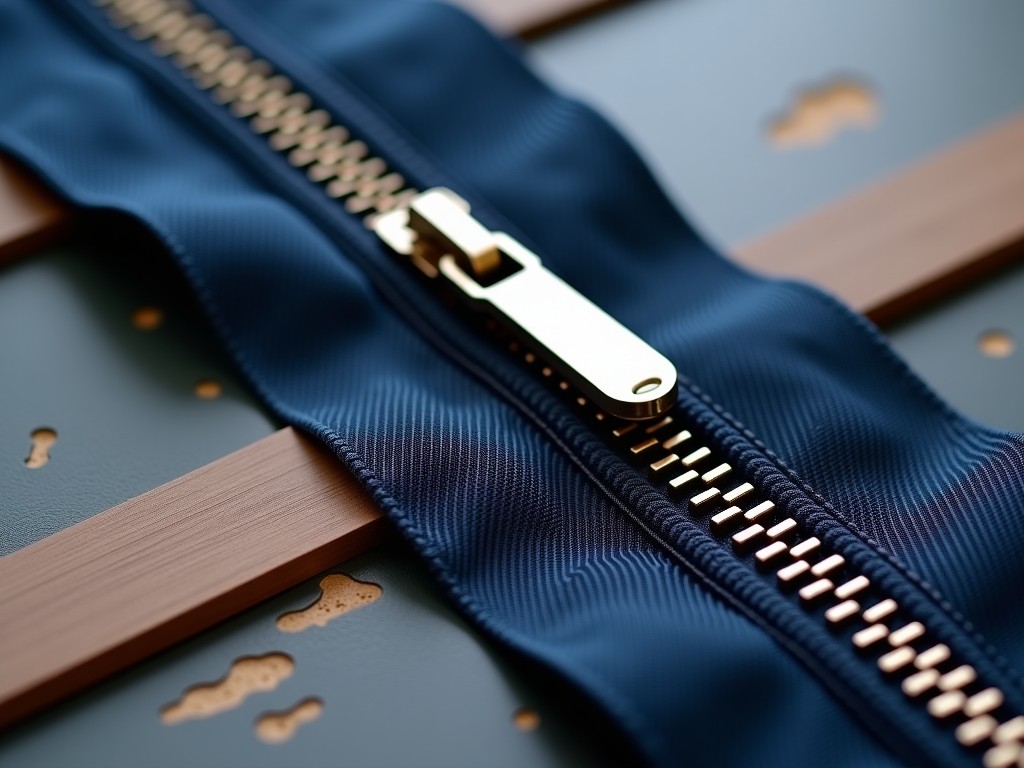
Custom Metal Zipper Machine For Jeans And Workwear Company
The machine produces continuous metal zipper chains tailored to the heavy‑weight fabrics used in denim jeans and industrial workwear. It integrates a hardened‑steel tooth forming station with a
Custom Metal Zipper Machine for Jeans and Workwear
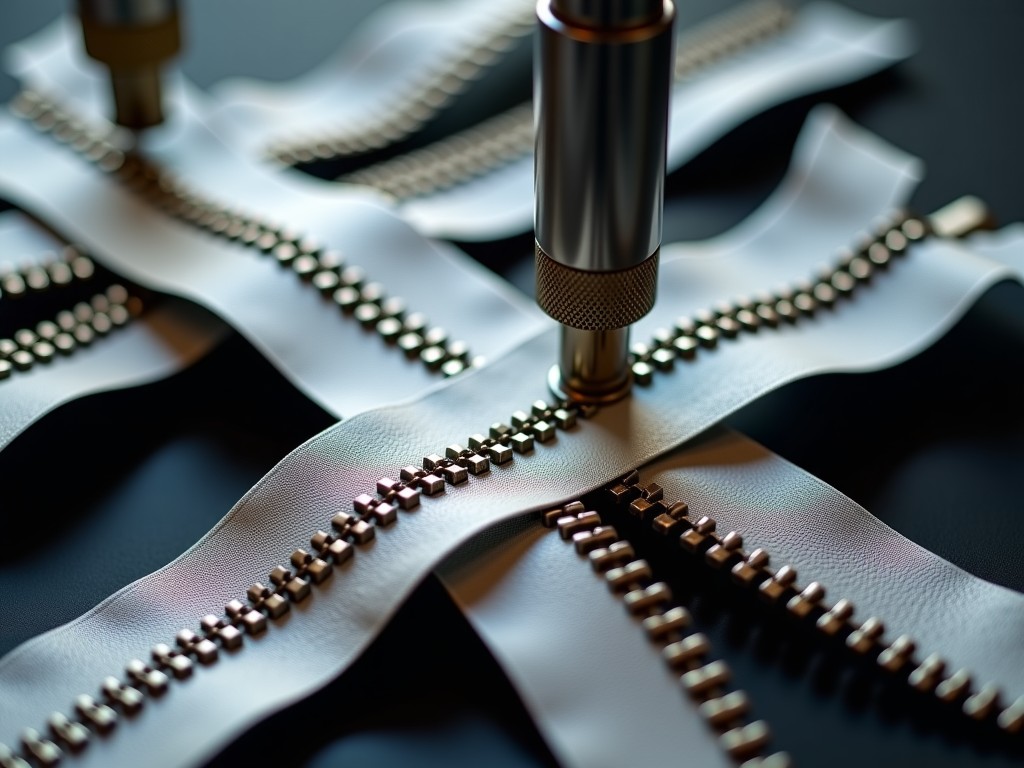
The machine produces continuous metal zipper chains tailored to the heavy‑weight fabrics used in denim jeans and industrial workwear. It integrates a hardened‑steel tooth forming station with a servo‑driven tape feeding system, allowing precise pitch control from 3 mm to 6 mm without manual gear changes.
A closed‑loop tension controller monitors tape pull force in real time, reducing tooth deformation on thick, multi‑layer seams. The modular die set can be swapped in under five minutes, supporting rapid change‑over between brass, nickel‑silver, and stainless‑steel tooth profiles.
Technical Specifications
| Parameter | Typical Value / Range |
|---|---|
| Tooth Pitch | 3 mm – 6 mm (adjustable via servo) |
| Maximum Chain Width | 30 mm (customizable up to 45 mm) |
| Production Speed | Up to 120 m/min (depending on material) |
| Tooth Material Options | Brass, Nickel‑Silver, Stainless Steel 304 |
| Tape Feeder Type | Servo‑driven, closed‑loop tension control |
| Power Supply | 380 V / 3‑phase / 50 Hz (other voltages on request) |
| Footprint (L×W×H) | 2.2 m × 1.1 m × 1.6 m (approx.) |
| Control Interface | 7‑inch HMI with recipe storage for up to 50 profiles |
Design Features That Reduce Downtime
- Quick‑change die cartridge – no tools required, cuts change‑over from 30 min to <5 min.
- Integrated chip‑breaker on the forming roll prevents metal shavings from contaminating the tape path.
- Self‑lubricating linear guides on the tape feeder eliminate daily greasing.
- Real‑time pitch verification sensor feeds data to the HMI, enabling immediate correction without stopping the line.
Material Compatibility and Selection Guidance
Brass teeth provide a classic appearance and sufficient corrosion resistance for standard denim. Nickel‑silver adds a brighter finish and higher wear resistance, often specified for premium workwear brands. Stainless steel 304 is selected when the end product must endure repeated industrial laundering or exposure to chemicals; its higher hardness demands a slightly lower forming speed to avoid excessive tool wear.
The tape substrate can be polyester, cotton‑poly blend, or aramid‑reinforced webbing. The servo feeder automatically compensates for differing modulus of elasticity, maintaining constant tooth engagement across all approved tapes.
Customization Options
- Chain width and tooth pitch per customer spec.
- Special tooth geometry – e.g., rounded, flat‑top, or double‑lock profiles.
- Surface treatment: nickel plating, black oxide, or PVD coating for color matching.
- Integration of RFID tag insertion station for traceability.
- Optional inline vision inspection with reject diversion.
Quality Assurance and Inspection Philosophy
Each machine undergoes a three‑stage validation before shipment: (1) dimensional audit of the first 500 mm of chain using a calibrated optical comparator, (2) tensile pull test on a 1 m sample to verify tooth‑to‑tape bond strength meets ≥ 150 N, (3) 8‑hour continuous run at rated speed monitoring temperature rise and vibration spectra. Inspection reports are supplied with the equipment; statistical process control charts can be shared for ongoing production monitoring.
Why This Machine Fits Jeans and Workwear Production
Denim and workwear lines demand zippers that survive high‑stress seam junctions, frequent laundering, and abrasive environments. The servo‑controlled pitch ensures uniform tooth spacing even on thick, multi‑layer fabric stacks, preventing the “zipper bite” defect common with mechanically cam‑driven machines. The rapid die change capability aligns with seasonal style changes where brass, antique‑finish, and stainless‑steel zippers alternate within the same production cell.
Frequently Asked Questions
Can the machine dimensions be customized for an existing line layout? Yes – frame length and feeder height are adjustable within ±150 mm; provide your layout drawing for a tailored proposal.
What information is required before a quotation? Desired tooth pitch range, chain width, tooth material, tape type, target output (m/min), and any special surface finish.
Which tooth materials are available? Brass, nickel‑silver, and stainless steel 304 are standard; other alloys can be evaluated on request.
How is quality inspected during production? Inline pitch sensor, tensile sampling every 2 hours, and optional vision system for cosmetic defects.
What packaging methods protect the machine for export? Machine is secured on a fumigated wooden pallet, wrapped in VCI film, and placed in a seaworthy plywood crate with shock indicators.
Typical production lead time? 8–10 weeks from order confirmation for standard configuration; custom tooling adds 2–3 weeks.
How are samples arranged? After factory acceptance test, a 5 m sample chain in the specified material can be shipped for customer validation.