Custom Luxury Metal Zipper Production Line Turnkey Solution Company
A turnkey line integrates coil feeding, tooth forming, slider assembly, and final inspection into a single controlled workflow. The architecture eliminates hand‑off points that normally cause
Custom Luxury Metal Zipper Production Line Turnkey Solution
System Overview
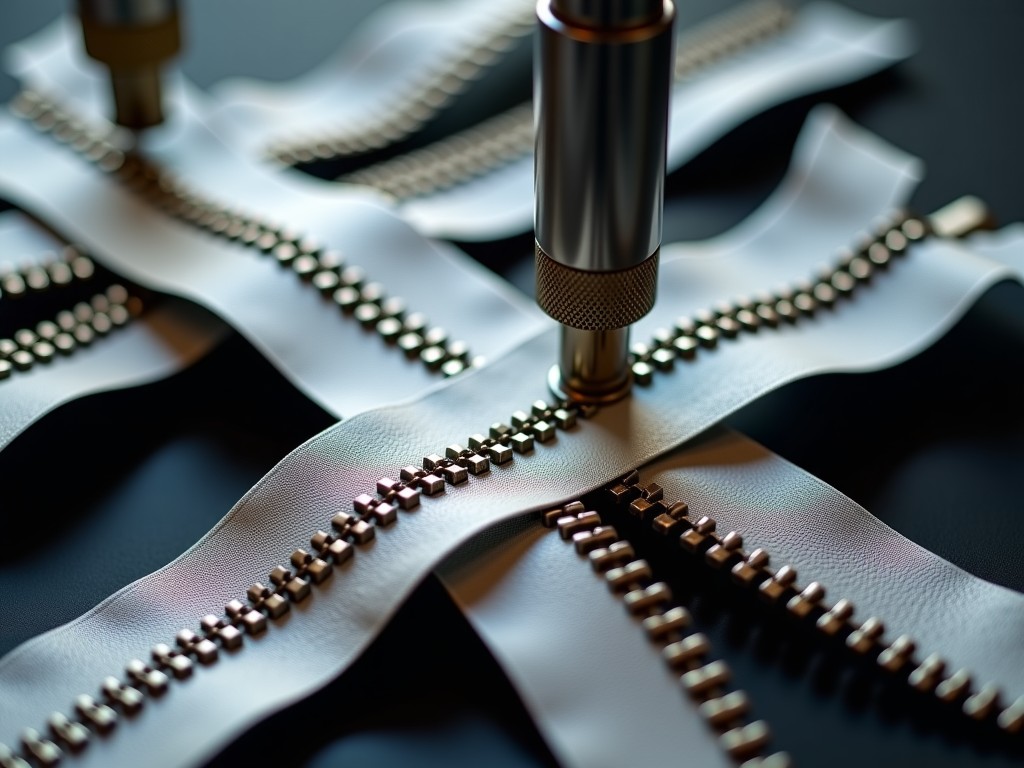
A turnkey line integrates coil feeding, tooth forming, slider assembly, and final inspection into a single controlled workflow. The architecture eliminates hand‑off points that normally cause dimensional drift in high‑end metal zippers.
Each module communicates through an industrial Ethernet backbone, allowing real‑time synchronization of feed speed, punch force, and slider positioning. This closed‑loop control is essential when producing zippers with tolerances tighter than ±0.02 mm on tooth pitch.
Key Technical Specifications
| Parameter | Typical Value | Customization Range |
|---|---|---|
| Maximum line speed | 120 m/min | 80‑150 m/min (project dependent) |
| Supported metal alloys | Brass, nickel‑silver, stainless steel 304/316 | Any alloy with 0.3‑1.2 mm strip thickness |
| Zipper width range | 3 mm – 12 mm | 2 mm – 15 mm (tooling change) |
| Automation level | Fully automatic with robotic slider feed | Semi‑auto or fully auto per budget |
| Power consumption | ≈ 85 kW (full load) | Scalable with module count |
| Footprint (L × W) | 22 m × 6 m | Modular layout, down to 15 m × 5 m |
Values shown represent a baseline configuration for a 120 m/min line. Exact figures shift with alloy choice, tooth geometry, and required surface finish.
Customization Options
Luxury brands typically request three layers of differentiation: alloy selection, surface treatment, and tooth profile geometry. The line accommodates each through interchangeable tooling cassettes and programmable process recipes.
- Alloy feedstock: brass C26000, nickel‑silver C75200, stainless 304/316, or customer‑specified specialty alloys.
- Surface finish: bright polish, satin brush, PVD coating (TiN, ZrN), or electro‑plated gold/silver layers up to 2 µm.
- Tooth profile: standard Y‑cut, reverse‑Y, micro‑teeth (0.3 mm pitch), or proprietary contour supplied as CAD file.
- Slider integration: automatic feeder for metal sliders, optional logo stamping station, and inline torque verification.
- Control system: Siemens S7‑1500 PLC with HMI, or Beckhoff TwinCAT based on plant standard.
Each option is validated during a pre‑production trial run, ensuring that the final zipper meets the brand’s tactile and visual specifications.
Why This Line Fits Luxury Zipper Manufacturing
Luxury metal zippers demand consistent tooth geometry, flawless surface, and repeatable slider engagement. The integrated inspection module uses laser profilometry at 2 kHz to measure tooth height, pitch, and edge radius on every piece, rejecting out‑of‑spec units before they reach packaging.
Because the line stores process data per batch, traceability reports can be generated automatically for brand audits. This reduces the documentation burden that often delays shipments in high‑value accessory supply chains.
Quality Control & Inspection
- In‑line laser profilometry for tooth geometry (±0.01 mm resolution).
- Vision system for surface defect detection (scratches, oxidation, coating voids).
- Automated slider pull‑force test (0.5‑2.5 N range, configurable).
- Statistical process control dashboard with Cp/Cpk tracking per shift.
- Final packaging inspection: count verification, label match, moisture barrier seal integrity.
All inspection stations output data to a central MES, enabling real‑time yield monitoring and rapid root‑cause analysis.
Turnkey Delivery Scope
The turnkey package covers mechanical installation, electrical wiring, software commissioning, operator training, and a 12‑month performance warranty. Spare‑parts kits for wear items (punches, dies, feeder belts) are sized for the first two years of operation.
Project management follows a gate‑review model: design freeze, factory acceptance test (FAT), site acceptance test (SAT), and hand‑over. This structure limits schedule risk for facilities that cannot afford extended downtime.
Frequently Asked Questions
Can the line dimensions be adapted to an existing factory layout?
Yes. The modular frame design allows length reduction in 1.5 m increments and width adjustment by repositioning side conveyors. A site survey is performed before final layout approval.
What information is required for a quotation?
Target annual volume, desired zipper width and tooth pitch, alloy grade, surface finish specification, and preferred automation level. Providing a sample zipper or CAD drawing accelerates the proposal.
Which materials can be processed?
Brass, nickel‑silver, stainless steel 304/316, and any alloy supplied in 0.3‑1.2 mm strip form. Exotic alloys are evaluated case by case for tooling wear.
How is quality inspected during production?
Continuous laser profilometry, vision inspection, and automated slider pull‑force testing generate real‑time SPC data. Out‑of‑spec parts are diverted automatically.
What is the typical lead time from order to commissioning?
Standard configurations ship in 16‑20 weeks after design freeze. Highly customized tooling or exotic alloy qualification can extend this to 28 weeks.
How are export shipments protected?
Modules are crated in ISPM‑15 compliant wooden cases with vibration‑damping foam, desiccant packs, and nitrogen purge for sensitive electronics. A packing list and certificate of conformity accompany each shipment.
Ready to define the exact configuration for your luxury zipper line? Engage our engineering team for a feasibility study and detailed proposal.
Request a Technical Consultation Download Specification Sheet