China Zipper Chain Cutting And Sealing Machine Exporter
A zipper chain cutting and sealing machine integrates two distinct thermal processes — precision cutting of continuous zipper chain and simultaneous or sequential sealing of cut ends — into a single
Zipper Chain Cutting and Sealing Machine — Technical Specifications and Export Configuration
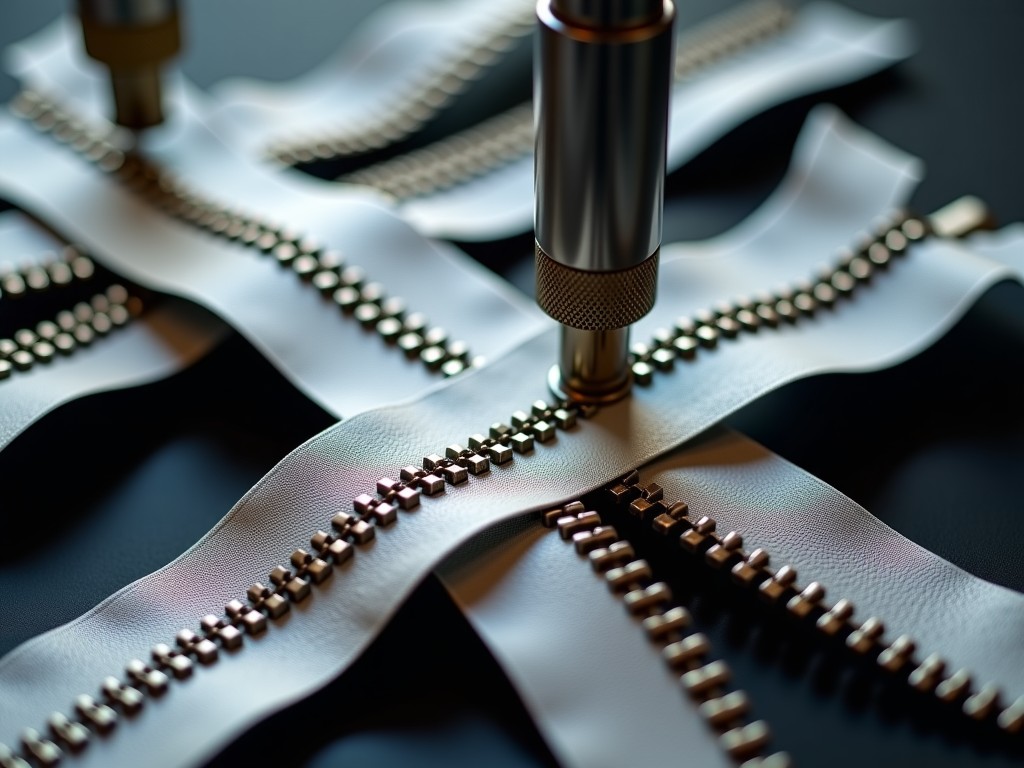
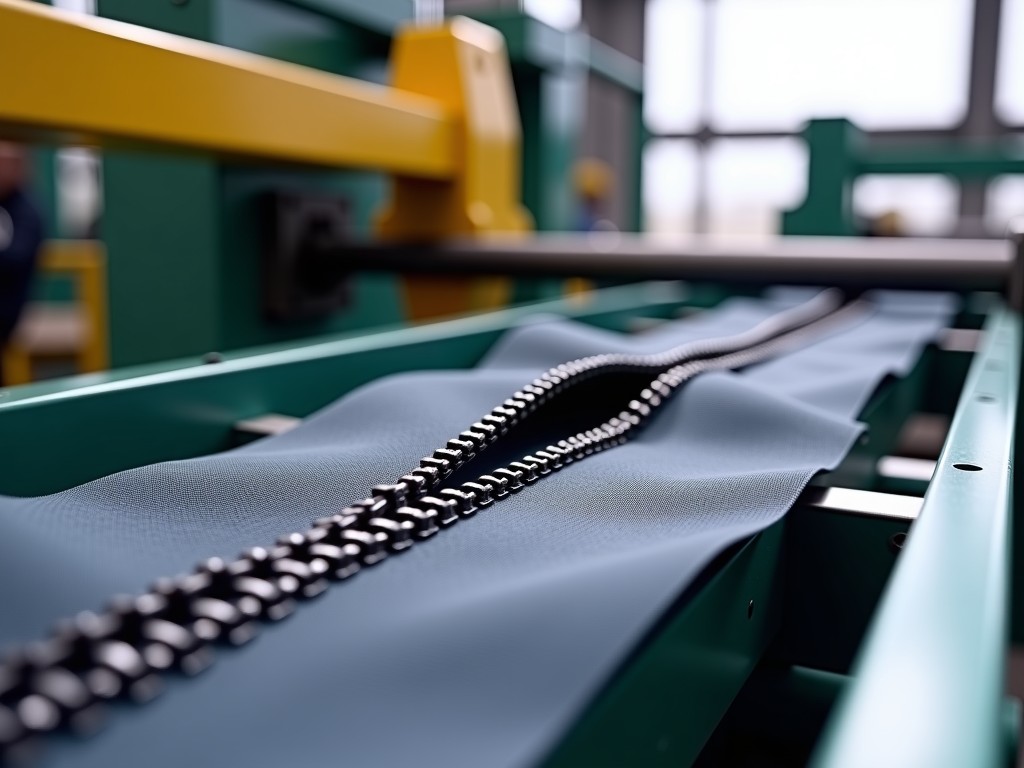
A zipper chain cutting and sealing machine integrates two distinct thermal processes — precision cutting of continuous zipper chain and simultaneous or sequential sealing of cut ends — into a single automated cycle. For manufacturers producing finished zippers in bulk, this equipment replaces manual cutting with heated blades or ultrasonic separation, eliminating frayed edges and reducing material waste. The sealing station applies controlled heat and pressure to fuse synthetic tape fibers, creating a clean terminal that feeds directly into slider attachment or top-stop crimping lines.
Export-oriented configurations differ from domestic-market units in three structural areas: power supply adaptation (380 V / 3-phase / 50 Hz standard, with 220 V / 440 V / 60 Hz variants available), CE-compliant guarding and emergency-stop circuitry, and documentation packages that include English-language PLC ladder logic prints, risk assessment reports, and customs-compliant HS code classification (typically 8451.50 for textile finishing machinery). These adaptations reduce commissioning time at the buyer's facility by an estimated 30–40 % compared to non-export models.
Core Technical Parameters
| Parameter | Typical Range / Option | Notes |
|---|---|---|
| Applicable zipper type | Nylon coil (#3–#10), plastic molded (#3–#10), metal (#3–#8) | Changeover via interchangeable guide rails |
| Cutting method | Hot knife (resistive) / Ultrasonic (20–35 kHz) | Ultrasonic preferred for heat-sensitive tapes |
| Sealing method | Hot-air impingement / Heated platen / Ultrasonic | Platen gives highest seal strength for heavy gauge |
| Cut length tolerance | ±0.3 mm (servo-fed), ±0.5 mm (stepper-fed) | Servo recommended for auto-slider lines |
| Cycle rate | 60–180 pcs/min (single lane), 120–360 pcs/min (dual lane) | Dual lane requires synchronized twin servo drives |
| Control platform | Siemens S7-1200 / Mitsubishi FX5U / Delta DVP | HMI: 7–10" color touchscreen, multilingual |
| Power consumption | 3.5–7.5 kW depending on heater zones | Ultrasonic units draw 1.2–2.5 kW |
| Compressed air | 0.5–0.6 MPa, 120–250 NL/min | For pneumatic clamping and waste ejection |
| Footprint (L×W×H) | 1,800 × 950 × 1,650 mm (single lane) | Add 400 mm width for dual-lane variant |
| Net weight | 680–950 kg | Crated weight +12–15 % |
Cutting and Sealing Technology Comparison
Hot-knife cutting uses a nichrome or kanthal blade heated to 350–450 °C. The blade descends pneumatically, severing the chain while simultaneously melting the tape edges. This method is cost-effective for nylon coil and standard polyester tape, but carbon residue can accumulate on the blade, requiring automated cleaning cycles every 8,000–12,000 cuts. Blade life typically reaches 1.5–2 million cycles before replacement.
Ultrasonic cutting employs a titanium horn vibrating at 20–35 kHz with 10–30 µm amplitude. The localized frictional heat melts only the immediate cut zone, producing a virtually carbon-free edge. This is critical for medical-grade or food-packaging zippers where particulate contamination is unacceptable. Horn wear is negligible — 5–8 million cycles — but the generator and transducer assembly increases capital cost by approximately 35–45 % over hot-knife equivalents.
Sealing follows a similar dichotomy. Hot-air impingement (250–350 °C, 2–4 m/s airflow) suits high-speed lines where dwell time is limited to 0.3–0.5 s. Heated platens (180–220 °C, 0.8–1.2 MPa) deliver superior seal peel strength — typically 18–25 N/15 mm for polyester tape — but require 0.8–1.2 s contact time. Ultrasonic sealing matches platen strength with 0.2–0.3 s cycles, making it the preferred choice for dual-lane configurations targeting 300+ pcs/min.
Application Fit by Industry Segment
Apparel zipper manufacturers processing 50,000–200,000 pcs/day typically select single-lane hot-knife/hot-air units. The lower capital outlay aligns with frequent style changes; guide-rail swap takes 8–12 minutes, and the HMI stores 200+ recipe profiles (cut length, heater temperatures, dwell times, clamp pressures). Waste ejection into a centralized vacuum system keeps the work area lint-free, a requirement for ISO 9001:2015 audits common in garment supply chains.
Automotive and luggage OEMs demand dual-lane ultrasonic/platen configurations. Seat-track zippers and hard-shell luggage closures use heavier tape (1.2–1.8 mm thickness) with TPU or aramid reinforcement. The platen seal withstands 90 °C / 95 % RH aging tests per GMW 14124 and ISO 3795 flammability standards. Traceability is built in: each cycle logs length, seal force, temperature, and timestamp to a local SQL database, exportable via OPC UA to the plant MES.
Specialty tape converters producing waterproof, fire-retardant, or conductive zippers benefit from the modular heater-zone architecture. Independent PID control of pre-heat, cut, and seal zones allows thermal profiling for multi-layer laminates without overheating the base tape. This reduces delamination defects from an industry-typical 3–5 % to under 0.8 % in validated trials.
Customization Scope for Export Orders
- Voltage and frequency: 220 V / 380 V / 415 V / 440 V / 480 V, 50/60 Hz, with integrated transformer tap selection
- Control platform localization: Siemens, Mitsubishi, Omron, Allen-Bradley, or Delta per regional service network preference
- Language packs: English, Spanish, Portuguese, Russian, Arabic, Vietnamese, Thai, Turkish pre-loaded; additional fonts on request
- Safety compliance: CE (Machinery Directive 2006/42/EC), UKCA, NR-12 (Brazil), KCs (Korea), or custom risk assessment for other jurisdictions
- Infeed/outfeed integration: synchronizing encoder output, dry-contact ready signals, or EtherCAT/Profinet/EtherNet-IP fieldbus handshake
- Waste handling: venturi vacuum port, bagger interface, or pneumatic chopper for closed-loop recycling
- Surface treatment: standard epoxy powder coat (RAL 7035 / 9005), optional 316L stainless cladding for humid or coastal environments
Quality Verification and Acceptance Protocol
Every unit undergoes a 4-hour factory acceptance test (FAT) before crating. The protocol includes: dimensional verification of 50 consecutive cuts at nominal and ±10 % speed; seal peel testing per ASTM D1876 (10 samples per heater zone); thermal imaging of knife/horn and platen surfaces to confirm uniformity within ±5 °C; and a 30-minute uninterrupted run monitoring PLC fault logs and servo following error. FAT report, calibrated instrument certificates (ISO 17025 traceable), and a first-article inspection sheet ship with the machine.
For buyers unable to visit the factory, a live-streamed FAT with real-time HMI screen share and dual-camera coverage (process zone and control cabinet) is standard. Recorded video and data logs are uploaded to a secure link valid for 90 days. This remote acceptance option has been used for 60+ export shipments since 2021, reducing customer travel cost and lead-time uncertainty.
Packaging, Logistics, and Incoterms Flexibility
Machines are secured on fumigated plywood pallets (ISPM-15 stamped) with four-point ratchet strapping. Critical components — ultrasonic generator, servo drives, HMI — are individually wrapped in anti-static VCI film with desiccant packs (2 kg per m³). The control cabinet door is locked and key-taped; keys ship in a sealed envelope inside the documentation box. Total crate dimensions for single-lane unit: 2,050 × 1,150 × 1,850 mm; gross weight ~1,050 kg.
Standard Incoterms 2020 offered: EXW (Ningbo/Shanghai), FOB (Ningbo/Shanghai), CIF (destination port), DDP (major industrial zones in Southeast Asia, EU, North America, Latin America). For DDP quotations, we engage a licensed customs broker in the destination country and pre-clear HS 8451.50 with declared value matching the commercial invoice. Insurance (All Risks, 110 % CIF) arranged upon request. Typical ocean transit: 18–22 days to West Coast Americas, 25–30 days to Northern Europe, 12–15 days to Southeast Asia.
Frequently Asked Technical Questions
Can the cut length be changed without mechanical adjustment?
Yes. All export models use servo-driven feed with length set digitally on the HMI in 0.1 mm increments. Recipe change takes <5 seconds; no tooling change required unless zipper gauge changes.
What information is needed for a firm quotation?
Zipper type (coil/molded/metal), gauge (#3–#10), tape material and thickness, target output (pcs/min), single or dual lane, preferred cutting/sealing method, destination voltage/standard, and any MES integration requirements.
Are spare parts available long-term?
We maintain a 10-year spare-parts commitment. Critical wear items (knives, horns, platens, heater cartridges, pneumatic cylinders) are stocked in Ningbo and can ship within 48 hours via express courier. PLC and HMI hardware follows the manufacturer's standard lifecycle (typically 12–15 years).
How is operator training handled for overseas installations?
Two options: (1) 3-day on-site commissioning with hands-on training for up to 4 operators, including maintenance basics and recipe management; (2) remote commissioning via video link with pre-shipped training kit (sample zipper chain, tool set, printed quick-reference cards). Both include a 12-month warranty covering parts and remote diagnostics.
What is the typical production lead time?
Standard single-lane hot-knife unit: 30–35 working days from deposit receipt and drawing approval. Dual-lane ultrasonic/platen: 45–55 working days. Expedited builds (component pre-stock) can reduce by 10–12 days; confirm availability at inquiry.
Can the machine handle recycled or bio-based zipper tapes?
Yes, provided melt temperature and thermal conductivity are within the heater-zone capability (max 450 °C knife, 350 °C platen). We recommend sending 5 m of sample tape for lab validation — seal strength, cut edge quality, and residue analysis — before final specification lock.
Ready to discuss your zipper chain cutting and sealing requirements?
Provide your zipper specifications, target output, and destination requirements. We will return a detailed technical proposal — including layout drawing, utility summary, and FAT protocol — within two business days.
Request Technical Proposal