China Metal Zipper Wire And Chain Forming Machine Company
We design and manufacture forming equipment that converts raw metal wire into precision zipper chains for apparel, luggage, automotive seating, and industrial fastening. The machinery integrates wire
China Metal Zipper Wire and Chain Forming Machine Company
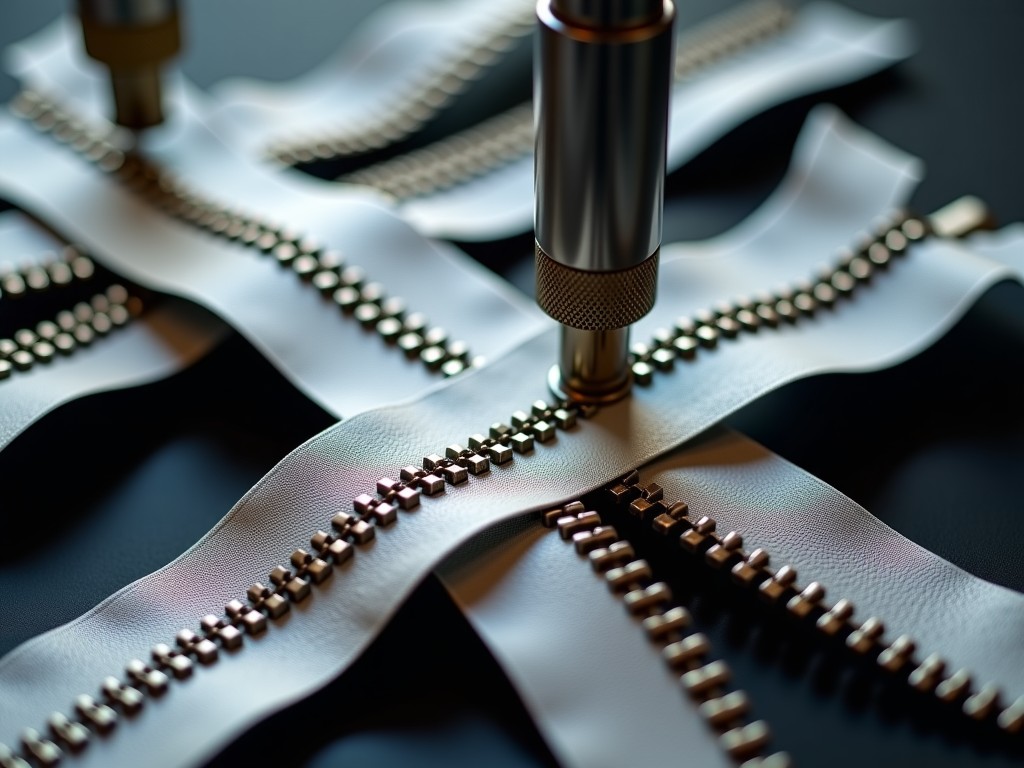
We design and manufacture forming equipment that converts raw metal wire into precision zipper chains for apparel, luggage, automotive seating, and industrial fastening. The machinery integrates wire drawing, tooth profiling, and chain assembly in a single production line, reducing handling steps and maintaining tight dimensional tolerances.
Core Machine Architecture
Each line consists of a decoiler, straightening unit, multi‑stage roll forming station, tooth‑cutting module, and an automated chain‑link welding station. The roll forming stations are CNC‑controlled, allowing rapid changeover between tooth profiles such as #3, #5, #8, and custom pitches. The welding station uses high‑frequency resistance welding with real‑time current monitoring to ensure consistent joint strength.
Technical Specifications (Typical Values)
| Parameter | Range / Value | Notes |
|---|---|---|
| Wire diameter | 0.30 – 1.20 mm | Adjustable via roller gap |
| Chain pitch | 3.0 – 12.0 mm | Custom pitches on request |
| Production speed | Up to 120 m/min | Depends on wire size and tooth complexity |
| Main motor power | 15 – 45 kW | Variable frequency drive |
| Overall footprint | ≈ 6 m × 2.5 m × 2.2 m | Modular layout for plant integration |
| Machine weight | ≈ 4.5 t | Includes decoiler and welding unit |
Typical Applications and Why They Fit
- Apparel zipper chains – high‑speed tooth profiling delivers the smooth engagement required for garment zippers.
- Luggage and bag hardware – the welding station produces corrosion‑resistant joints that withstand repeated loading.
- Automotive seat adjusters – precise pitch control meets OEM dimensional specs for safety‑critical components.
- Industrial fastening straps – configurable wire diameters allow production of heavy‑duty chain for cargo securement.
Customization Options
Because zipper chain geometry varies by brand and end‑use, the line is built for modular adaptation. The following parameters can be tailored per project:
- Tooth profile geometry (standard YKK, YKK‑compatible, or proprietary designs)
- Wire material – carbon steel, stainless steel 304/316, brass, or coated alloys
- Surface treatment – zinc plating, nickel plating, or dry‑film lubricant
- Automation level – semi‑automatic with manual loading, or fully automatic with robotic feed and vision inspection
- Control system – Siemens S7‑1500 PLC with HMI, or customer‑specified PLC platform
Quality Assurance Process
Every machine undergoes a defined inspection sequence before shipment. The process focuses on dimensional repeatability, weld integrity, and control‑system reliability.
- First‑article dimensional check on tooth height, pitch, and wire diameter using calibrated optical comparators.
- Weld shear test on a statistical sample (≥ 30 joints) to verify minimum tensile strength per ASTM A370.
- Run‑in at rated speed for 8 hours while monitoring motor current, vibration, and temperature.
- Software validation – all motion profiles, safety interlocks, and data‑logging functions exercised.
- Final visual inspection and packaging verification against the packing list.
Packaging, Shipping, and Export Protection
Machines are disassembled into transportable modules, each secured on fumigated wooden skids with anti‑vibration mounts. Critical components (CNC rollers, welding electrodes) are wrapped in VCI‑impregnated film and placed in sealed crates. Standard export documentation includes commercial invoice, packing list, certificate of origin, and a conformity declaration for CE‑marked units. Alternative packaging (container‑load, break‑bulk) is available on request.
Frequently Asked Questions
- Can the tooth profile be changed after installation?
- Yes. The roll forming stations use quick‑change cassette rollers; a profile swap typically takes 30–45 minutes with no need for re‑calibration of the welding station.
- What information is required for a formal quotation?
- Wire material and diameter, desired chain pitch, tooth profile drawing or sample, target production volume, and preferred automation level.
- How is machine warranty structured?
- Standard warranty covers 12 months from commissioning or 18 months from bill of lading, whichever occurs first. Extended service contracts are negotiable.
- What is the typical lead time for a customized line?
- 6–10 weeks after order confirmation, depending on the extent of custom tooling and control‑system integration.
Next Steps
If the specifications align with your production goals, we invite you to share your project details. Our engineering team will prepare a layout proposal, cycle‑time simulation, and a formal quotation within three business days.
Request a quotation | Download technical datasheet | View case studies