China Metal Zipper Machine Production Line Factory
A metal zipper machine production line integrates coil feeding, tooth forming, slider assembly, and finishing into a continuous flow. The line is designed for manufacturers that require consistent
China Metal Zipper Machine Production Line Factory
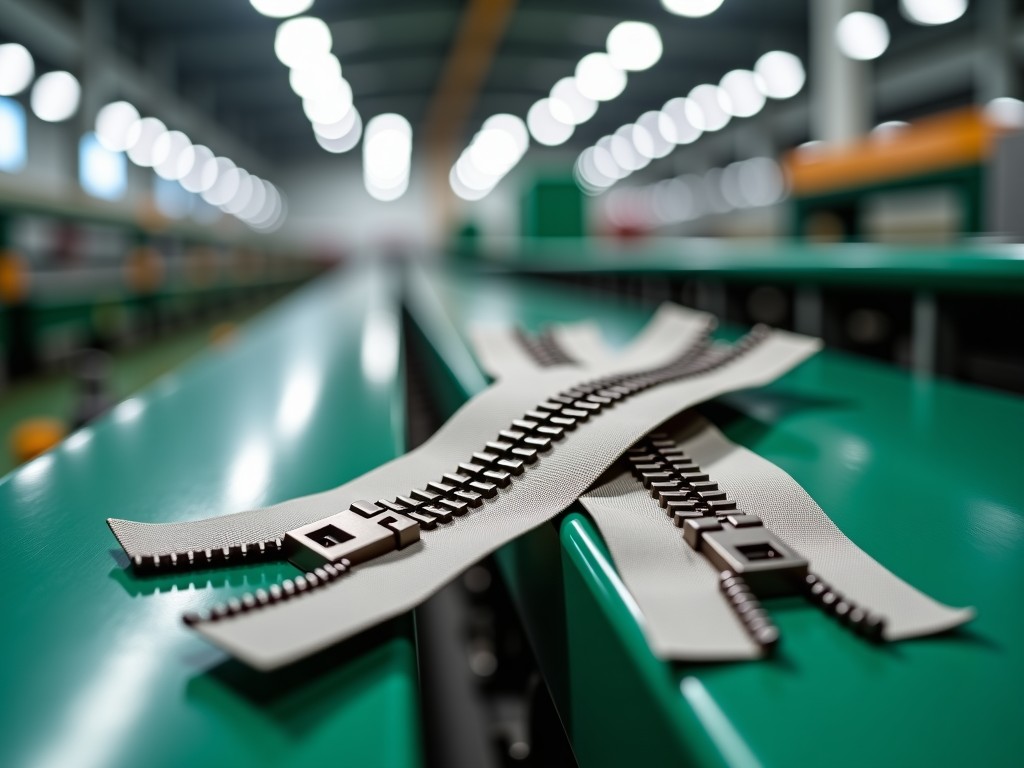
A metal zipper machine production line integrates coil feeding, tooth forming, slider assembly, and finishing into a continuous flow. The line is designed for manufacturers that require consistent tooth geometry and high throughput for apparel, luggage, and industrial fastening applications.
Machine Architecture
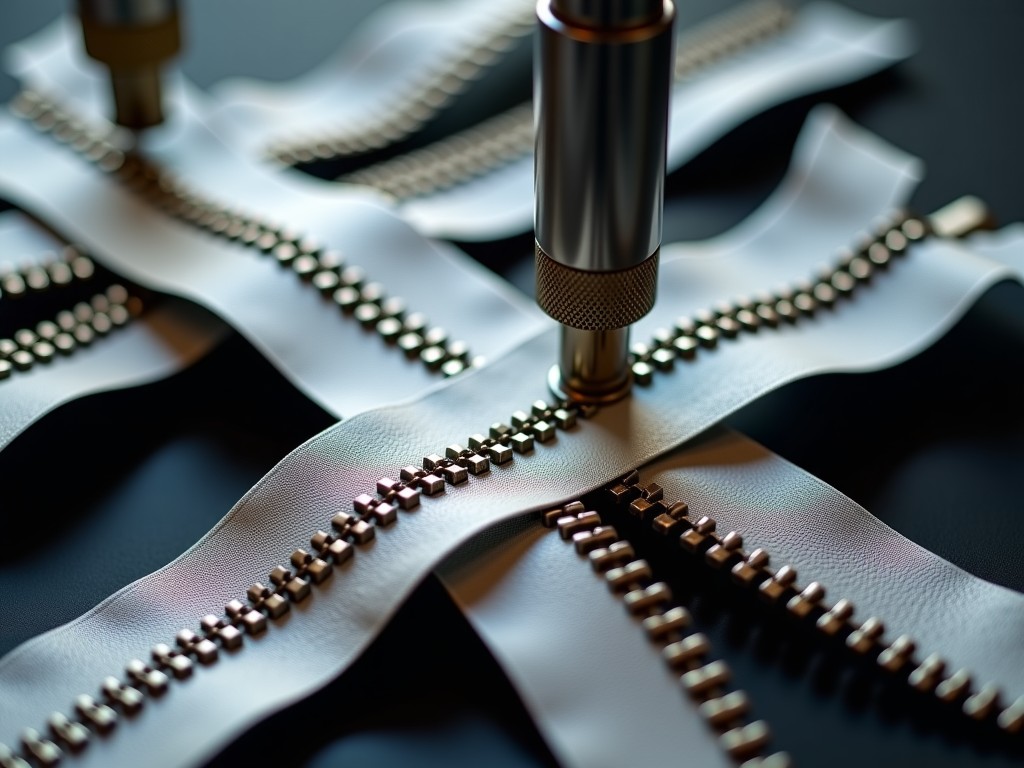
The core of the line consists of a high‑speed coil unwinder, a precision tooth‑forming press, an automated slider insertion unit, and a tension‑controlled winding station. Each module is mounted on a rigid steel frame to minimize vibration during continuous operation.
- Coil unwinder with servo‑controlled tension
- Tooth‑forming press using hardened H13 dies
- Slider insertion robot with vision alignment
- Winding station with programmable torque
Production Line Configuration
Typical configurations range from four to eight stations, allowing the line to be scaled according to order volume. The table below summarizes the key parameters that are commonly specified during the quotation stage.
| Parameter | Typical Value |
|---|---|
| Maximum zipper width | 10–30 mm |
| Production speed | 120–200 m/min |
| Number of stations | 4–8 |
| Power consumption | 15–25 kW |
| Control system | PLC + HMI (Siemens/Allen‑Bradley compatible) |
Material Compatibility
The forming dies are hardened tool steel (H13 or equivalent) and can process brass, nickel‑silver, and stainless‑steel zipper tape. Surface treatment options include nickel plating, black oxide, and custom color coating, which are selected based on the end‑use corrosion requirements.
- Brass tape – standard for apparel
- Nickel‑silver – higher wear resistance
- Stainless steel – marine and industrial environments
- Coating options: nickel, black oxide, custom RAL colors
Customization Options
Buyers can adjust tooth pitch, slider type, and tape width without changing the base frame. Optional modules such as automatic quality‑inspection cameras, laser marking, and inline packaging can be integrated on request.
- Tooth pitch: 0.5 mm – 1.2 mm (adjustable)
- Slider variants: closed, open, double‑pull
- Inline vision inspection for tooth height
- Laser marking for batch traceability
- Automatic bagging and palletizing
Quality Assurance
Each station is equipped with servo‑driven positioning and closed‑loop force feedback. In‑process inspection includes tooth height measurement, slider engagement force testing, and tape tension monitoring. Final inspection follows ISO 9001 sampling plans, and test reports are supplied with every shipment.
- Servo positioning accuracy ±0.02 mm
- Force feedback resolution 0.1 N
- Statistical process control charts logged per shift
- Certificate of conformity included
Packaging & Export Logistics
Finished lines are disassembled into modular crates, vacuum‑sealed for moisture protection, and secured on fumigated wooden pallets. Documentation includes a packing list, certificate of conformity, and a detailed installation manual in English.
Frequently Asked Questions
Can the line dimensions be customized?
Yes. Frame length, station count, and tape width are configurable within the ranges shown in the specification table. Detailed layout drawings are provided after order confirmation.
What information is required before a quotation?
Typical data includes desired zipper width, tooth pitch, production volume (m/min), material type, and any optional modules such as vision inspection or laser marking.
How is quality inspected during production?
In‑process sensors monitor tooth height, slider pull force, and tape tension in real time. A final statistical sample is taken per ISO 9001 AQL 1.0, and a full test report accompanies each shipment.
What packaging methods are available for export?
Standard export packaging uses vacuum‑sealed crates on ISPM‑15 compliant pallets. Custom crating, shock‑absorbing inserts, and climate‑controlled containers can be arranged on request.
What is the typical production lead time?
For a standard 6‑station line, lead time is 8–10 weeks from order confirmation to factory acceptance test. Additional custom modules may extend the schedule by 2–4 weeks.
Next Steps
To discuss a configuration that matches your production targets, contact our engineering team for a detailed layout proposal. Request a quotation or schedule a technical call.