China High Quality Metal Zipper Machine Manufacturer
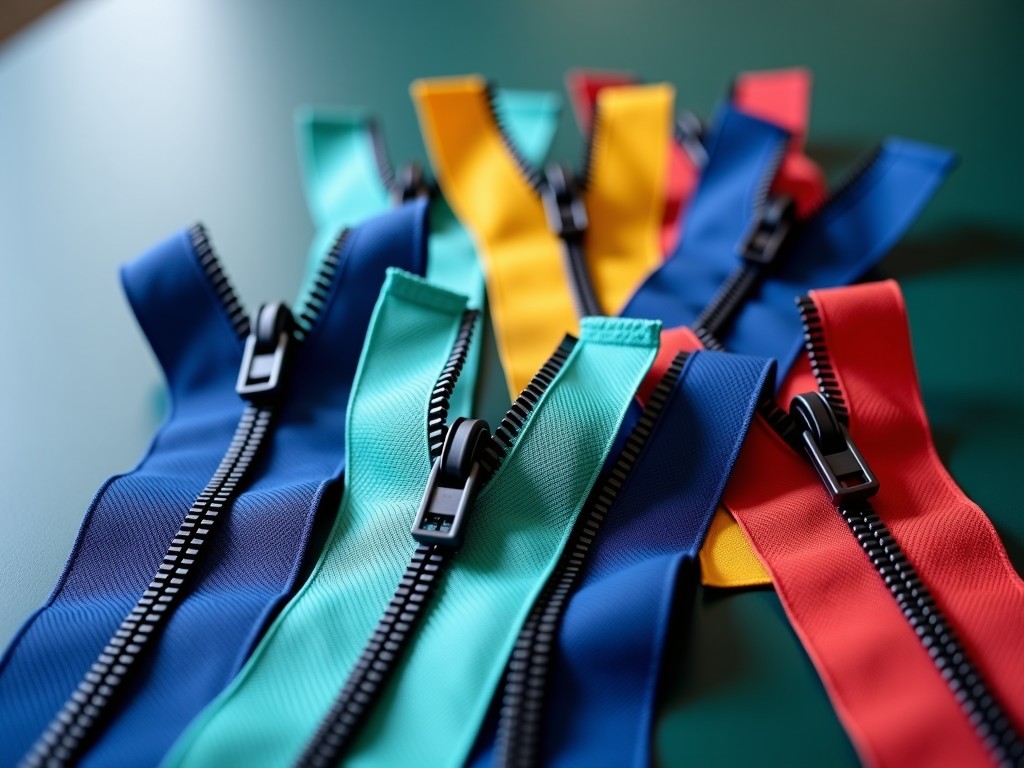
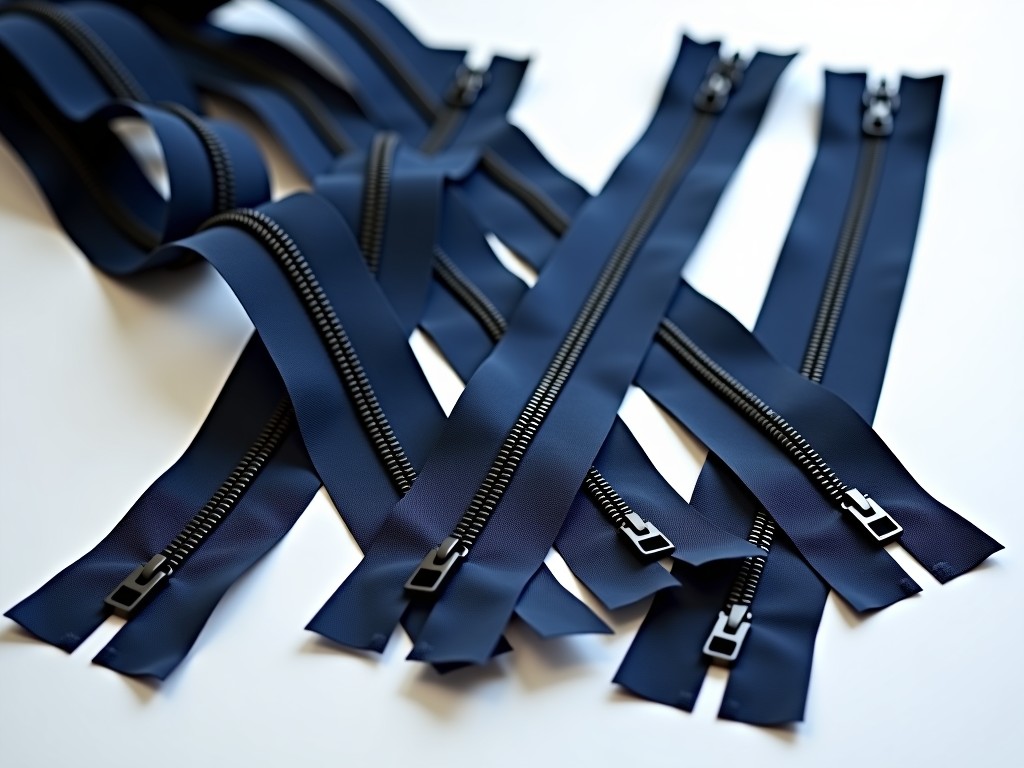
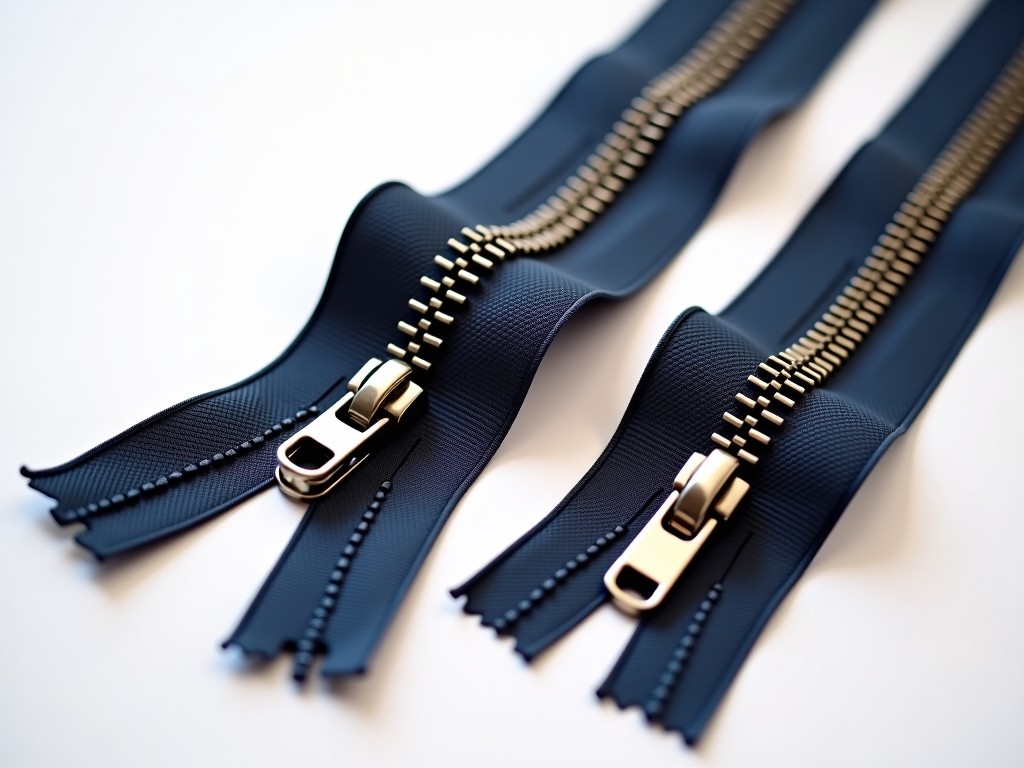
Metal zipper machines form the backbone of fastener production lines serving apparel, luggage, automotive seating, and technical textile sectors. Unlike plastic or nylon zipper equipment, metal
China High Quality Metal Zipper Machine Manufacturer
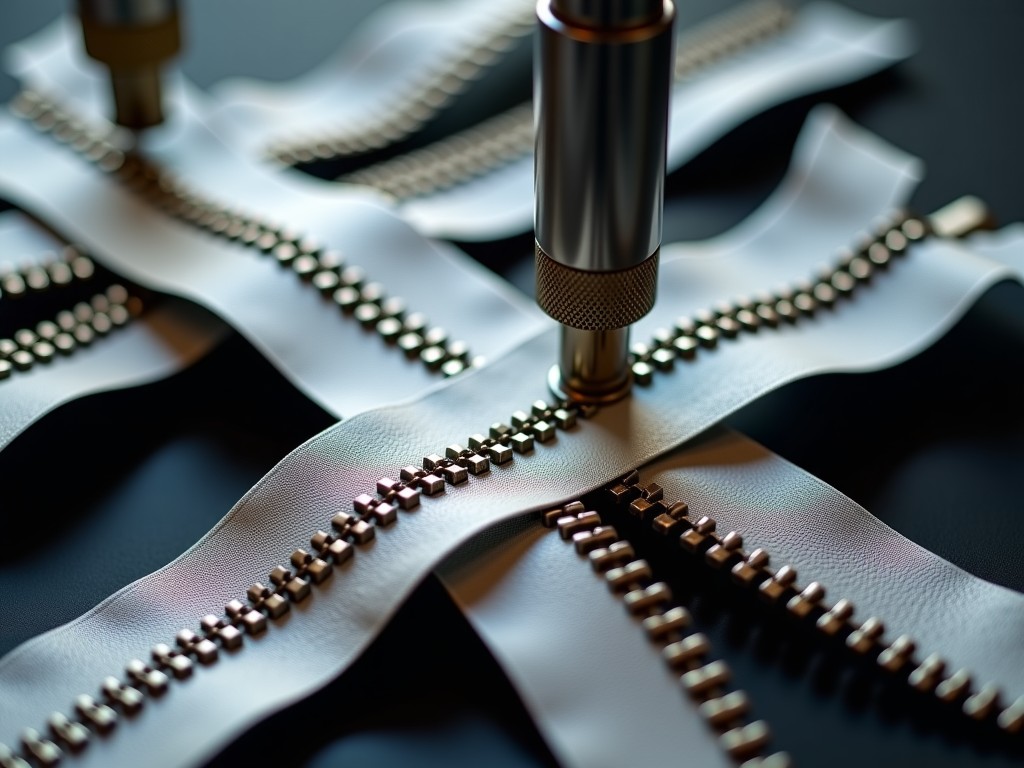
Metal zipper machines form the backbone of fastener production lines serving apparel, luggage, automotive seating, and technical textile sectors. Unlike plastic or nylon zipper equipment, metal machines must manage higher forming forces, tighter dimensional tolerances, and abrasive wire materials such as brass, aluminum, nickel-silver, and stainless steel. A typical production cell integrates wire drawing, teeth forming, tape feeding, teeth clamping, and top/bottom stop crimping into a synchronized sequence where timing deviations of even 0.5 milliseconds can generate defective teeth profiles.
Chinese manufacturers have concentrated this technology in regions like Ningbo, Wenzhou, and Dongguan, where supply chains for precision cams, hardened tool steel, and servo drive systems are locally mature. The result is equipment that delivers European-level mechanical repeatability — often ±0.02 mm on tooth pitch — at a capital cost 30–45 % lower than comparable Western brands, without compromising on spindle rigidity or control system responsiveness.
Core Machine Categories and Technical Differentiation
Procurement engineers typically encounter three primary machine families, each addressing distinct production volume and profile complexity requirements:
- High-speed continuous teeth-forming machines — rated 1,800–2,400 teeth/minute, optimized for standard Y-type and #3–#10 brass zippers. Cam-driven main shafts with roller followers minimize backlash; servo-assisted tape feed ensures pitch accuracy during acceleration/deceleration phases.
- Multi-profile CNC teeth-forming centers — 4–6 axis interpolation enables rapid changeover between flat, corn, European, and custom tooth geometries. Typical changeover time: 18–25 minutes including die set swap and recipe load. Suited for short-run, high-mix OEM orders.
- Integrated zipper chain assembly lines — combine teeth forming, clamping, stop crimping, and slider mounting in a single footprint. Throughput 80–120 meters/hour depending on zipper size. Reduces WIP handling and cross-contamination between processes.
Selection hinges on annual volume, SKU count, and whether the buyer requires standalone teeth forming or finished chain output. Most Chinese suppliers offer modular upgrades — a continuous former can later receive a clamping module — preserving initial CapEx.
Typical Technical Specifications (Reference Values)
| Parameter | Continuous High-Speed | CNC Multi-Profile | Integrated Assembly Line |
|---|---|---|---|
| Tooth pitch range | 1.2–4.5 mm (#3–#10) | 1.0–6.0 mm (custom) | 1.2–4.5 mm |
| Max forming speed | 2,400 teeth/min | 1,200 teeth/min | 120 m/hr (chain) |
| Wire diameter capacity | 0.25–0.65 mm | 0.20–0.80 mm | 0.25–0.65 mm |
| Main drive power | 5.5–7.5 kW servo | 7.5–11 kW direct-drive | 15–22 kW total |
| Pitch accuracy (CPK≥1.33) | ±0.02 mm | ±0.015 mm | ±0.02 mm |
| Changeover time (die set) | 35–50 min | 18–25 min (recipe-based) | 45–60 min |
| Control platform | Delta/Inovance PLC + HMI | Siemens 828D / Fanuc 0i-MF | Siemens S7-1500 + Safety PLC |
| Footprint (L×W×H) | 2.2×1.1×1.8 m | 2.8×1.5×2.0 m | 6.5×2.2×2.1 m |
Values represent typical configurations; final specifications are customized per project requirements.
Material Compatibility and Tooling Considerations
Wire material dictates die material, lubrication strategy, and forming force curves. Brass (CuZn30) remains the volume standard — good formability, low tool wear, compatible with standard carbide dies. Aluminum wire (typically 5056 alloy) reduces weight by 65 % but work-hardens rapidly; machines require polished die cavities with 0.2–0.4 μm Ra finish and dedicated oil-mist lubrication to prevent galling. Nickel-silver (CuNi18Zn20) offers superior corrosion resistance for marine and outdoor gear; its higher yield strength (320–450 MPa) demands 25–30 % more forming force and powder-metallurgy dies with TiAlN coating to maintain edge life beyond 2 million teeth.
Stainless steel wire (304L, 0.3–0.5 mm) appears in medical and aerospace zipper niches. Forming forces exceed 8 kN per tooth; machine frames must incorporate stress-relieved cast iron bases (HT250 minimum) with 45 mm wall thickness at critical sections to avoid deflection-induced pitch errors. Chinese suppliers with in-house heat treatment can supply matching die sets hardened to 58–62 HRC with 0.005 mm grind tolerance — a capability that distinguishes integrated manufacturers from assemblers sourcing dies externally.
Quality Control Philosophy in Metal Zipper Machine Production
Reputable Chinese manufacturers implement a three-layer inspection regime. First, incoming component verification: linear guides (THK/Hiwin or domestic CPC grade P), ball screws (C3 accuracy), servo motors (encoder resolution ≥23-bit), and electrical cabinets (IP54, CE-marked components). Second, geometric accuracy testing per JB/T 8732 or ISO 230-2: laser interferometer measurement of positioning repeatability, ball bar test for circularity, and spindle run-out under load. Third, process capability validation — a 30-minute production run at rated speed with statistical sampling of tooth pitch, height, width, and clamping force. Data is recorded; CPK reports accompany shipment.
Buyers should request the factory acceptance test (FAT) protocol before ordering. A complete FAT includes vibration spectrum analysis (ISO 10816-3), thermal stability test (4-hour soak at max speed), and emergency stop response time verification (<200 ms). Machines shipping without documented FAT data carry hidden commissioning risk.
Application-Specific Engineering Rationale
Apparel brands running #5 brass zippers at 500k units/month benefit from continuous high-speed formers — low cost per tooth, minimal changeovers, and servo tape feed that compensates for tape thickness variation (±0.05 mm) without operator intervention. Luggage manufacturers producing #8 and #10 nickel-silver zippers in 20+ profiles per season require CNC multi-profile centers; the 20-minute recipe changeover enables economic batch sizes as low as 500 meters. Automotive seating suppliers specify integrated assembly lines with 100 % inline vision inspection for slider mounting orientation and stop crimp height — critical for side-airbag deployment clearance. Medical device OEMs sourcing stainless steel zipper chains demand machines with full material traceability (EN 10204 3.1 certificates for all wire-contacting parts) and cleanroom-compatible lubrication systems (NSF H1 registered).
Matching machine architecture to application prevents over-capitalization on unnecessary axes or under-specification that creates bottlenecks during peak demand.
Customization Scope and Integration Readiness
Standard customization dimensions include:
- Tooth profile geometry — CAD-defined profiles translated to wire EDM die cavities within ±0.003 mm profile fidelity.
- Tape width and material — woven polyester, cotton, aramid, or TPU-coated; tape tension control range 5–120 N adjustable via HMI.
- Stop crimp style — top stop, bottom stop, open-end box/pin, two-way separable; crimp force monitored by load cell with ±2 % repeatability.
- Automation interfaces — Profinet/EtherCAT for MES integration, OPC UA server for Industry 4.0 data exchange, safety-rated I/O for light curtain or area scanner zones.
- Auxiliary modules — automatic wire spool changer (reduces downtime 12 % on 3-shift ops), inline lubrication concentration sensor, zipper chain accumulator buffer (20–50 m) for continuous downstream feeding.
Electrical cabinets are pre-wired for customer-specified voltage (380 V/415 V/480 V, 50/60 Hz) and include phase-sequence protection. Documentation package: English/Chinese bilingual manual, PLC ladder logic printout, IO list, pneumatic/hydraulic schematics, spare parts list with manufacturer part numbers.
Frequently Asked Procurement Questions
What information is required for an accurate quotation? Annual volume per zipper size, wire material and diameter, tooth profile drawings or samples, tape specifications, desired automation level, factory voltage, and whether FAT witness is needed.
Can tooth pitch and profile be changed after purchase? Continuous machines require physical die set replacement (35–50 min). CNC machines accept new profiles via recipe upload; new die sets only needed for geometry outside existing die cavity range.
How is machine accuracy verified at our facility? Supplier typically provides installation supervision (3–5 days) including geometric re-verification, process capability run with your wire/tape, and operator training. Final acceptance based on agreed CPK thresholds.
What spare parts are recommended for two-year operation? Critical list: forming die set (2 sets per profile), clamping jaws (4 sets), crimp dies (2 sets), servo motor brake assembly, ball screw support bearings, HMI touch panel, PLC battery. Suppliers provide priced spare parts list with lead times.
What is typical production lead time? 60–90 days for standard continuous former; 90–120 days for CNC multi-profile; 120–150 days for integrated assembly line. Custom profiles add 15–20 days for die manufacturing.
How are machines protected for sea freight export? Anti-rust oil on all machined surfaces, VCI film wrap, desiccant packs (2 kg/m³), fumigation-free plywood case with shock indicators, container lashing points on base frame. Humidity indicator card included for receiver inspection.
Are sample zipper chains available before order? Most suppliers run 50–100 m test chains on identical machines in their showroom using customer-supplied wire/tape. Samples shipped via express for dimensional and visual approval.
Next Step: Technical Discussion
Every zipper production requirement involves unique trade-offs between speed, flexibility, capital allocation, and downstream integration. The most efficient path forward is a 30-minute technical call with our application engineers — share your annual volumes, wire materials, profile drawings, and automation preferences. We will return a preliminary layout, cycle time analysis, and budget range within two business days.
Request Technical Consultation