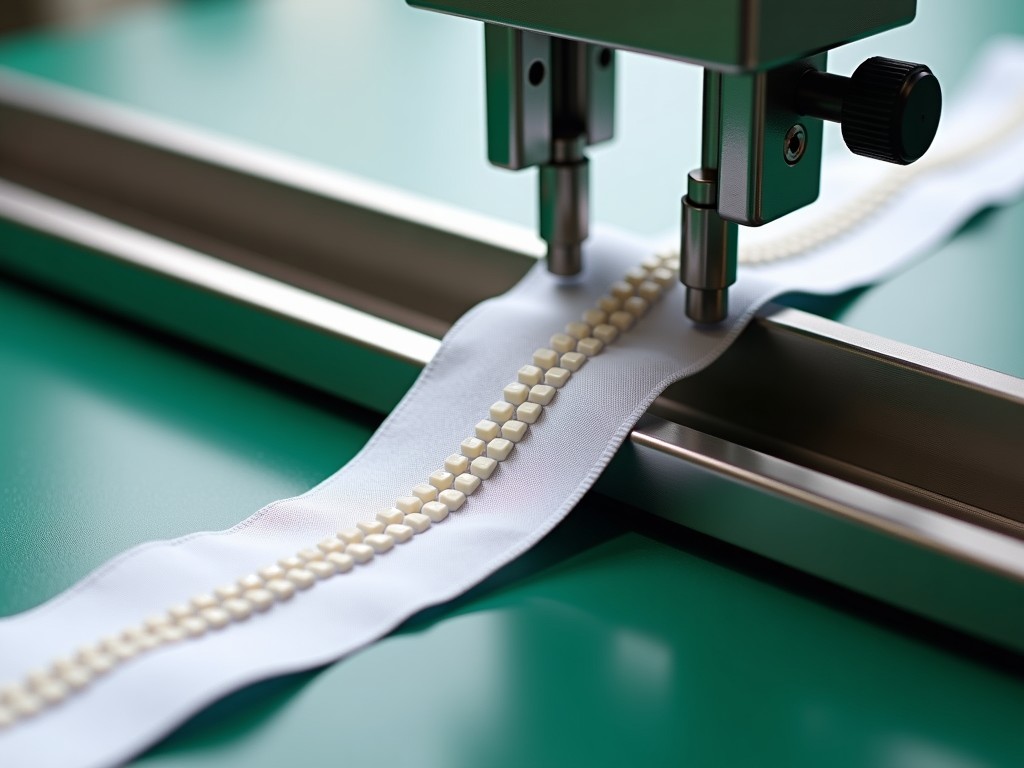
China Automatic Zipper Top Stopper Attaching Machine Factory
This equipment is designed for high‑volume zipper manufacturers that need a repeatable, low‑maintenance method of securing top stoppers onto continuous zipper chains. The machine integrates a
Automatic Zipper Top Stopper Attaching Machine
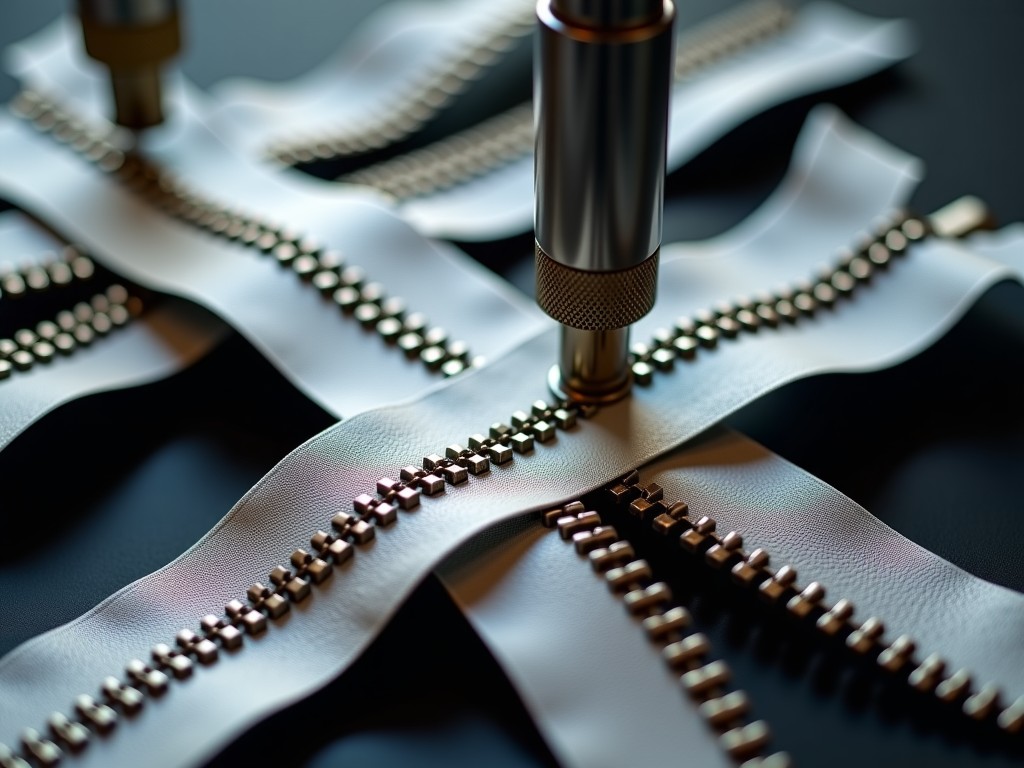
This equipment is designed for high‑volume zipper manufacturers that need a repeatable, low‑maintenance method of securing top stoppers onto continuous zipper chains. The machine integrates a servo‑driven feed, a precision stopper placement head, and an inline vision inspection station, all controlled through a PLC with a 10‑inch HMI.
Technical Specifications
| Parameter | Typical Value / Range |
|---|---|
| Maximum chain speed | 120 m/min (adjustable via HMI) |
| Stopper type compatibility | Metal, plastic, and coated stoppers (Ø2.0–3.5 mm) |
| Placement accuracy | ±0.15 mm (vision‑verified) |
| Power supply | 3‑phase 380 V ± 10 %, 50/60 Hz, 7.5 kW |
| Compressed air requirement | 0.5–0.7 MPa, 120 L/min |
| Machine footprint (L×W×H) | 2,200 mm × 1,100 mm × 1,650 mm |
| Weight | ≈1,850 kg |
| Control system | Siemens S7‑1500 PLC + 10″ HMI, EtherCAT I/O |
| Safety compliance | CE, ISO 12100, emergency stop, light curtains |
Key Engineering Features
A servo‑driven chain feed eliminates the speed fluctuations common with pneumatic pullers, delivering a constant linear velocity that directly improves stopper placement repeatability. The placement head uses a dual‑axis linear motor with a 0.05 mm resolution encoder, allowing rapid change‑over between stopper diameters without mechanical shims.
Integrated vision inspection captures a 5 MP image of each stopper after insertion; the algorithm measures offset, tilt, and presence, automatically rejecting out‑of‑spec parts and logging data for statistical process control. The reject station diverts defective chains to a side bin without stopping the main line.
- Quick‑change stopper magazine (≤30 s) reduces downtime during product switches.
- Modular frame permits addition of a second placement head for double‑stopper configurations.
- Remote diagnostics via Ethernet/IP enable firmware updates and parameter backup from the plant MES.
Industry Applications
Apparel zipper lines benefit from the machine’s ability to handle both metal and polymer stoppers on the same platform, eliminating the need for separate equipment when a brand switches between decorative and functional stoppers. In automotive seat‑belt and luggage zipper production, the ±0.15 mm placement tolerance meets the stringent dimensional requirements of OEM quality audits. Outdoor gear manufacturers appreciate the high throughput (up to 120 m/min) combined with the vision system that prevents costly rework on waterproof zipper assemblies.
Customization Options
The base model can be tailored in several dimensions to match specific line layouts:
- Chain width range: 3 mm–12 mm (adjustable guide rails).
- Stopper feed: vibratory bowl, linear feeder, or robotic pick‑and‑place for exotic geometries.
- Additional inspection: laser height check, force‑feedback verification, or barcode read‑back.
- Control integration: ProfiNet, OPC UA, or custom API for ERP synchronization.
- Enclosure rating: IP54 standard; IP65 available for wash‑down environments.
Quality Assurance & Inspection
Every unit undergoes a factory acceptance test (FAT) that includes a 2‑hour run at rated speed with a statistical sample of 500 stoppers. Critical dimensions are recorded on a calibrated CMM, and the vision system’s false‑reject rate is verified below 0.2 %. A first‑article inspection report (FAIR) is supplied with each shipment, and a 12‑month warranty covers the servo drives, PLC, and vision hardware. Spare‑part kits (encoder, linear motor, camera) are stocked for 5‑year service life.
Packaging & Export Logistics
Machines are shipped in fumigated wooden crates (ISPM‑15 compliant) with internal vibration damping foam and corrosion‑inhibiting VCI film. Each crate includes a lifting lug layout drawing, a packing list, and a pre‑commissioning checklist. Standard sea‑freight dimensions fit a 40‑ft high‑cube container; air‑freight pallets are available for urgent deliveries. Documentation package comprises commercial invoice, certificate of origin, CE declaration of conformity, and a bilingual (English/Chinese) operation manual.
Frequently Asked Questions
Can the stopper magazine be adapted for non‑standard stopper shapes? Yes – the magazine uses interchangeable fingers; custom finger profiles are machined to order and can be swapped in under five minutes.
What information is required before a quotation? Chain width, stopper material and diameter, desired throughput, available floor space, and preferred control network protocol.
How is the vision system calibrated on site? A calibration routine runs automatically on first power‑up; a reference plate with known stopper positions is supplied for periodic verification.
What is the typical production lead time? 8–10 weeks for a standard configuration; custom feed or enclosure options add 2–3 weeks.
Are spare parts available locally? Core components (servo drives, PLC modules, cameras) are stocked in our regional service centers; consumable fingers and belts are shipped within 48 hours.
Request a Quotation
To receive a detailed proposal, including layout drawings and a projected ROI model, please submit your line specifications through our inquiry form. Our application engineers will review the data and respond within one business day.
Submit an inquiry or schedule a virtual demo to discuss integration details.