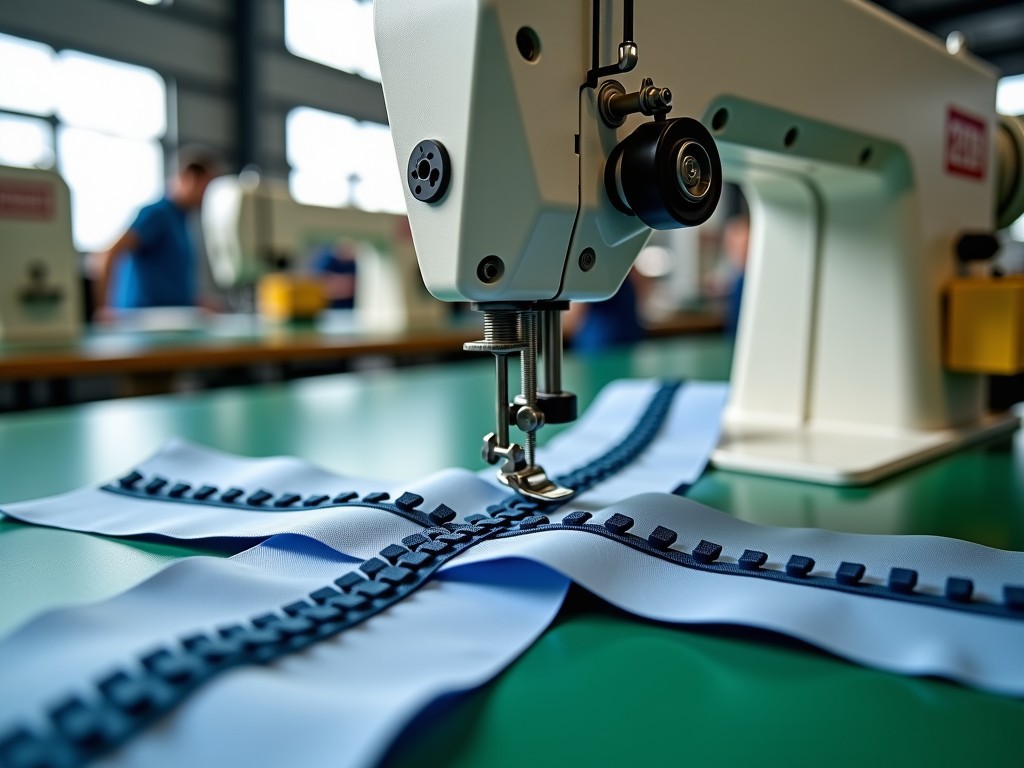
Buy Automatic Zipper Making Machine Factory
Selecting an automatic zipper making machine requires evaluating more than output speed. The interaction between die precision, servo synchronization, and material handling determines whether a
Automatic Zipper Making Machine — Factory-Direct Production Equipment
Selecting an automatic zipper making machine requires evaluating more than output speed. The interaction between die precision, servo synchronization, and material handling determines whether a production line delivers consistent chain dimensions across millions of cycles — or requires daily manual adjustment that erodes throughput.
Our factory designs and manufactures complete zipper production systems covering metal, nylon coil, and injection-molded plastic chain types. Each machine integrates closed-loop tension control, automatic lubrication circuits, and modular die sets that accommodate tape widths from 3 mm to 30 mm without mechanical changeover exceeding 15 minutes.
Core Technical Specifications
| Parameter | Typical Range | Notes |
|---|---|---|
| Chain type compatibility | Metal (brass, aluminum, nickel), nylon coil, injected plastic | Dedicated head modules per type |
| Production speed | 1,200–2,800 pcs/min (metal); 3,000–4,500 pcs/min (nylon) | Dependent on tooth pitch and tape tension |
| Tape width range | 3–30 mm | Quick-change guide rails |
| Tooth pitch options | 2.0 mm, 3.0 mm, 4.0 mm, 5.0 mm, 6.0 mm, 8.0 mm | Custom pitches available |
| Servo motor configuration | 4–8 axes (feeding, forming, cutting, stacking) | Mitsubishi / Delta / Yaskawa options |
| Control system | PLC + HMI touchscreen (10.4″–15″) | Recipe storage for 50+ product profiles |
| Power consumption | 8–18 kW (3-phase 380 V / 50 Hz) | VFD on all main drives |
| Compressed air requirement | 0.5–0.7 MPa, 150–300 L/min | Integrated air preparation unit |
| Machine footprint (L×W×H) | 2.8–4.2 m × 1.2–1.6 m × 1.8–2.1 m | Varies by chain type and options |
| Net weight | 2,200–4,500 kg | Cast iron base frame, stress-relieved |
Engineering Architecture That Determines Output Consistency
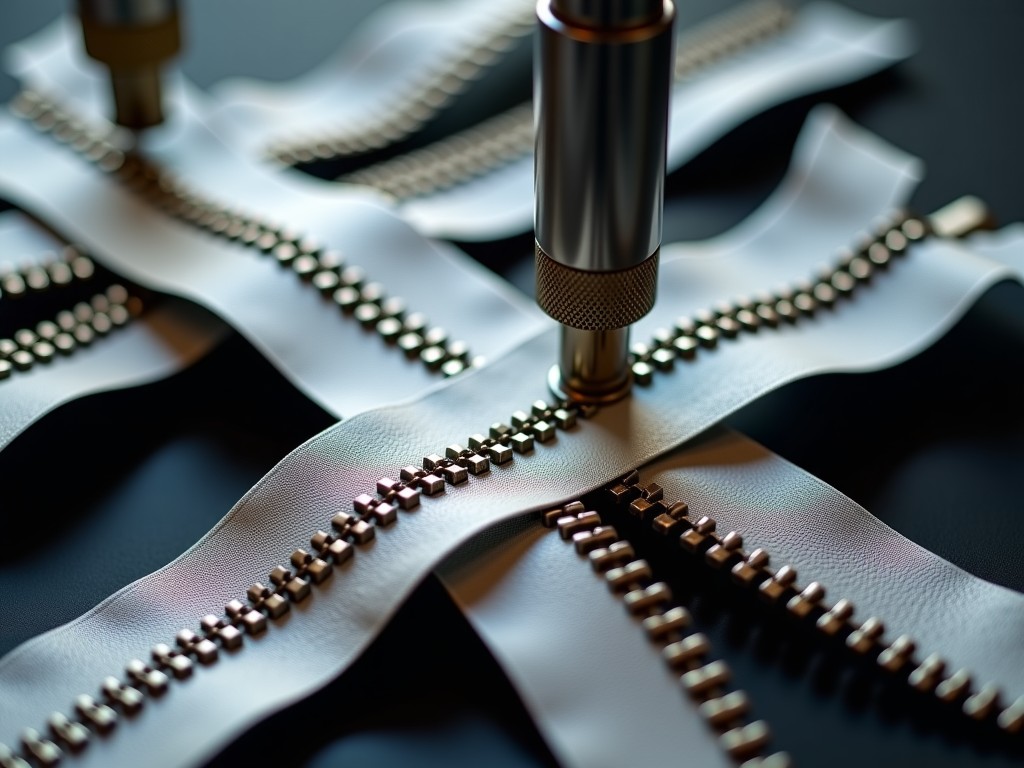
The forming head uses a synchronized cam-and-servo hybrid drive. Cam profiles govern the primary tooth-forming motion — ensuring repeatable geometry at high speed — while servo axes handle tape feeding, lateral positioning, and cut-to-length. This separation prevents servo bandwidth limitations from introducing phase lag during peak acceleration, a common cause of tooth height variation in pure-servo designs.
Tape tension is maintained by a dancer-arm transducer feeding a PID loop that adjusts the unwind brake torque in real time. The loop updates at 1 kHz, compensating for roll diameter changes and splice passages without operator intervention. For metal chain, an additional ultrasonic sensor monitors wire feed consistency, triggering an immediate stop if deviation exceeds ±0.03 mm.
Die sets are CNC-machined from SKD11 tool steel, hardened to HRC 58–60, and nitride-treated for wear resistance exceeding 8 million cycles under normal brass-wire conditions. Each set includes embedded thermocouples that feed forming-temperature data to the HMI, enabling predictive die-life tracking rather than fixed-interval replacement.
Application Fit — Why These Machines Match Specific Production Environments
Apparel manufacturers running 3,000–5,000 m/day of nylon coil benefit from the high-speed coil head's ability to maintain 4,200 pcs/min with ±0.05 mm tooth-height CpK > 1.33. The quick-change tape guides allow same-day switching between #3, #4, and #5 coil sizes — critical for fast-fashion lines handling mixed SKUs.
Luggage and outdoor-gear producers requiring metal zippers (typically #5, #8, #10 brass or aluminum) gain from the wire-straightening module integrated ahead of the forming station. Straightening reduces wire-cast memory that otherwise causes chain curvature, a defect that forces downstream rework in tape sewing operations.
Injection-molded plastic zipper lines — common in medical disposables and waterproof sportswear — use the hot-runner mold head with PID-controlled manifold zones (±1 °C stability). The machine's servo-driven mold-open/close profile reduces cycle time by 18 % compared to hydraulic-clamp predecessors while eliminating oil-leak contamination risk on cleanroom floors.
Customization Logic — Configuring the Line for Your Process
- Inline inspection integration: Camera-based tooth-profile inspection (Keyence / Cognex) mounts on the output conveyor, rejecting out-of-spec chains before stacking.
- Automatic tape splicing: Ultrasonic or hot-air splicer reduces roll-change downtime from 8 minutes to 90 seconds.
- Multi-head gang configuration: Dual or triple heads on a single base frame for high-volume single-SKU production.
- MES/ERP connectivity: OPC-UA and Modbus TCP interfaces for real-time OEE data collection.
- Cleanroom-rated version: Stainless steel covers, IP65 enclosures, particle-free cable carriers for ISO Class 7 environments.
Quality Assurance Philosophy — Factory Acceptance and Beyond
Every machine undergoes a 72-hour run-in at the factory using the customer's specified tape and wire materials. We record continuous tooth-height, tooth-width, and pitch data at 100 Hz, providing a statistical process capability report (Cp, Cpk, Pp, Ppk) with the shipment documentation. This data becomes the baseline for the customer's own incoming inspection.
Critical components — servo motors, PLC, linear guides, ball screws — carry original manufacturer warranties (typically 12–24 months). Wear parts (dies, cutters, guide rollers) are stocked at our regional warehouses in Shanghai, Guangzhou, and Ho Chi Minh City, with 48-hour dispatch to major Asian manufacturing hubs.
Frequently Asked Procurement Questions
What information is needed for an accurate quotation?
Chain type (metal/nylon/plastic), target daily output (meters or pieces), tooth size (#3, #5, #8, etc.), tape material and width, local power supply (voltage/frequency), and any automation integration requirements (MES, robotics, inspection).
Can the machine handle multiple zipper sizes on one line?
Yes. Quick-change die sets and servo-adjustable tape guides allow size changes within 15–20 minutes. Recipe parameters are stored in the HMI; operators select the profile and the machine auto-positions all axes.
What is the typical production lead time?
Standard configurations: 45–60 calendar days from deposit receipt. Customized lines (multi-head, cleanroom, special voltage): 75–90 days. We provide a detailed Gantt chart at order confirmation.
How are export shipments protected?
Machines are coated with VCI anti-corrosion film, wrapped in moisture-barrier PE, and secured in fumigated wooden cases with shock-indicator labels. Container loading follows IMO/ILO/UN ECE guidelines; we provide lashing photos and a packing list with gross/net weights for customs.
Is on-site installation and training included?
One mechanical and one electrical engineer are dispatched for 5–7 working days (travel and accommodation at buyer's account). Training covers operation, routine maintenance, die change, and HMI recipe management. Remote video support is available for 12 months post-commissioning.
Are sample chains available before purchase?
We can produce 50–100 m samples on the configured machine using your tape/wire materials (shipped to our factory). Sample quality reports and high-resolution micrographs are provided for approval prior to shipment.
Request a Technical Consultation
Share your production requirements — chain type, volume, tape specifications, and automation needs. Our application engineers will return a preliminary layout, cycle-time analysis, and budgetary quotation within 2 business days.
Submit Inquiry Form