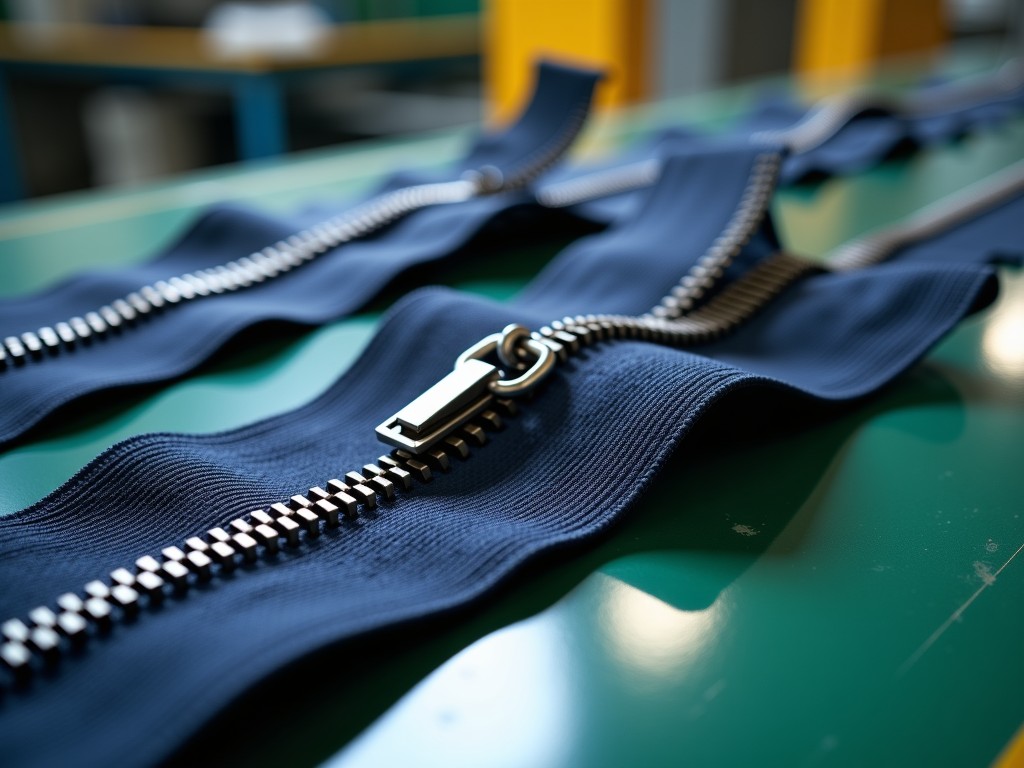
B2B Zipper Production Line Top Manufacturer
The line integrates continuous‑feed tape forming, tooth molding, and slider attachment into a single synchronized flow, reducing change‑over time between zipper profiles. A modular frame allows each
B2B Zipper Production Line – Top Manufacturer Solutions
The line integrates continuous‑feed tape forming, tooth molding, and slider attachment into a single synchronized flow, reducing change‑over time between zipper profiles. A modular frame allows each station to be serviced independently without halting the entire line.
Core Technical Specifications
| Parameter | Typical Value / Range | Notes |
|---|---|---|
| Line speed | 30–120 m/min (adjustable) | Dependent on zipper gauge and tooth profile |
| Supported zipper types | Coil, metal, molded plastic, invisible | Tooling change‑over < 15 min |
| Power consumption | 45–85 kW (three‑phase 380 V) | VFD on each motor for energy optimization |
| Footprint (L×W×H) | 12 m × 3.2 m × 2.5 m (standard) | Custom length available per layout study |
| Control system | Siemens S7‑1500 PLC + HMI 15″ | Remote diagnostics via OPC UA |
Key Mechanical Modules
- Tape feeding unit – tension‑controlled rollers with closed‑loop encoder feedback for ±0.1 mm positional accuracy.
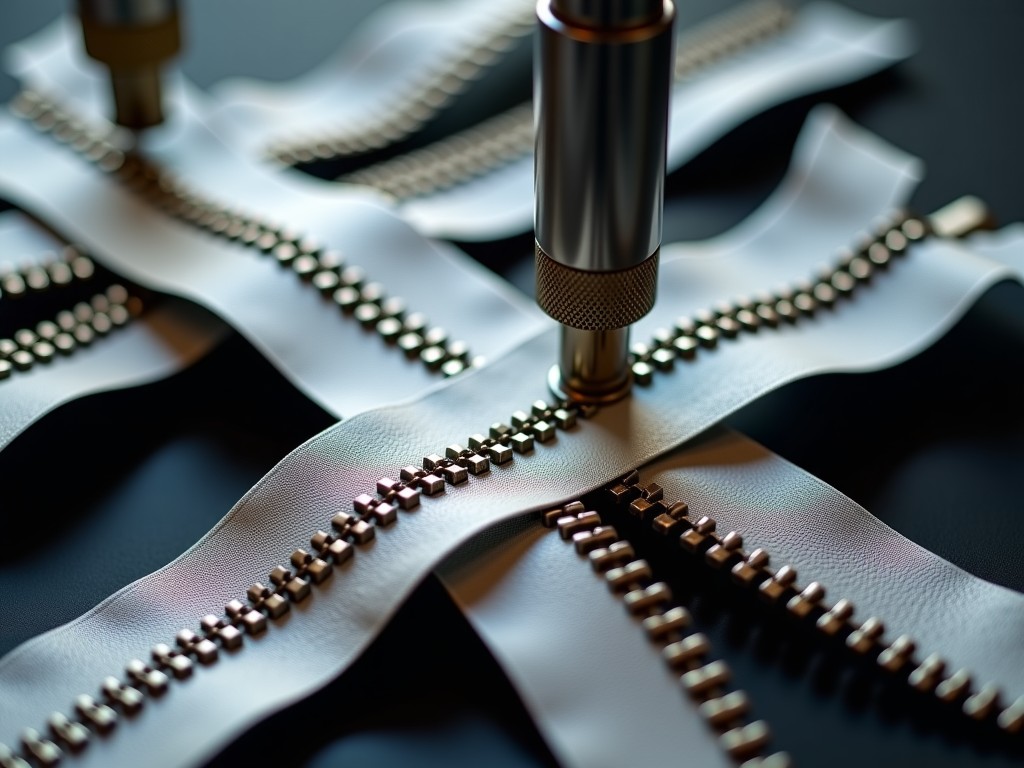
- Tooth molding station – interchangeable die sets; hydraulic clamping force 12 kN, cycle time 0.45 s per tooth pitch.
- Slider insertion head – pneumatic pick‑and‑place with vision verification; accommodates slider widths 3–10 mm.
- Cut‑to‑length & end‑stop module – servo‑driven shear, programmable length resolution 0.5 mm.
- Quality inspection tunnel – inline laser micrometer + high‑speed camera; defect detection down to 0.02 mm.
Customization Options
Configuration is driven by the target zipper gauge, daily output, and factory layout. The following choices are commonly requested:
- Additional tooth‑profile stations for multi‑gauge production.
- Integrated coil‑winding reel for continuous zipper chain output.
- Automated packaging line interface (carton erector, case sealer).
- Clean‑room compatible enclosure (ISO 7) for medical‑grade zipper runs.
- Data‑exchange module for ERP/MES integration (MQTT, Modbus TCP).
Application Fit – Why This Line Serves the Market
Apparel manufacturers benefit from the rapid tooling swap, enabling short‑run fashion cycles without sacrificing throughput. Automotive trim suppliers value the tight dimensional control on metal‑tooth zippers, which directly influences seat‑cover fit. Luggage and outdoor gear producers leverage the coil‑winding option to produce continuous chain that feeds directly into downstream sewing cells, eliminating manual handling steps.
Quality Assurance Philosophy
Every line ships with a documented Factory Acceptance Test (FAT) protocol covering speed stability, tooth pitch repeatability, and slider alignment. In‑process statistical process control (SPC) charts are pre‑configured on the HMI, allowing operators to monitor Cp/Cpk in real time. Spare‑part kits are staged per module, and a 12‑month warranty covers drive components and control hardware.
Lead Time, Logistics & Installation
Standard configuration ships within 10–12 weeks after order confirmation; customized layouts add 3–5 weeks for engineering validation. Units are packaged in seaworthy wooden crates with vibration‑damping foam, each crate marked with center‑of‑gravity indicators for forklift handling. On‑site commissioning typically requires 5 days, including operator training and SPC baseline capture.
Frequently Asked Questions
Can the line be sized for a specific factory floor plan? Yes – the modular frame permits length adjustments in 1 m increments; a layout study is performed before quotation.
What information is needed for a formal quote? Desired zipper gauge(s), daily output target, preferred tooth profiles, available utilities (power, compressed air), and floor‑space constraints.
Which zipper materials are compatible? The standard tooling library covers polyester coil, brass/metal alloy, and thermoplastic molded teeth; additional alloys are evaluated on request.
How is quality inspected during production? Inline laser micrometer measures tooth pitch and height; a high‑speed camera verifies slider engagement. Data logs are exportable for traceability.
What packaging options exist for export? Standard wooden crates, optional vacuum‑sealed barrier bags for humidity‑sensitive components, and custom palletization per Incoterms.
What is the typical production lead time after order? 10–12 weeks for standard; 13–17 weeks for heavily customized configurations.
Next Steps
Submit your project requirements through the inquiry form and a process engineer will return a preliminary layout and cost estimate within two business days.
Request a Technical Proposal